
Morocco Vacation Planning Guide 2026: Cities, Desert, Culture & Everything You Need to Know
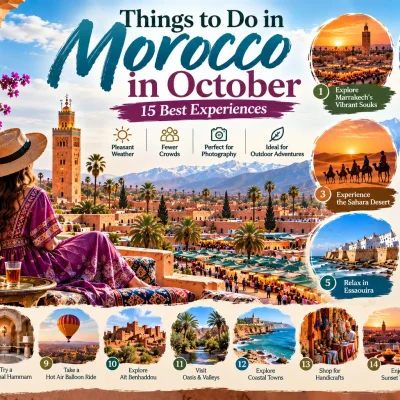
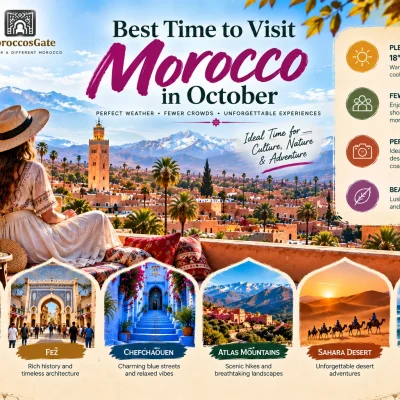
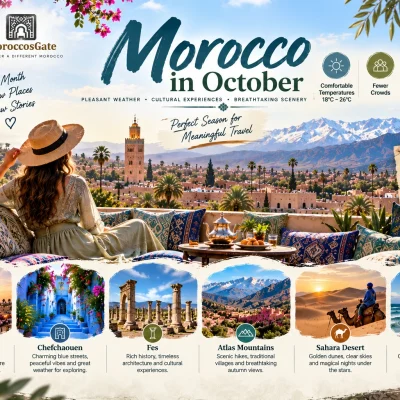
Planning a Morocco vacation in 2026 starts with four essentials: choosing your cities (Marrakech for souks and Jemaa el-Fna, Fes for the ancient medina, Chefchaouen for the Blue City photography, Casablanca for the Hassan II Mosque), booking a Sahara Desert tour from Marrakech (the dunes of Erg Chebbi at Merzouga are Morocco’s finest), learning a handful of Darija phrases (“Salam” for hello, “Shukran” for thank you), and understanding Morocco’s extraordinary geography — where you can genuinely ski the Atlas Mountains and surf the Atlantic coast in a single extraordinary day. Spring (March–May) is the best time to visit.
Morocco is one of those countries where the planning itself becomes a pleasure — where researching the destinations, the food, the language, and the landscape generates a genuine sense of excitement before the trip has even begun. There are good reasons why it has become one of the world’s fastest-growing travel destinations, welcoming nearly 20 million international visitors in 2025 and targeting 20 million for 2026. The country delivers on its reputation: ancient medinas that have changed almost nothing in a thousand years, desert dunes that rise as high as 150 metres above the valley floor, mountain peaks that carry snow into late spring, and a coastline that runs from Mediterranean coves in the north to Atlantic surf breaks in the south.
But Morocco also rewards preparation. Turning up without knowing which neighbourhood your riad is in, which side of the Marrakech medina leads to which souk, how to identify a good hammam from a tourist one, or which Darija phrase will unlock a genuine smile rather than a tourist-price calculation — these are the small differences between a good Morocco trip and an extraordinary one.
This guide covers everything: the top tourist cities and what to prioritise in each, the Sahara Desert experiences that most people come for, the food and phrases that open Moroccan culture to you, and the geographical and climate facts that make Morocco genuinely unlike any other short-haul destination from Ireland or the UK.
Morocco at a Glance: Essential Facts for 2026
| Category | Key Facts |
|---|---|
| Capital city | Rabat |
| Largest city | Casablanca (population ~3.4 million) |
| Language | Arabic (official), Tamazight (official), French (widely used), Darija (colloquial) |
| Currency | Moroccan Dirham (MAD). 1 EUR ≈ 10.7 MAD; 1 GBP ≈ 12.5 MAD |
| Best time to visit | Spring (March–May) and autumn (September–November) |
| Flight time from Dublin | 3–3.5 hours (direct to Marrakech, Casablanca, Fes, Agadir) |
| Visa (Irish/UK/EU) | Not required for stays up to 90 days |
| Safety | Generally safe; standard tourist precautions apply |
| Religion | Islam (Sunni). Dress modestly; respect prayer times |
| Tipping | Expected; 10–15% in restaurants, 10–20 MAD for guides/porters |
Part 1: Morocco’s Top Tourist Cities — Where to Go and What to Prioritise
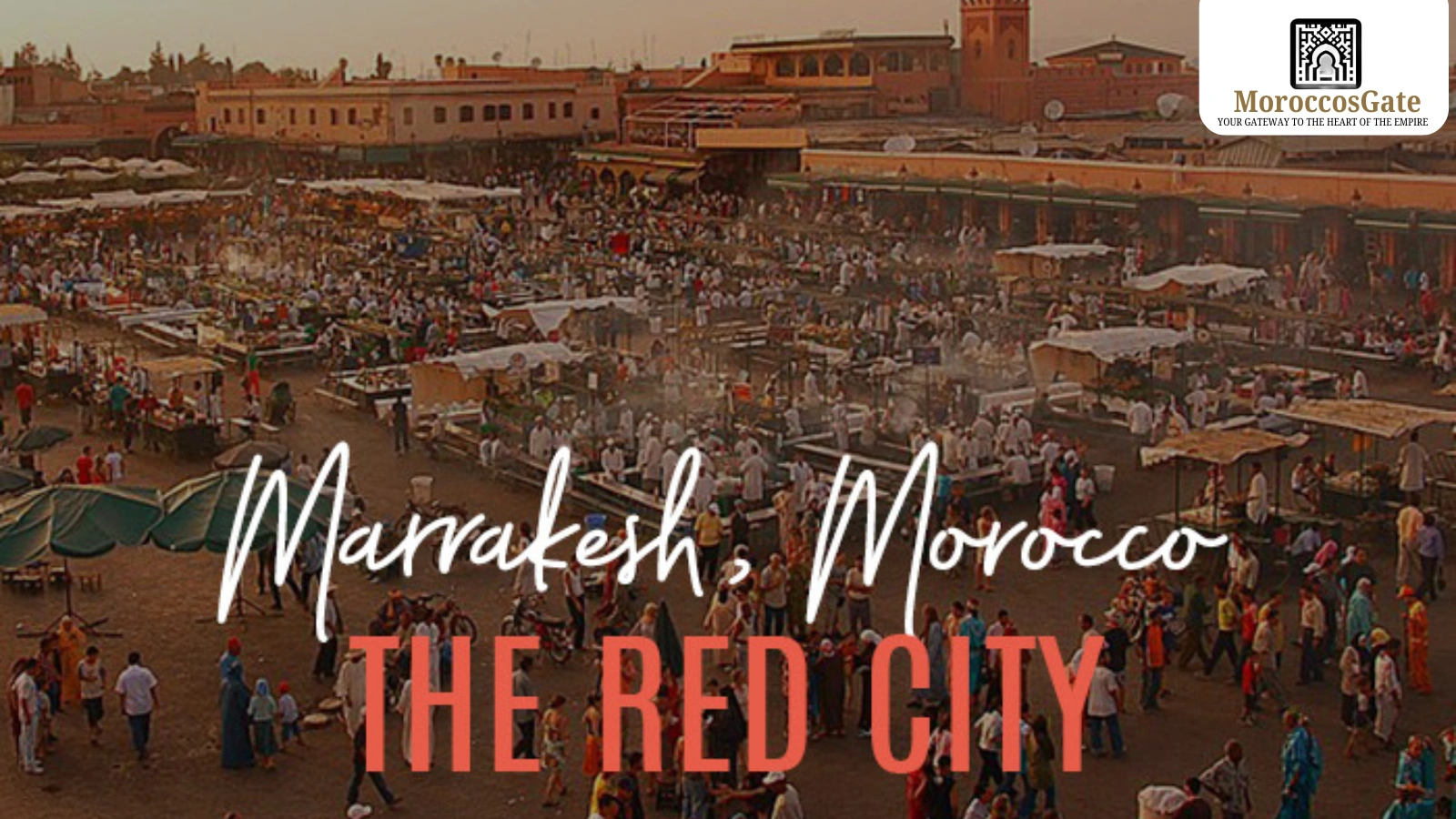
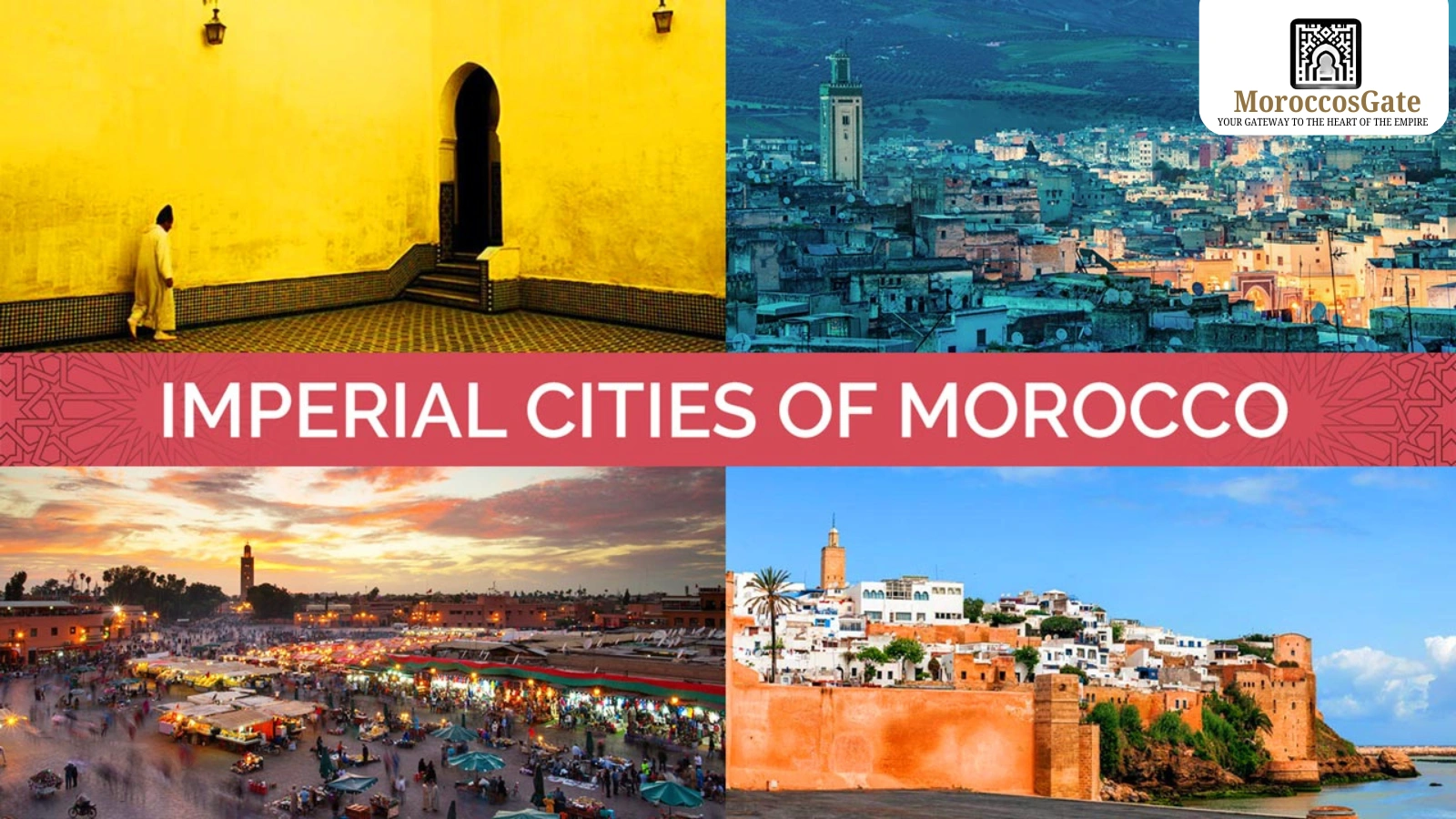
Marrakech: The Red City and Morocco’s Most Visited Destination
Marrakech is, for most first-time visitors, the entry point to Morocco — and it earns that status fully. The most visited city in Morocco, Marrakech is a bustling hub of travellers and locals alike, showcasing traditional Moroccan culture in an accessible way, with a sprawling medina selling handicrafts and souvenirs and the Instagram-famous Jardin Majorelle boasting gorgeous architecture and landscaping. But the description barely scratches the surface of what actually makes Marrakech extraordinary.
Jemaa el-Fna Square: The pulsing heart of Marrakech and one of the world’s great public spaces. During the day, the square is busy but navigable — snake charmers, henna artists, orange juice vendors. After sunset, it transforms into something genuinely extraordinary: dozens of open-air food stalls appear, musicians set up in overlapping circles of percussion and song, storytellers gather crowds around them in a tradition that has continued without interruption for centuries. UNESCO recognised Jemaa el-Fna as Intangible Cultural Heritage of Humanity — a designation that means the square itself, and the performances within it, are considered a living cultural monument. Sit at the edge, order a bowl of harira, and give it at least an hour. You will not regret a single minute.
The Souks: The market districts immediately north of Jemaa el-Fna are a genuine labyrinth — interconnected by speciality (copper, leather, textiles, spices, lanterns), organised by a logic that is entirely its own, and best explored without a fixed agenda. The souks are most atmospheric before 10 AM and after 5 PM; midday is busy and the light is less rewarding for both photography and navigation. A licensed guide for your first souk morning is genuinely worth the cost — they will show you the workshops behind the products, translate the conversations between traders, and ensure that your haggling instincts are calibrated to local reality rather than tourist-zone expectations.
The Must-See Monuments: The Bahia Palace (a 19th-century masterpiece of Islamic decoration), the Saadian Tombs (a 16th-century royal necropolis of exceptional beauty), the Koutoubia Mosque and its 12th-century minaret (visible from across the city), the Ben Youssef Madrasa (a Quranic school of extraordinary architectural richness, currently closed for renovation but worth checking current status), and the Majorelle Garden (the botanical garden created by Yves Saint Laurent, now one of Morocco’s most visited attractions — book timed entry in advance online).
Where to stay in Marrakech: A riad inside the medina walls is the only accommodation choice that fully delivers the Marrakech experience. Our complete guide to the best riads in Marrakech under €80 covers the finest value properties in detail, from the two-pool Riad Nelia to the hammam-equipped Riad Gallery 49.
Chefchaouen: The Blue City of the Rif Mountains
Chefchaouen is the Blue Pearl of Morocco, nestled in the Rif Mountains at approximately 600 metres altitude, and it is simultaneously Morocco’s most photographed city and one of its most genuinely peaceful. The entire medina is painted in shades of blue from powder-pale to deep cobalt — a visual identity that has made it one of the most recognisable urban environments in the world from a single photograph.
But Chefchaouen rewards more than photography. The hiking trail to the Spanish Mosque at sunset, the morning walk to the Ras el-Maa waterfall, the day trip to the Akchour Gorge and waterfalls in Talassemtane National Park, the weekly Riffian market with its mountain goat cheese and local honey — these give the Blue City substance beyond its photogenic surface. The city is also Morocco’s best-value destination: the same riad experience costing €60–€90 in Marrakech costs €25–€50 here. For a complete planning guide, our Chefchaouen travel guide 2026 covers everything from accommodation to the Akchour hike in full detail.
How to get there: 2.5 hours by bus or grand taxi from Tangier; 4 hours from Fes. No train or airport. Stay at least two nights — day-trippers see only the crowded midday medina; the magic is in early morning and evening.
Fes: Morocco’s Ancient Soul
Fes is, by most measures, Morocco’s most historically significant city — and the most challenging to fully appreciate on a short visit. It is home to the world’s oldest continuously operating university (the Kairouyine, founded 859 AD), Fes is the world’s oldest university and a labyrinthine medieval medina that is classified as the largest car-free urban area on earth. To walk its 9,000 alleyways is to move through a living medieval city that has changed almost nothing in its fundamental character since the 12th century.
Fes el-Bali (the Old Medina): This is the destination and the experience in one. The UNESCO World Heritage Site that comprises Fes el-Bali is genuinely unlike any other urban environment available within a short-haul flight of Europe. A licensed local guide is strongly recommended for your first visit — not as a luxury, but as the difference between surface-level wandering and genuine understanding. The tanneries (where leather has been dyed in the same open vats for centuries, best viewed from the surrounding shops), the Bou Inania madrasa (extraordinary carved cedar and zellige tilework), the Attarine souk (medieval spice and wood market), and the Al-Attarine madrasa are the highlights, but what makes Fes extraordinary is the sum of the whole rather than any individual sight.
Fes in summer 2026: The Fes Festival of World Sacred Music (4–7 June 2026 — see our Morocco Music Festivals 2026 guide) offers a once-a-year opportunity to experience the ancient medina filled with sacred music from across the world, performed at Bab Makina under the stars. For cultural travellers, this is unmissable.
Where to stay in Fes: A riad inside Fes el-Bali is the only accommodation that gives you the full experience. The Rcif and Batha areas are closest to the major attractions. Book at least 2–3 months ahead for spring.
Casablanca: Modern Morocco at Its Most Cosmopolitan
Casablanca is Morocco’s biggest city with a population of about 3.4 million — a busy coastal city and one of the more developed places in Morocco, with a thriving entertainment scene and growing business sector. Here you can find international cuisine, high-end shopping, and one of the world’s largest shopping centres, the Morocco Mall.
But the reason most travellers come to Casablanca — and the reason they consistently leave having been surprised by it — is the Hassan II Mosque. Built on a promontory over the Atlantic Ocean, its 210-metre minaret is the tallest religious structure in the world. The mosque can accommodate 105,000 worshippers, and its retractable roof opens to the Moroccan sky. Non-Muslim visitors can enter on guided tours — making it one of the very few mosques in Morocco accessible to international visitors — and the interior is breathtaking: 140,000 square metres of Moroccan artisanship — marble, granite, cedar, zellige, carved plaster — produced by craftsmen from across the country.
Beyond the mosque: Casablanca has a New Medina built in the 1930s, called the Quartier Habous, which is much cleaner and more refined, showcasing modern European influence. The city’s Art Deco architecture district (one of the world’s finest collections), the Ain Diab Corniche beachfront, and the Jazzablanca music festival (2–9 July 2026) make Casablanca a city worth spending at least two nights in, not merely transiting through.
Part 2: Sahara Desert Experiences — What to Book and How
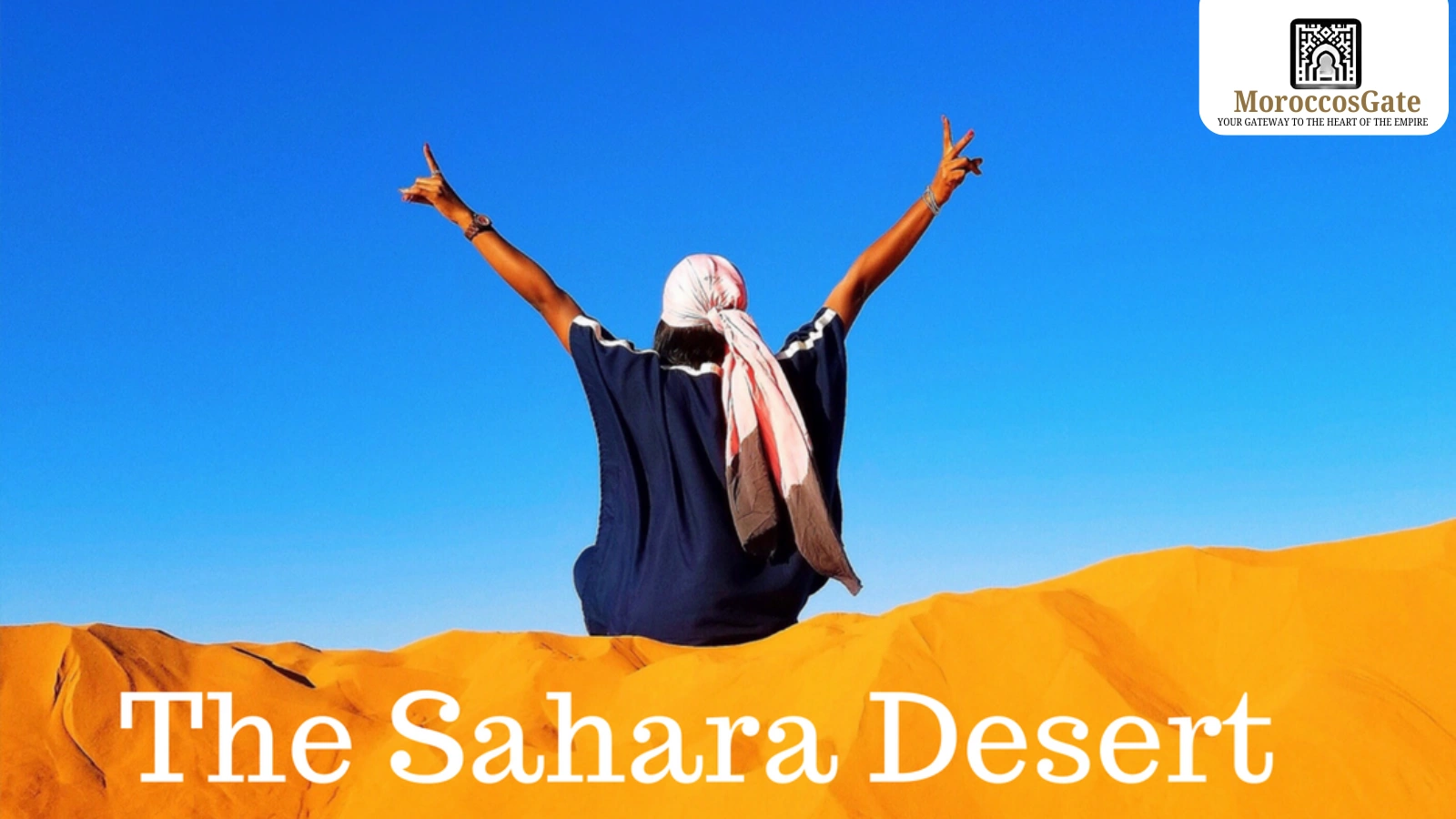
A massive volume of searches about Morocco relates to Sahara Desert adventures — and for very good reason. Morocco offers the most convenient access to the Sahara Desert of any country on earth, with Marrakech serving as the standard departure point for a wide range of desert tour formats.
The Erg Chebbi Dunes at Merzouga: The Classic Experience
The Sahara Desert offers experiences including camel treks and night sky gazing in Merzouga or Zagora. Of these two options, Merzouga and the Erg Chebbi dunes are consistently considered the superior desert destination — the dunes are larger, more dramatic, and more photogenic than those at Zagora, and the surrounding landscape of ochre plains, Berber villages, and the dramatic Tafilalt oasis gives the area extraordinary visual richness beyond the dunes themselves.
The standard experience runs as follows: depart Marrakech early morning (or the night before for a truly leisurely journey), travel south through the Atlas Mountains and the pre-Saharan valleys (Aït Benhaddou, Ouarzazate, the Dades Gorges — these stops alone are worth the journey), arrive at Merzouga in the late afternoon, mount a camel for a 45-minute ride into the dunes in time for sunset, reach your desert camp as the sky turns extraordinary colours, eat a traditional Berber meal under a tent, listen to Gnawa percussion music around a fire, and sleep in your tent to wake before dawn and climb a dune to watch the sun rise. This experience is available year-round, though spring (March–May) and autumn (September–November) offer the most comfortable temperatures.
Types of Desert Tour
- Shared 2-day group tour from Marrakech: The most budget-friendly option, covering Aït Benhaddou, Ouarzazate, the Dades Gorges, Merzouga, and the dunes. Typically €60–€100 per person including transport, one night in a desert camp, camel trekking, and basic meals. Best for solo travellers and budget-conscious visitors.
- Shared 3-day group tour: Adds the Todra Gorge and a more leisurely pace. Typically €90–€150 per person. The extra day allows a return via Fes — one of the finest itinerary structures available for a 10–14 day Morocco trip.
- Private 3-day tour: Your own vehicle, driver, and guide for the full journey. More expensive (typically €200–€350 per person, depending on group size) but allows complete flexibility on timing, stops, and pace.
- Luxury glamping at Erg Chebbi: Several high-end desert camps near Merzouga offer genuine luxury in the dunes — proper beds, en-suite bathrooms, high-quality Berber-style meals, and private camp access. For honeymoons, special occasions, or travellers for whom comfort is non-negotiable, this is an extraordinary option.
- Agafay Desert (close to Marrakech): For travellers without the time for the full Merzouga journey, the Agafay Desert — a stony, dramatic landscape just 30–40 minutes from Marrakech — offers sunset camel rides, quad biking, and traditional Berber tent dinners as an evening excursion.
Desert Booking Tips
- Book through a licensed, reputable local operator — ask your riad or hostel for a personal recommendation, as these tend to connect you with genuine operators rather than resellers.
- Avoid the cheapest possible tours — the minimum viable Sahara camp is acceptable; the worst ones are genuinely poor. A few extra euros for a well-reviewed operator are always worth spending.
- For summer desert trips (June–August), plan all outdoor activities for early morning and late afternoon only. Merzouga midday temperatures exceed 40°C — rest during the heat of the day.
For more on the best Sahara timing across all seasons, see our Best Time to Visit Morocco 2026 guide.
Part 3: Moroccan Culture — Food, Language, and Essential Etiquette
Moroccan Food: What to Eat and Where
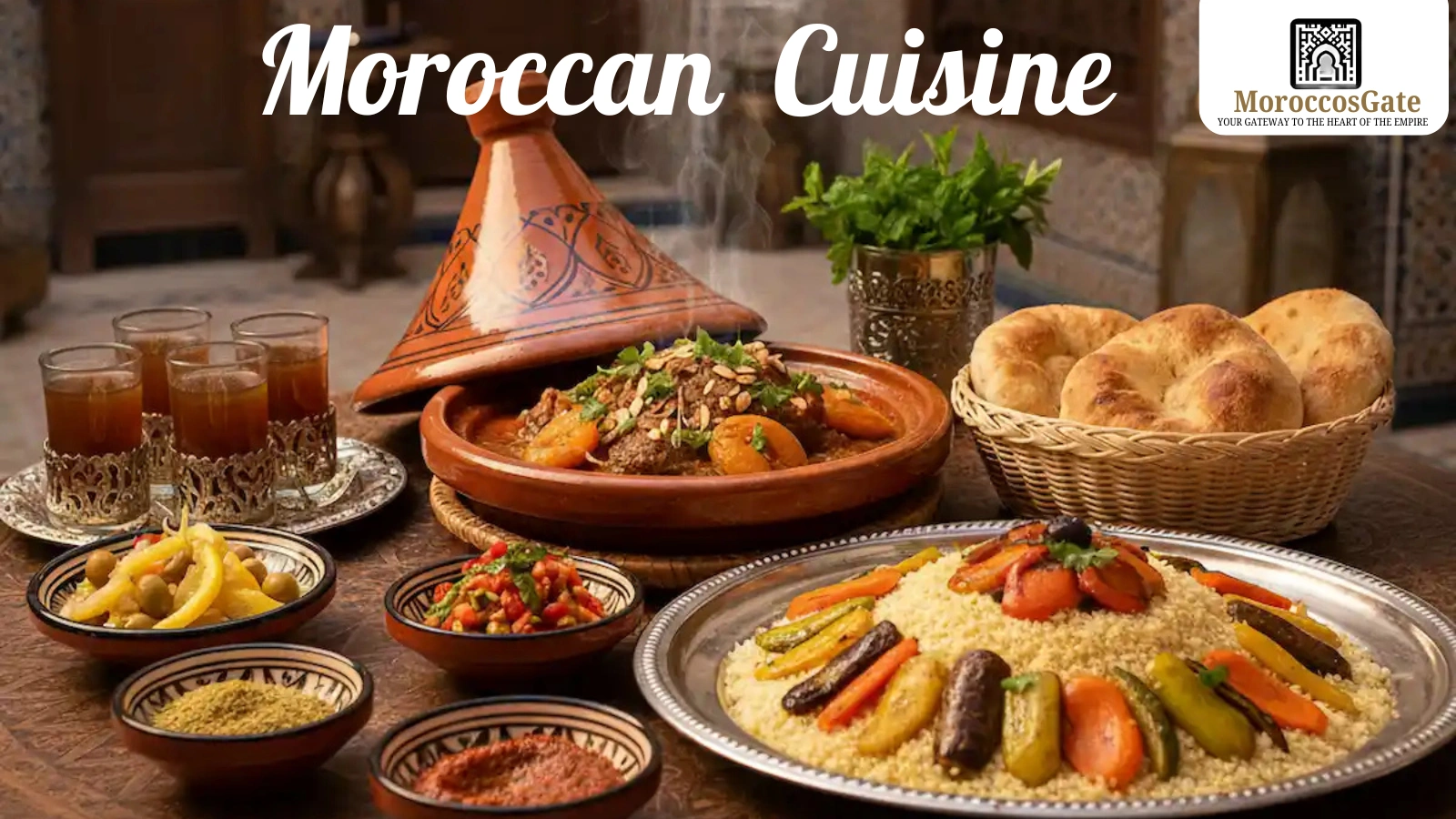
Moroccan cuisine is one of the world’s finest — rich with spice, slow-cooked with care, and deeply rooted in a culinary tradition that draws from Amazigh, Arab, Andalusian, and sub-Saharan African influences. These are the dishes you must try:
Tagine (Tajine)
The definitive Moroccan dish: a slow-cooked stew prepared in a conical clay pot (also called a tagine), built around a protein (lamb, chicken, fish, or vegetables) and layered with preserved lemon, olives, saffron, ras el-hanout spice blend, ginger, and coriander. The tagine’s distinctive cone lid creates a steam cycle that slowly tenderises the ingredients and concentrates the flavours into something that bears almost no resemblance to any comparable Western stew.
The best tagines are not found in the tourist-facing restaurants of the main tourist squares — they are found in the small family-run establishments two streets back from any major attraction, where the menu is written on a chalkboard and the bread is baked that morning. A tagine with bread and mint tea at a local restaurant costs €5–€10. At a tourist-facing restaurant on Jemaa el-Fna, the same quality meal costs €15–€25.
Couscous (Kesksou)
Steamed semolina grains served with a rich broth, slow-cooked vegetables, and your choice of meat — typically lamb, chicken, or merguez sausage. Couscous is the traditional Friday dish in Morocco (after the weekly mosque prayers), and the finest versions are made in home kitchens by the same techniques that have been used for centuries. The Friday couscous at a small Moroccan restaurant in any city’s residential neighbourhood is one of the best meals Morocco offers.
Mint Tea (Atay)
Moroccan mint tea is not just a drink — it is a ritual. Fresh spearmint, green tea, and an extraordinary quantity of sugar are combined in a silver teapot and poured from height to aerate the mixture and produce a characteristic froth. Three glasses are traditionally served and expected to be accepted — refusing the third is considered slightly rude, though a polite decline is generally understood. In a traditional guesthouse, the tea arrives with the first breath of arrival and marks the transition from guest to welcomed visitor. The tea itself, while sweet, is genuinely excellent: the combination of fresh mint and bitter tea creates a flavour that is entirely its own.
Pastilla (Bastilla)
One of the great dishes of the entire Arabic culinary tradition — a large savoury-sweet pie made from warka pastry (similar to filo but lighter), filled with spiced pigeon or chicken, almonds, cinnamon, and saffron, then dusted with icing sugar and cinnamon. It sounds improbable; it tastes extraordinary. Order it as a starter in any quality restaurant; it requires forward planning (typically 20–30 minutes to prepare properly) but rewards the wait entirely.
Harira Soup
Morocco’s everyday soup — a thick, warming broth of tomatoes, lentils, chickpeas, fresh herbs, and spices — served throughout the day at street food stalls and restaurants across the country. At its finest, harira is complex, deeply flavoured, and entirely filling; at a basic street stall in the evening, it costs less than €0.50 a bowl. It is also the traditional soup served to break the Ramadan fast each evening — which gives it cultural significance well beyond its status as a street food staple.
Essential Moroccan Arabic (Darija) Phrases
Darija — Moroccan Arabic — is the colloquial language spoken in everyday life throughout Morocco. It differs significantly from Modern Standard Arabic and, to a lesser extent, from Egyptian Arabic. French is also widely spoken across Morocco, particularly in cities and tourist-facing businesses. A few Darija words and phrases, deployed with genuine warmth and humour rather than perfect pronunciation, unlock a quality of Moroccan hospitality that the English-only tourist simply never encounters.
| Darija Phrase | Pronunciation Guide | Meaning / When to Use |
|---|---|---|
| Salam / As-salamu alaykum | Sah-lam / As-sah-lah-moo ah-lay-koom | Hello / Peace be upon you — use to greet anyone, anywhere |
| Shukran | Shook-rahn | Thank you — the single most important word to know |
| Afak / Minfadlik | Ah-fak / Min-fahd-lick | Please |
| La bas? | Lah bahs | How are you? (lit. “No harm?”) — expect “La bas, Hamdullah” (Fine, praise God) |
| Bshhal hada? | Besh-hall hah-dah | How much is this? — essential for souk shopping |
| Ghali bzaf | Ghah-lee bzaf | Too expensive — the opening move in any souk negotiation |
| Mzyan | Mzee-yan | Good / nice — versatile term of approval |
| La shukran | Lah shook-rahn | No thank you — politely declines persistent vendor approaches |
| Fin kayn…? | Fin cane? | Where is…? — essential for navigation |
| Bismillah | Bis-mil-lah | In the name of God — say before eating; deeply appreciated by hosts |
| Bslama | Bess-lah-mah | Goodbye (used by the person leaving) |
A note on expectations: do not worry about perfect pronunciation. Moroccans are extraordinarily appreciative of any genuine effort to use their language, however imperfect. A mistimed “Shukran” and a laugh about the mispronunciation will get you further than a flawlessly correct phrase delivered without warmth.
Cultural Etiquette: Practical Respect
Morocco is a Muslim-majority country and its cultural practices reflect deep religious roots alongside Amazigh traditions that predate Islam. Here is what you actually need to know, stripped of the hedging that makes most travel advice on this topic unhelpfully vague:
- Dress: Cover shoulders and knees in medinas, mosques, and traditional areas. This applies to all genders. Light, modest clothing is both culturally respectful and practically sensible in the Moroccan climate.
- Right hand: Use your right hand for eating, passing money, and shaking hands. The left hand is traditionally reserved for hygiene purposes — this matters in traditional settings.
- Photography: Always ask before photographing individuals. A gesture toward your camera and a questioning look is sufficient to check permission. Accept refusals gracefully.
- Mosque etiquette: Most mosques in Morocco are not open to non-Muslim visitors. The Hassan II Mosque in Casablanca is the significant exception. Remove shoes before entering any mosque or traditional home you are invited into.
- Ramadan: Morocco’s Ramadan 2026 runs approximately 17 February to 18 March. During this period, eating, drinking, or smoking in public during daylight hours is disrespectful and technically prohibited in some areas. Respect the fast publicly, even if you do not observe it yourself.
- Tipping: Expected across Morocco for services. 10–15% at restaurants, 10–20 MAD for guides (per person, per half day), 5–10 MAD for parking attendants, and a small tip for accommodation staff at the end of your stay. Tipping well is genuinely important to local livelihoods.
Part 4: Morocco’s Extraordinary Geography and Climate
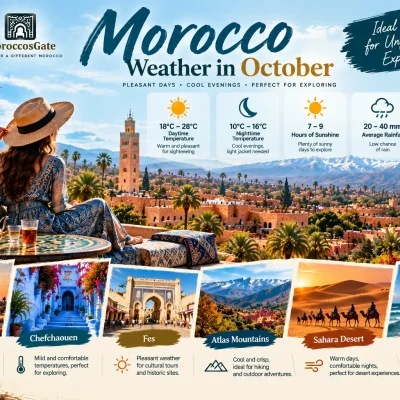
Morocco possesses one of the most geographically diverse landscapes of any country its size on earth — and one of the most uniquely stratified climates. Understanding this geography transforms the way you plan a Morocco trip, because the “Morocco” that is hot and dry in Marrakech in July is the same country as the “Morocco” where Essaouira stays at 22°C, and the same country where Ifrane received over a metre of snow in the same month.
The Four Climate Zones of Morocco
| Zone | Key Locations | Summer (Jun–Aug) | Winter (Dec–Feb) | Character |
|---|---|---|---|---|
| Atlantic Coast | Casablanca, Essaouira, Agadir, Tangier | 22–28°C, breezy | 15–20°C, mild | Temperate year-round |
| Mediterranean Coast | Tetouan, M’diq, Al Hoceïma | 24–30°C, warm | 12–16°C, some rain | Classic Mediterranean |
| Imperial Cities (Inland) | Marrakech, Fes, Meknes, Rabat | 30–42°C, dry | 10–18°C, occasional rain | Continental extremes |
| High Atlas Mountains | Ifrane, Oukaimeden, Toubkal | 20–28°C, pleasant | Below 0°C, heavy snow | Alpine |
| Pre-Sahara & Sahara | Ouarzazate, Merzouga, Zagora | 36–45°C, extreme | 8–20°C, cold nights | Desert extremes |
Can You Really Ski and Surf in Morocco on the Same Day?
Yes — and this is not merely a clever marketing line. It is physically achievable. Oukaimeden ski resort in the High Atlas sits at 2,600 metres altitude, approximately 75 km south of Marrakech, and has a ski season running from December through early March with reliable snowfall and proper ski infrastructure including lifts and hire equipment. The Atlantic surf breaks at Taghazout, Tamri, or Rabat’s beaches are approximately 175 km from Oukaimeden (or 3.5 hours by road via Marrakech).
Combining both in a single day requires an early morning ski session followed by a long afternoon drive to the coast — genuinely achievable in winter, when conditions at Oukaimeden are at their best and the Atlantic surf is at its most consistent. Even travellers who choose not to physically attempt both in a single day should understand what this geographical reality means: that Morocco in a single trip can offer alpine mountain landscapes, Atlantic surf culture, Sahara dunes, Mediterranean coves, and ancient imperial cities — all within a country the size of France, served by an improving domestic transport network.
Morocco’s Mountain Ranges
Morocco has not one but three significant mountain ranges, each with its own character:
- The High Atlas: Running across central Morocco from northeast to southwest, the High Atlas contains North Africa’s highest peak — Jebel Toubkal (4,167m). Covered extensively in our Toubkal hike guide, these mountains offer some of the finest multi-day trekking available from a short-haul European flight.
- The Middle Atlas: Home to Ifrane (Morocco’s “Little Switzerland”), cedar forests, Barbary macaques in the wild, and the highest concentration of freshwater lakes in the country.
- The Rif Mountains: Northern Morocco’s mountain range, home to Chefchaouen and the Talassemtane National Park, with gentler terrain than the High Atlas and equally spectacular landscapes.
The Coastline: Atlantic and Mediterranean
Morocco’s coastline runs for approximately 2,900 km — encompassing Atlantic facing beaches from Tangier in the north to Lagouira in the extreme south, and a Mediterranean coast from Tangier to Saïdia in the east. The Atlantic coast is shaped by the cold Canaries Current, which keeps coastal temperatures dramatically lower than the interior throughout summer — the reason why Essaouira stays at 22°C in July while Marrakech three hours away exceeds 40°C. The Mediterranean coast is warmer, calmer, and less wind-driven — better for swimming but less interesting for watersports.
For our complete summer coastal activities guide — surfing, kitesurfing, beach festivals, and the best coastal cities for summer travel — see our guides to best summer activities in Morocco and Morocco summer beach festivals 2026.
Practical Planning: Building Your Morocco Vacation Itinerary
Suggested Itineraries by Duration
4–5 days (long weekend): Fly in to Marrakech. Two full days in the medina (Jemaa el-Fna, souks, Bahia Palace, Majorelle Garden, hammam). One day trip to Ouzoud Falls or the Atlas Mountains. Return home. This compact itinerary captures Marrakech’s core without rushing.
7 days: Marrakech (2 nights) → 2-day shared Sahara Desert tour including Aït Benhaddou and Merzouga → return to Marrakech → Essaouira (2 nights) → fly home. This classic “city + desert + coast” circuit covers Morocco’s three most distinct experiences.
10 days: Fly into Marrakech → Marrakech (2 nights) → Sahara circuit (3 days) → Fes (2 nights) → train to Casablanca → fly home. Alternatively: Fly into Casablanca → Fes (2 nights) → Chefchaouen (2 nights) → Tangier (1 night) → Marrakech (3 nights) → fly home. This northern circuit offers a completely different Morocco from the southern desert circuit.
14 days: The grand tour combining both circuits: Casablanca → Fes → Chefchaouen → Tangier → Marrakech → Sahara → Essaouira. Two weeks allows genuine depth in each destination without rushing. This is our team’s recommended duration for a first Morocco trip.
For specific budget planning across any of these itineraries, see our Morocco budget travel 2026 guide, which breaks down daily costs by category with real 2026 prices.
Frequently Asked Questions — Morocco Vacation Planning 2026
What are the best cities to visit in Morocco for first-time visitors?
Marrakech is the essential starting point — vibrant, accessible, and the gateway to the Sahara. Fes offers Morocco’s deepest historical and cultural immersion. Chefchaouen provides the unique blue medina experience and mountain hiking. Casablanca is worth one to two nights for the Hassan II Mosque and Art Deco architecture. A first Morocco trip combining Marrakech, one desert excursion, and either Fes or Chefchaouen covers the country’s essential experiences.
What is the best time to visit Morocco?
Spring (March–May) and autumn (September–November) are the optimal seasons — warm, largely dry, and ideal for all activities including Sahara desert trips, city exploration, and mountain hiking. June is the best summer month, combining manageable heat with an extraordinary festival calendar including Mawazine, Gnaoua, and the Fes Sacred Music Festival.
What food should I try in Morocco?
The essential Moroccan dishes are tagine (slow-cooked stew in a clay pot), couscous (steamed semolina with vegetable broth and meat), bastilla (savoury-sweet pastry pie), harira soup, and mint tea. The best versions are found in small local restaurants away from the main tourist squares, where the same quality food costs half the price.
What Moroccan Arabic (Darija) phrases should I learn?
The most important are: Salam (hello), Shukran (thank you), Afak (please), Bshhal hada? (how much is this?), Ghali bzaf (too expensive), La shukran (no thank you), Mzyan (good/nice), and Bslama (goodbye). Even an imperfect attempt at these phrases is warmly appreciated and measurably improves the quality of interactions throughout any Morocco trip.
What is the Sahara Desert experience like in Morocco?
A standard Sahara tour from Marrakech involves a full day’s drive south through the Atlas Mountains and pre-Saharan valleys (stopping at Aït Benhaddou UNESCO kasbah and Ouarzazate), arriving at Merzouga in the late afternoon for a camel ride into the Erg Chebbi dunes at sunset, a night in a desert camp under extraordinary stars, and a pre-dawn dune climb to watch sunrise. It is one of travel’s genuinely extraordinary experiences.
Can you ski and surf in Morocco on the same day?
Yes — physically achievable in winter (December–February). Oukaimeden ski resort in the High Atlas (75km south of Marrakech) has a reliable ski season, and the Atlantic surf breaks near Essaouira or Taghazout are 3–4 hours away by road. This combination requires an early start, but the geographical reality that makes it possible — snowy Alpine peaks and Atlantic beaches in the same country — is one of Morocco’s most remarkable features.
Is Morocco safe for tourists in 2026?
Yes — Morocco is generally safe for tourists. Crime rates are relatively low, but like many tourist destinations, scam artists, overly persistent vendors, and pickpockets can be expected in popular tourist areas. In busy cities like Marrakech and Fes, many touts will try to sell things or act as unlicensed guides. Simply provide a polite refusal and walk away. Standard precautions apply: keep valuables secure, use licensed guides, and carry copies of your travel documents. Solo female travellers should dress modestly and exercise normal caution.
How much does a Morocco vacation cost?
A comfortable budget Morocco vacation costs €30–€50 per person per day for accommodation, food, and transport, excluding flights. A 7-day trip costs approximately €350–€550 per person, excluding flights. Return flights from Dublin or London to Morocco cost £80–£220. For a detailed breakdown, see our Morocco budget travel 2026 guide.
Plan Your Morocco Vacation with Morocco’s Gate
Morocco in 2026 is one of the world’s most compelling travel destinations — extraordinarily diverse in its geography, exceptionally rich in its culture, and still genuinely affordable for travellers from Ireland and the UK. The cities, the desert, the food, the language, and the landscapes all deliver on their considerable reputations. The planning, done properly, ensures you see the right version of each.
Morocco’s Gate has been helping Irish and European travellers plan extraordinary Morocco experiences since 2015. Whether you are planning your first visit or your fifth, we can help you build the itinerary that makes the most of whatever time you have.
- → Talk to our team and start planning your Morocco vacation
- → Browse our curated Morocco travel deals
- → Read our Best Time to Visit Morocco 2026 guide
- → Read the Morocco Budget Travel 2026 guide
- → Why visiting Morocco before the 2030 World Cup is the smartest decision
About the Author: Morocco’s Gate Editorial Team
Morocco’s Gate is based between Dublin, Ireland, and Morocco. We have planned Morocco trips from the outside — as travellers who had never been — and from the inside, after a decade of annual visits, riad stays, medina explorations, desert crossings, mountain hikes, and the accumulated knowledge of having done things right and having done them wrong.
We have sat in Jemaa el-Fna as the food stalls appeared at dusk, gotten genuinely lost in the Fes medina and found something better than what we were looking for, crossed Erg Chebbi by camel at sunset, and drunk mint tea on more rooftop terraces than we can accurately count. This guide is the distillation of that experience into the most useful Morocco planning resource we know how to write. Morocco’s Gate has been helping Irish and European travellers plan extraordinary Morocco experiences since 2015.
Affiliate Disclosure: This article contains affiliate links. Morocco’s Gate may earn a commission when you book tours, accommodation, or travel services through links on this page — at no additional cost to you. All recommendations are based on genuine first-hand experience and independent research. This commission helps us continue producing free, independent Morocco travel content.