
Affiliate Disclosure: This article contains affiliate links. If you book a tour, hotel, flight, or travel service through links on this page, MoroccosGate may earn a small commission at no additional cost to you. We only recommend services and providers we genuinely trust. Thank you for supporting our independent travel content.
The Best Time to Visit Morocco in 2026: A Complete Seasonal Guide
Few countries in the world can claim to be genuinely rewarding in every season — but Morocco is one of them. Whether you are dreaming of striding through fragrant rose-filled valleys in spring, watching the night sky shimmer above Sahara dunes in autumn, surfing Atlantic swells on the coast in summer, or wandering the ancient medinas of Fes and Marrakech in the quiet cool of winter, there is a version of Morocco waiting for you in every month of the year.
The question is not so much whether to go, but when to go — and that depends entirely on what you are hoping to experience. Morocco is a large and geographically diverse country, stretching from Mediterranean coastline in the north to Saharan sand seas in the south, and from Atlantic beaches in the west to the High Atlas mountain ranges at its heart. The climate varies dramatically between these regions, and the “best” season shifts depending on your destination and interests.
In this comprehensive guide, Morocco’s Gate breaks down every season, every month, and every key consideration you need to plan the perfect 2026 trip. We cover weather, events, travel tips, Ramadan considerations, and expert advice for every type of traveller — from first-timers to seasoned Morocco regulars.
Bottom line up front: the best overall time to visit Morocco in 2026 is spring (March to May) or autumn (September to November) — but read on, because the full picture is far more interesting.
Morocco at a Glance: Understanding the Climate Zones
Before diving into the seasons, it helps to understand why Morocco’s climate is so varied. The country sits at a geographical crossroads — the Atlantic Ocean to the west, the Mediterranean to the north, the Sahara Desert to the south, and the High Atlas mountain chain running through its centre. Each of these forces shapes the climate of the region it touches.
For practical travel planning, it is useful to think of Morocco in four distinct climate zones:
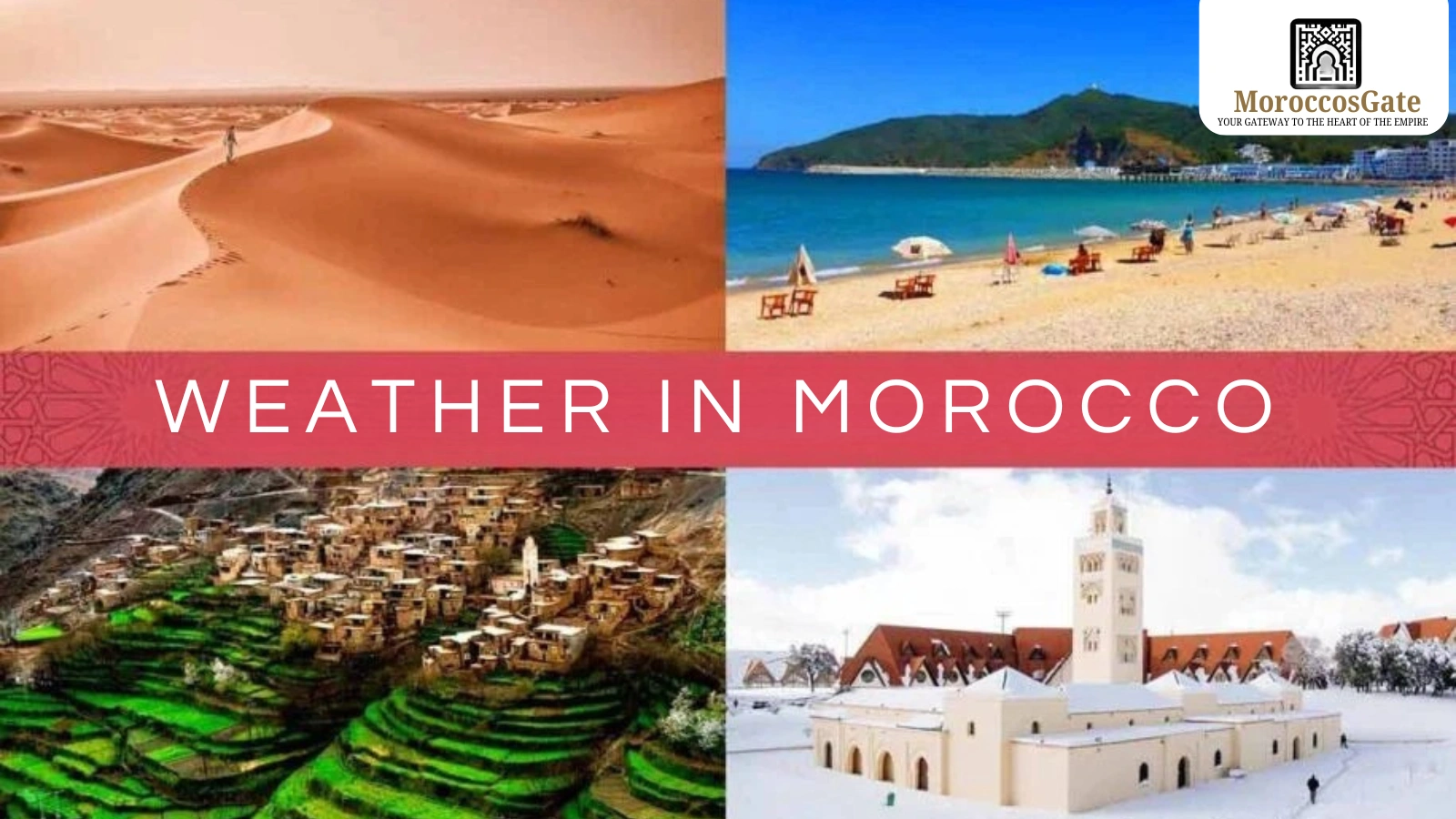
- Coastal Atlantic (Casablanca, Essaouira, Agadir, Taghazout): Mild year-round, tempered by ocean breezes. Summers are warm but never extreme. Winters are rainy but rarely cold.
- Imperial Cities — Inland North (Marrakech, Fes, Meknes, Rabat): Hot summers (Marrakech regularly hits 38–42°C in July and August), mild springs and autumns, and cool but rarely freezing winters. This is where the majority of travellers spend most of their time.
- High Atlas Mountains (Toubkal, Ifrane, Ourika Valley): Alpine conditions, with heavy snowfall in winter (December–February), fresh and pleasant in spring and autumn, and mild summers. Ifrane, at altitude, can record sub-zero temperatures in winter.
- Pre-Sahara and Sahara (Ouarzazate, Merzouga, Zagora, Dades Valley): Extreme heat in summer (regularly exceeding 43°C), very pleasant in spring and autumn, and cold nights year-round. Surprisingly cold in winter, particularly overnight.
With this geography in mind, let us work through the seasons.
Spring (March to May): The Best Overall Time to Visit Morocco
Spring is widely considered the finest season for Morocco travel, and for 2026 it is our top recommendation for the majority of visitors. The reasons are numerous and compelling.
Weather in Spring
Across most of Morocco, March to May brings warm, sunny days with pleasantly cool evenings. In Marrakech, daytime temperatures in April typically range from 22–28°C — warm enough to enjoy the city’s outdoor spaces and rooftop terraces without the punishing heat of summer. In the High Atlas, the snowmelt feeds rivers and waterfalls, turning the mountain valleys vivid green. The Dades Valley and the pre-Saharan south enjoy ideal conditions: warm days in the mid-20s, fresh nights, and almost no rainfall.
March can occasionally bring short periods of rainfall, particularly in northern Morocco, but by April the skies are reliably clear across most of the country. May is arguably the most consistently beautiful month of the Moroccan calendar.
What Makes Spring Special
Spring in Morocco is a sensory experience of extraordinary richness. The almond trees bloom first in February, followed by wildflowers carpeting the Atlas foothill valleys in March and April. The Dades Valley — already famous for its dramatic red-rock gorges — becomes doubly beautiful when the Damask roses bloom along its banks in late April and early May, culminating in the magnificent Morocco Rose Festival 2026 (6–9 May in El Kelaâ M’Gouna).
Spring is also ideal for Sahara Desert travel. Merzouga and the Erg Chebbi dunes are at their finest in April and early May — daytime temperatures in the desert are warm but manageable (25–32°C), the light is extraordinary for photography, and the overnight experience under a sky blazing with stars is genuinely magical. By June, the same desert becomes almost hostile in the midday heat.
Key Events in Spring 2026
- Morocco Rose Festival (6–9 May, El Kelaâ M’Gouna): The crown jewel of the Moroccan festival calendar. See our complete guide to the 2026 Rose Festival.
- Marrakech Marathon (January/March): One of North Africa’s largest running events, drawing international participants through the city’s historic medina.
- Cherry Festival, Sefrou (May/June): A charming traditional moussem in the Middle Atlas celebrating the cherry harvest — considerably quieter and more local than the Rose Festival.
Ramadan 2026 — Important Consideration for Spring Visitors
In 2026, Ramadan is expected to begin on or around 17–18 February, concluding approximately 18–19 March (exact dates depend on the lunar calendar moon sighting). This means Ramadan overlaps with the very beginning of the spring travel season.
Travelling in Morocco during Ramadan is a genuinely fascinating cultural experience — the evenings come alive with iftar (the breaking of the fast) gatherings, the mosques ring with prayer, street food vendors set up at dusk, and there is a palpable sense of community and spiritual energy. However, there are practical considerations: many restaurants and cafés do not serve food during daylight hours, alcohol is much harder to find, and some businesses operate reduced hours. For travellers who are flexible and curious, Ramadan Morocco is extraordinary. For those who prioritise easy access to restaurants and full business hours, targeting late March onwards (after Eid al-Fitr) is advisable.
Practical note: Eid al-Fitr in 2026 falls approximately on 18–19 March. From late March onwards, all businesses return to normal hours and Morocco is fully in spring mode.
Who Is Spring Best For?
- First-time visitors wanting to experience the most of Morocco
- Travellers combining city exploration (Marrakech, Fes, Chefchaouen) with Sahara Desert tours
- Photographers and nature lovers
- Festival-goers (Rose Festival, cultural moussems)
- Hikers heading into the High Atlas
Summer (June to August): Coastal Escapes and Atlantic Adventures
Summer in Morocco is a tale of two very different countries. Inland, the heat is intense and unrelenting — Marrakech, Fes, and the Sahara can become genuinely uncomfortable for extended sightseeing. But along Morocco’s Atlantic and Mediterranean coasts, the picture is entirely different, and summer offers some of the country’s finest experiences for beach lovers, surfers, and those seeking a relaxed seaside holiday.
Weather in Summer
In June, July, and August, Marrakech regularly records daytime temperatures between 36–42°C. The Sahara Desert south of Ouarzazate and around Merzouga frequently exceeds 43–45°C — temperatures that make outdoor activity during the middle of the day genuinely risky. Fes and the northern cities are somewhat cooler but still very warm.
The Atlantic coast, however, is transformed by the cool Canaries Current — an ocean current running south along Morocco’s western seaboard that keeps coastal towns dramatically cooler than the interior. Essaouira, famously known as the “Wind City of Africa,” averages a comfortable 22–24°C in July, refreshed by near-constant Atlantic breezes. Taghazout, Morocco’s surf capital north of Agadir, is similarly pleasant.
Best Summer Destinations
Essaouira
A beautiful blue-and-white fortified city on the Atlantic coast, Essaouira is Morocco’s most romantic seaside destination. It has a magnificent long beach, a UNESCO-listed medina, an excellent selection of seafood restaurants, and a vibrant arts and music scene. In summer it is perfectly cool, and the constant wind — a nuisance to some, a delight to windsurfers and kitesurfers — keeps temperatures wonderfully moderate. The Gnaoua World Music Festival (typically late June) is one of Morocco’s finest cultural events, drawing international artists and tens of thousands of visitors.
Taghazout and Agadir
If surfing is your motivation, Taghazout between September and April offers the finest waves — but even in summer, the consistent Atlantic swell and coastal climate make this area attractive for those who prefer the beach to the medina. Agadir, just 18 km south, is Morocco’s most resort-style destination: a wide sandy beach, a good selection of international hotels, and a laid-back atmosphere that suits families and those after a genuinely restful holiday.
Chefchaouen
The famous “Blue City” in the Rif Mountains of northern Morocco offers a refreshing escape from the summer heat thanks to its altitude (about 600 metres) and mountain breezes. Temperatures in Chefchaouen in July are typically 28–32°C — warm but considerably more manageable than Marrakech. The blue-painted streets are, if anything, more photogenic in the long golden light of summer evenings.
Summer Travel Tips
- Avoid the Sahara in July and August — temperatures are genuinely dangerous for desert camping or camel trekking.
- Book accommodation early — Essaouira and Agadir are popular with Moroccan and European tourists in summer, and good properties fill quickly.
- Marrakech in summer: If you must visit Marrakech in July or August, plan your sightseeing for early morning (before 10 AM) and late afternoon (after 5 PM), and rest during the midday heat.
- Stay hydrated — Morocco’s summer heat is drier than many Europeans expect, and dehydration can creep up quickly.
Who Is Summer Best For?
- Beach and coastal holiday seekers
- Surfers and watersport enthusiasts
- Festival-goers (Gnaoua World Music Festival in Essaouira)
- Travellers based in coastal cities who want to avoid crowds at inland sights
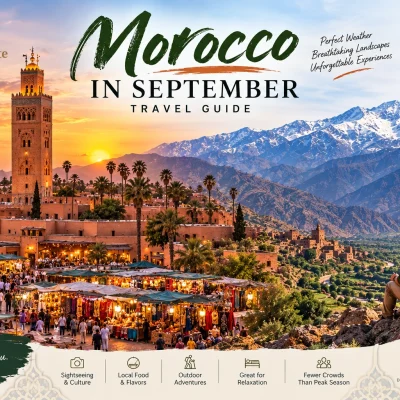
Autumn (September to November): The Finest Season for Desert and Mountains
If spring is Morocco’s most popular season, autumn runs it a very close second — and for certain types of travel (Sahara Desert tours, High Atlas trekking, and extended road trips through the south), many seasoned Morocco travellers actually prefer it.
Weather in Autumn
By September, the brutal summer heat has broken. In Marrakech, temperatures drop to a very pleasant 28–33°C in September, falling further to 22–28°C in October and 18–24°C in November. In the Sahara, the same pattern holds — September and October offer warm, sunny desert days with cool, star-filled nights, and none of the extreme heat that makes summer desert travel hazardous.
In the High Atlas, autumn brings crisp, clear mountain air, brilliant visibility, and spectacular foliage as the valley trees begin to turn. The trekking conditions on the Toubkal circuit (the route to summit Jebel Toubkal, North Africa’s highest peak at 4,167 metres) are arguably at their finest in September and October.
Why Autumn is Exceptional for Sahara Travel
The Sahara Desert in autumn is a different world from the summer inferno. In October, Merzouga and the Erg Chebbi dunes see daytime temperatures of 25–32°C — perfect for camel trekking at sunset, sleeping under the stars in a luxury desert camp, and rising before dawn to watch the dunes glow amber as the sun climbs. The summer haze has cleared, and the photographic conditions — that extraordinary quality of desert light in autumn — are unparalleled.
Autumn also marks the beginning of the date harvest in the oasis villages south of Ouarzazate and Zagora, and you may encounter local markets and harvest celebrations that are rarely witnessed by tourists.
Key Events in Autumn 2026
- Imilchil Marriage Festival (September, High Atlas): One of Morocco’s most famous and atmospheric moussems, held annually in the remote Imilchil Plateau of the High Atlas. Berber tribes gather for a three-day celebration that includes traditional Amazigh music, markets, and — historically — a communal occasion for young people to find partners.
- Marrakech International Film Festival (typically late November/December): One of Africa’s most prestigious film festivals, drawing international filmmakers and celebrities to the Palais des Congrès.
- Date Festival, Erfoud (October): A vibrant celebration of the Medjool date harvest in the Tafilalet oasis region, with music, camel parades, and an extraordinary market.
Who Is Autumn Best For?
- Sahara Desert travellers and those planning camel-trekking or desert camping
- Trekkers and hikers in the High Atlas (Toubkal, Mgoun, Azzaden Valley)
- Road-trippers doing the classic southern Morocco circuit
- Photographers seeking exceptional desert and mountain light
- Those who find spring too busy and prefer quieter roads and hotels
Winter (December to February): Calm, Cultural, and Surprisingly Rewarding
Winter is Morocco’s least visited season, and as a result it is often overlooked. This is, frankly, a mistake — for the right type of traveller, a winter trip to Morocco offers rewards that the peak seasons simply cannot match: empty medinas, unhurried souks, lower prices, and the singular experience of watching snow fall on the Sahara.
Weather in Winter
Winter in Morocco is varied. Along the Atlantic coast, temperatures remain mild — Agadir and Essaouira typically see 18–22°C in January, with some rain but many sunny days. Inland cities are cooler: Marrakech averages 12–18°C in December and January, with occasional cold nights. Fes and Meknes can be genuinely chilly, with temperatures dropping to 5–8°C overnight and occasional frost.
The High Atlas in winter is fully alpine: heavy snowfall is common from December through February, the Tizi n’Tichka and Tizi n’Test mountain passes can be closed for days at a time, and temperatures at altitude plunge well below zero. This is, of course, precisely the point — for skiers and snowboarders, the High Atlas in winter is a revelation.
The Sahara Desert in winter surprises many visitors with its cold. Overnight temperatures in Merzouga and the Erg Chebbi can fall to 2–5°C in January — not extreme, but sufficiently cold to require proper warm clothing for outdoor sleeping. Daytime temperatures are pleasant (16–22°C), making winter desert tours perfectly feasible with good preparation.
Skiing in Morocco: Ifrane and Oukaimeden
Yes — Morocco has ski resorts, and they are genuinely impressive. Oukaimeden, located approximately 70 km south of Marrakech in the High Atlas at 2,600 metres altitude, is the most accessible ski resort and offers a memorable combination of African mountain scenery and real winter skiing. The ski season runs from December to March, snow conditions permitting. Ifrane, a charming Swiss-style town in the Middle Atlas north of Fes, also offers skiing at nearby Michlifen resort and is perhaps Morocco’s most charming winter destination — a town of extraordinary neatness and character that feels unlike anywhere else in Morocco.
Why Winter is Perfect for City Exploration
Marrakech, Fes, and Chefchaouen in winter are entirely different from their summer selves. The summer tourist crush has evaporated, and you can walk through the souks, visit the tanneries, explore the Bahia Palace, or sit in a café in the Djemaa el-Fna without fighting through crowds. Hotel prices drop significantly, often by 30–50% compared to spring peak. The medinas feel genuinely lived-in rather than stage-managed for tourism, and local interactions have a warmth and unhurriedness that crowds make impossible in high season.
Fes in particular — Morocco’s ancient imperial capital, home to the world’s oldest operating university and the largest car-free urban area in the world — is magnificent in winter. The rain brings out the colours of the zellige tilework, the hammams are a welcome refuge from the cold, and the atmospheric medina is yours to explore without rush.
Ramadan 2026 and Winter
As noted above, Ramadan 2026 begins around 17–18 February. The final two weeks of February will therefore fall within Ramadan. Travellers planning late February visits should account for restricted restaurant hours and the heightened spiritual atmosphere of the holy month.
Who Is Winter Best For?
- Skiers and snowboarders (Oukaimeden, Ifrane)
- City and culture travellers who prefer uncrowded medinas
- Budget-conscious travellers (lowest prices of the year)
- Sahara Desert visitors who do not mind cold nights (and relish the drama of a frosty Sahara morning)
- Those interested in experiencing Ramadan’s unique cultural atmosphere
Month-by-Month Quick Reference: Best Time to Visit Morocco 2026
| Month | Weather | Best For | Notes |
|---|---|---|---|
| January | Cool–cold inland; mild coast | City culture, coast, skiing | Quiet, low prices |
| February | Cool; snow in Atlas | Skiing, winter desert, culture | Ramadan begins ~17 Feb 2026 |
| March | Warming; some rain possible | Cities, Atlas valleys | Eid ~18 Mar; post-Ramadan buzz |
| April | Warm, sunny, ideal | Everything — peak season begins | Book well in advance |
| May | Warm, very pleasant | Sahara, Rose Festival, hiking | Rose Festival 6–9 May 2026 |
| June | Hot inland; mild coast | Atlantic coast, Essaouira | Gnaoua Festival, Essaouira |
| July | Very hot inland (38–42°C+) | Coast only; avoid Sahara | Agadir, Taghazout, surfing |
| August | Peak heat inland (up to 43°C) | Atlantic coast | Busy, higher coastal prices |
| September | Cooling; still warm | Sahara, south Morocco | Imilchil Festival (High Atlas) |
| October | Ideal — warm, dry, clear | Sahara, trekking, road trips | Date Festival, Erfoud |
| November | Pleasant; some north rain | Cities, south, Sahara | Fewer tourists, great value |
| December | Cool–cold; Alpine in Atlas | Skiing, culture, coast | Quiet; Marrakech Film Festival |
Practical Planning: Key Tips for Visiting Morocco in 2026
Safety in Morocco 2026
As of April 2026, all major tourist destinations in Morocco — including Marrakech, Fes, Chefchaouen, the Sahara Desert, the Atlantic coast, and southern Morocco — are safe and fully accessible to international visitors. Morocco ranks consistently among North Africa’s safest countries for tourism. The country’s well-developed tourism infrastructure, professional guide community, and hospitable culture make it a reassuringly straightforward destination to navigate.
As with any international travel, standard precautions apply: use registered, licensed guides, keep copies of your travel documents, purchase comprehensive travel insurance, and register your trip with your country’s foreign travel advisory service. The Irish Department of Foreign Affairs maintains current Morocco travel advice at dfa.ie.
Visas for Morocco in 2026
Citizens of the EU, UK, Ireland, USA, Canada, Australia, and most Western nations do not require a visa to enter Morocco for stays of up to 90 days. Your passport should be valid for at least six months beyond your planned departure date. Always check the most current entry requirements with your country’s foreign ministry before travelling, as regulations can change.
Getting There from Ireland and the UK
Morocco is exceptionally well connected to Ireland and the UK in 2026. Direct flights operate from Dublin and London to Marrakech (RAK), Casablanca (CMN), Agadir (AGA), Fes (FEZ), and Tangier (TNG). Ryanair, EasyJet, Aer Lingus, and Royal Air Maroc all offer competitive routes. Flight times from Dublin or London are typically 3–4 hours — making Morocco one of the most accessible “exotic” destinations available from these departure points.
Currency and Budget
Morocco’s currency is the Moroccan Dirham (MAD). In 2026, the approximate exchange rate from Euro is 1 EUR ≈ 10.7–11 MAD, and from GBP is 1 GBP ≈ 12.5–13 MAD. Morocco remains an excellent value destination — mid-range hotel accommodation typically costs €40–80 per night for a good riad or guesthouse, a three-course dinner at a quality restaurant costs €15–30 per person, and guided day tours run from €30–80 per person.
Ramadan 2026: What Travellers Need to Know
Ramadan 2026 is expected to run from approximately 17 February to 18 March. Here is what this means practically for travellers:
- Restaurants: Many restaurants, particularly those run by and for Moroccans, will not serve food during daylight hours. Tourist-facing restaurants in major cities typically remain open. If in doubt, ask your accommodation.
- Alcohol: Availability of alcohol is reduced during Ramadan. Bars and licensed restaurants that normally serve alcohol may observe restricted hours or suspend service entirely.
- Business hours: Many businesses open later and close earlier. Government offices, banks, and some shops adjust their schedules.
- Evenings: Post-iftar evenings (after sunset) are vibrant, festive, and full of life — the cities feel almost carnival-like between 8 PM and midnight. This is genuinely one of the most rewarding times to be in Morocco, if you approach it with curiosity and flexibility.
- Respect: Eating, drinking, or smoking in public during daylight hours during Ramadan is disrespectful and, in some areas, technically illegal. Be discreet.
Desert Travel: Best Times for the Sahara
The single most important piece of advice for Sahara Desert travel is to avoid July and August. Merzouga and the Erg Chebbi in midsummer are not merely uncomfortable — temperatures regularly exceeding 43°C make camel trekking genuinely hazardous, and the experience of a desert camp in extreme heat is far removed from the romantic ideal most travellers have in mind.
The optimal windows for Sahara travel are:
- March to May: Warm days (25–35°C), cool to cold nights, spectacular spring light, and the bonus of lush green valleys en route.
- September to November: Arguably the finest conditions of all — warm, dry, clear skies, and exceptionally cold, star-packed nights that make desert camping unforgettable.
- December to February: Cold (potentially very cold overnight), but dramatic and virtually tourist-free. For experienced or adventurous travellers, a winter desert trip has a stark beauty all its own.
Booking and Planning Advice
- Book accommodation early for spring: April and May are peak season. Quality riads and guesthouses in Marrakech and near the Rose Festival fill months in advance.
- Private desert tours: For Sahara itineraries, Morocco’s Gate recommends booking through a licensed operator well in advance — this ensures proper transport, qualified guides, and good desert camps.
- Tailor your itinerary to your interests: Morocco is large enough that a week-long visit can feel rushed if poorly planned. A 10–14 day trip allows a proper combination of cities, mountains, and desert.
- Internal transport: Morocco’s ONCF rail network connects major northern cities efficiently. For the south (Ouarzazate, Merzouga, Dades Valley), private car or guided transfer is necessary.
The Morocco Experience: What Awaits You in 2026
Morocco in 2026 is a destination in exciting transformation. The country is investing heavily in tourism infrastructure ahead of the 2030 FIFA World Cup (which Morocco co-hosts with Spain and Portugal), with improved roads, expanded airport capacity, and significant investment in accommodation and cultural sites. For travellers visiting now, this means a destination that retains its extraordinary authenticity while offering increasingly polished infrastructure.
As our New Morocco 2026 guide explores in depth, the country’s medinas remain some of the most intact medieval urban environments on earth, its Sahara Desert is as vast and humbling as ever, and its culinary traditions — the tagines, the preserved lemons, the argan oil, the harira, the bastilla — remain deeply rooted in centuries of Moroccan culture. The hidden gems of Morocco are still hidden, the luxury riads are more beautiful than ever, and the warmth of Moroccan hospitality — as-salamu alaykum, welcome, come in, have tea — is unchanged.
Whatever season you choose, Morocco will meet you with extraordinary generosity of landscape, culture, and spirit. The question is simply which version of that generosity you want to experience first.
Frequently Asked Questions
Q1. What is the best month to visit Morocco in 2026?
A1. April and May are the finest months for most visitors — consistently warm, reliably sunny, and coinciding with major festivals including the Rose Festival (6–9 May). October is an equally excellent choice for Sahara and mountain travel.
Q2. Is Morocco safe to visit in 2026?
A2. Yes. As of April 2026, Morocco is safe and fully accessible for tourists. All major destinations — Marrakech, Fes, Chefchaouen, the Sahara, and the Atlantic coast — are operating normally with good infrastructure and well-developed tourism services.
Q3. When is Ramadan in Morocco 2026?
A3. Ramadan 2026 is expected to run from approximately 17–18 February to 18–19 March 2026. Eid al-Fitr (the celebration marking the end of Ramadan) falls around 18–19 March, after which all businesses return to normal operations.
Q4. What is the weather like in Morocco in October?
A4. October is one of Morocco’s finest months: warm and sunny (22–30°C in most cities), low rainfall, and ideal conditions for Sahara Desert tours, High Atlas trekking, and city exploration. It is our top recommendation for autumn travel.
Q5. Is Morocco too hot to visit in July and August?
A5. Inland Morocco (Marrakech, Fes, the Sahara) is very hot in July and August — regularly exceeding 38–43°C. The Atlantic coast (Essaouira, Agadir, Taghazout) remains pleasantly cool (20–24°C) year-round and is the recommended summer destination.
Q6. Can I visit the Sahara Desert in winter?
A6. Yes, though come prepared for cold nights — temperatures in Merzouga can fall to 2–5°C overnight in January. Daytime conditions are pleasant (16–22°C), and a winter desert trip offers extraordinary solitude and dramatic scenery. Proper warm clothing for camping is essential.
Q7. When is the Morocco Rose Festival 2026?
A7. The Morocco Rose Festival 2026 takes place 6–9 May in El Kelaâ M’Gouna, Tinghir Province. It is one of Morocco’s finest cultural events. See our complete Rose Festival guide for full details.
Q8. Do I need a visa to visit Morocco from Ireland or the UK?
A8. No. Irish and UK passport holders do not require a visa for stays of up to 90 days. Your passport should be valid for at least six months beyond your departure date. Always verify current entry requirements with your government’s foreign travel advisory before travelling.
Start Planning Your Morocco Trip in 2026
Whether you are a first-time visitor drawn by the colours of Marrakech’s souks, a returning traveller ready to explore the Sahara, or someone planning a special journey to the Rose Festival in El Kelaâ M’Gouna, 2026 is a wonderful year to experience Morocco.
Morocco’s Gate is here to help you plan every detail — from the right season for your interests to curated itinerary recommendations, trusted accommodation partners, and expert guided tours.
- → Talk to our Morocco travel experts to start planning your 2026 trip
- → Browse our curated Morocco travel deals
- → Read our full guide to the Morocco Rose Festival 2026
- → Explore all Morocco travel guides
Affiliate Disclosure: This article contains affiliate links. When you book tours, accommodation, or travel services through links on Morocco’s Gate, we may receive a small commission at no extra cost to you. All recommendations are based on genuine editorial assessment. This commission helps us continue providing free, independent Morocco travel content.