
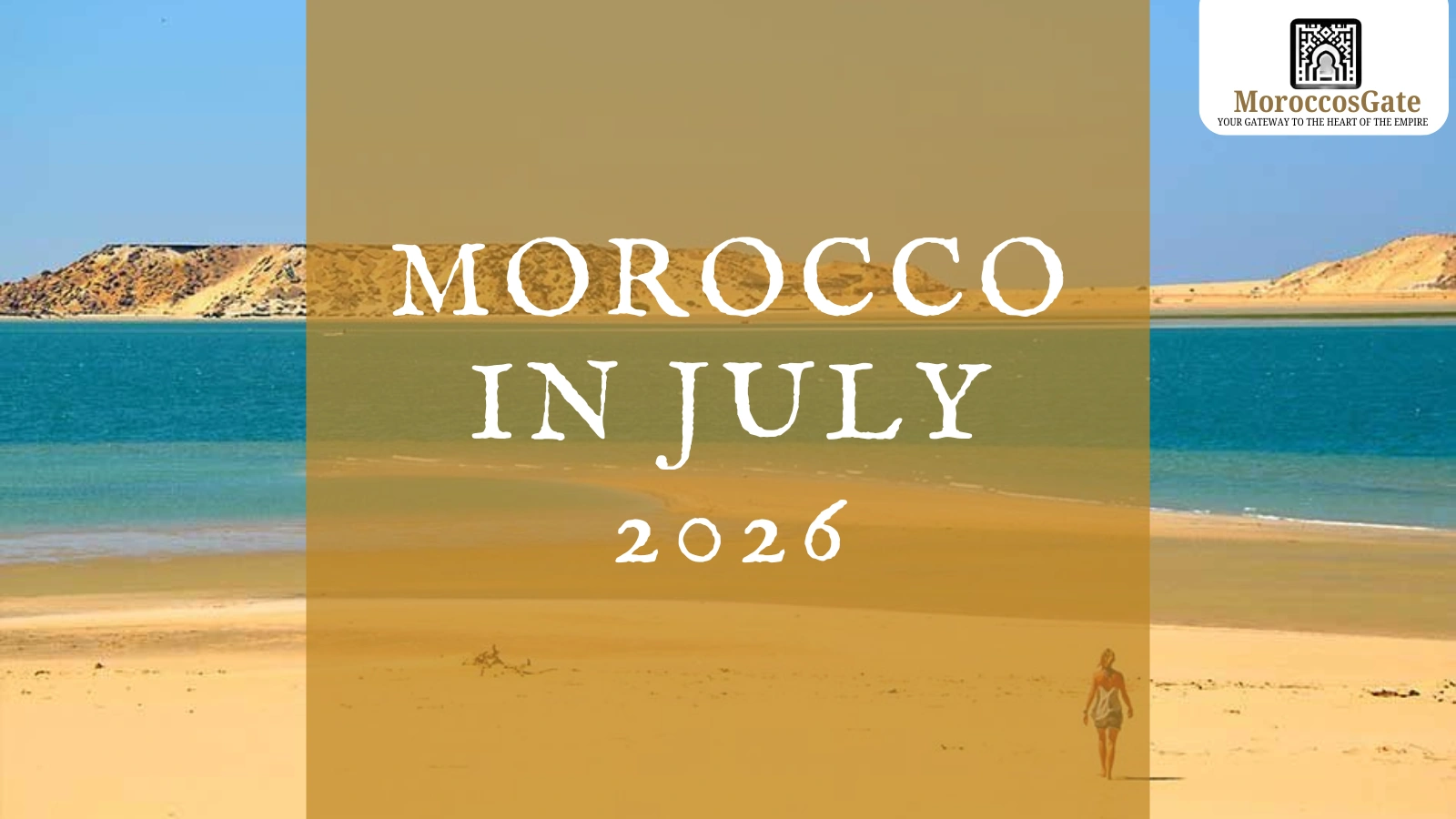
Morocco in July 2026: The Complete Summer Travel Guide
Quick Answer: Morocco in July is an excellent destination — if you know where to go. Atlantic coast cities like Essaouira and Agadir stay at a comfortable 22–28°C thanks to ocean breezes, the Atlas Mountains offer cool escapes at 18–25°C, and the north (Tangier, Chefchaouen) sits around 24–30°C. Inland cities like Marrakech and Fes reach 38–42°C — still very doable with the right strategy. The Sahara should be avoided entirely in July. This guide tells you exactly where to go, what to skip, and how to plan a brilliant Morocco summer trip.
Affiliate Disclosure: This post contains affiliate links. If you book a hotel, tour, or travel service through links on this page, Morocco’s Gate may earn a small commission at no extra cost to you. We only recommend places and services we genuinely trust.
Is Morocco Good to Visit in July 2026?
Morocco in July is one of the most misunderstood travel topics on the internet. Half the articles tell you to avoid it entirely. The other half pretend the heat doesn’t exist. The truth sits firmly in the middle.
July is Morocco’s peak tourist season, with over 17 million international visitors expected across the full year of 2026 — a 7% increase on 2025 figures (Source: Moroccan National Tourism Office, ONMT, 2026). A significant portion of those visitors travel specifically in July and August, drawn by long school holidays, direct European flights, and the lure of Morocco’s world-class coastline.
The key to a successful Morocco trip in July comes down to one thing: choosing the right destinations. Morocco is a geographically diverse country spanning Atlantic coast, Mediterranean shore, Saharan desert, mountain ranges, and northern valleys — and each of these regions behaves entirely differently in summer.
Bottom line: If your itinerary is built around the coast and mountains, July can be one of the best times to visit Morocco. If your itinerary tries to pack in Marrakech, Fes, and the Sahara in 40°C heat without adjustment, it will be exhausting.
Morocco Weather in July 2026 — Region by Region
Understanding Morocco’s regional temperature differences is the most important preparation you can do before a July visit. Morocco is not uniformly hot in summer.
| Region | Cities | July Temp (Day) | July Temp (Night) | Verdict |
|---|---|---|---|---|
| Atlantic Coast | Essaouira, Agadir, Taghazout | 22–28°C | 16–20°C | Excellent |
| Atlas Mountains | Ifrane, Imlil, Ourika Valley | 18–25°C | 10–15°C | Excellent |
| Northern Morocco | Tangier, Chefchaouen, Tétouan | 24–30°C | 18–22°C | Very good |
| Mediterranean Coast | Al Hoceima, Saidia, Nador | 28–33°C | 20–24°C | Good |
| Imperial Cities | Marrakech, Fes, Meknes | 35–42°C | 22–27°C | Doable with planning |
| Southern Interior | Ouarzazate, Zagora | 38–44°C | 24–28°C | Challenging |
| Sahara Desert | Merzouga, Erg Chigaga | 45–50°C+ | 28–32°C | Avoid |
Source: Regional temperature data compiled from Moroccan Meteorological Department (DMN) and local travel experts, 2026.
Atlantic Coast Weather in July
The Atlantic coast is Morocco’s summer hero. Cities like Essaouira experience what locals call the alizée — consistent Atlantic trade winds that keep temperatures pleasantly cool even at the height of summer. Essaouira’s medina is walkable all day. Agadir’s 10-kilometre beach is warm without being dangerous. Taghazout, the surf town north of Agadir, draws European surfers precisely because July’s conditions — warm water, consistent waves, cool evenings — are ideal.
Atlas Mountain Weather in July
The High Atlas Mountains offer a completely different Morocco in summer. The hill town of Ifrane sits at 1,650 metres altitude and regularly dips to 10–15°C at night in July. The Ourika Valley, just 35 kilometres from Marrakech, provides waterfalls, cool river air, and Berber villages within easy reach. Jebel Toubkal — North Africa’s highest peak at 4,167 metres — is one of the best months for trekking: clear skies, dry trails, and 11 hours of daylight.
Marrakech and Fes in July
Both cities are doable in July, but require a fundamentally different daily rhythm. Daytime highs of 38–42°C mean that the period from roughly 1pm to 6pm is genuinely uncomfortable for outdoor exploration. The approach that works: explore early (8am–12pm), retreat to your riad’s pool or a café for the afternoon, and re-emerge in the evening when temperatures drop and the real city comes alive. Djemaa el-Fna in Marrakech after 9pm in July is one of the most atmospheric experiences Morocco offers — 100 food stalls, storytellers, acrobats, and the square humming with energy. It’s worth building your entire Marrakech day around that evening.
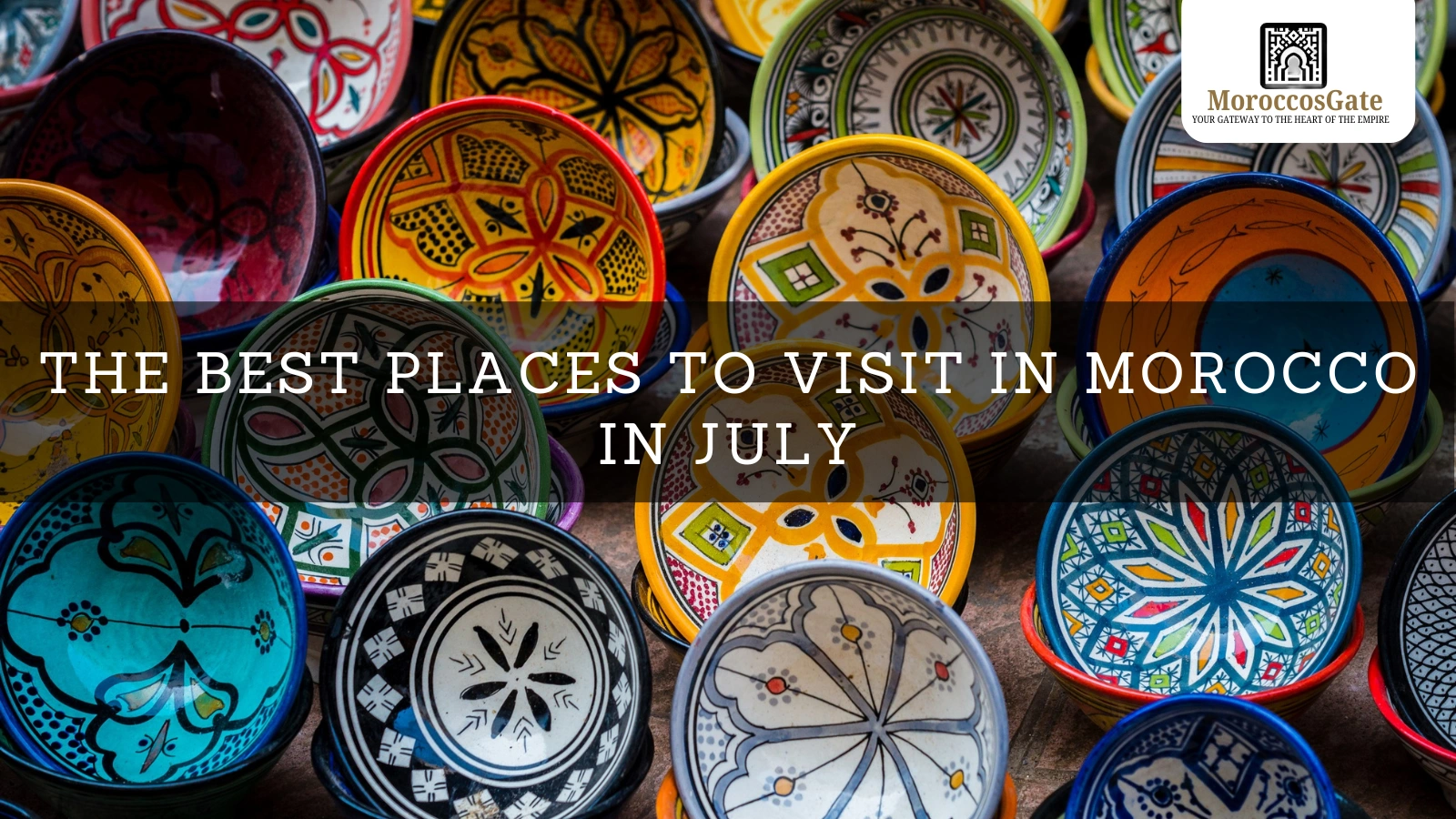
The Best Places to Visit in Morocco in July
1. Essaouira — Morocco’s Best Summer Base
Essaouira is the destination most Moroccan travel experts recommend above all others for July. The Atlantic trade winds keep the city genuinely cool while the rest of Morocco swelters. Its UNESCO-listed medina is relaxed, uncrowded, and walkable even at midday. The port serves fresh grilled fish from 30 MAD. Art galleries, surf schools, and kite-boarding operators fill the beach road. It is also one of the most affordable cities in Morocco.
Getting there: 2.5 hours by bus from Marrakech (CTM or Supratours, approximately 90 MAD). Direct flights from several European cities to Essaouira-Mogador Airport now available for summer 2026.
Where to stay: Riads in the medina cost €45–90 per night in July. Book direct with the riad for better rates and often free airport transfers.
2. Agadir — Sun, Sand, and Modern Comfort
Agadir offers a completely different Morocco experience from the medina cities. Its 10-kilometre crescent of Atlantic beach, modern promenade, international restaurants, and resort hotels with pools make it the top choice for families and beach holiday seekers. Sea temperatures in July reach 20–22°C — warm enough for comfortable swimming. The city rebuilt entirely after the 1960 earthquake, so it has wide streets, modern infrastructure, and reliable air conditioning throughout.
Practical note: Agadir’s medina is a reconstruction — visit the Agadir Oufella ruins above the city for history. For authentic Moroccan character, combine Agadir with a day trip to Tiznit or a half-day in the Souss Valley.
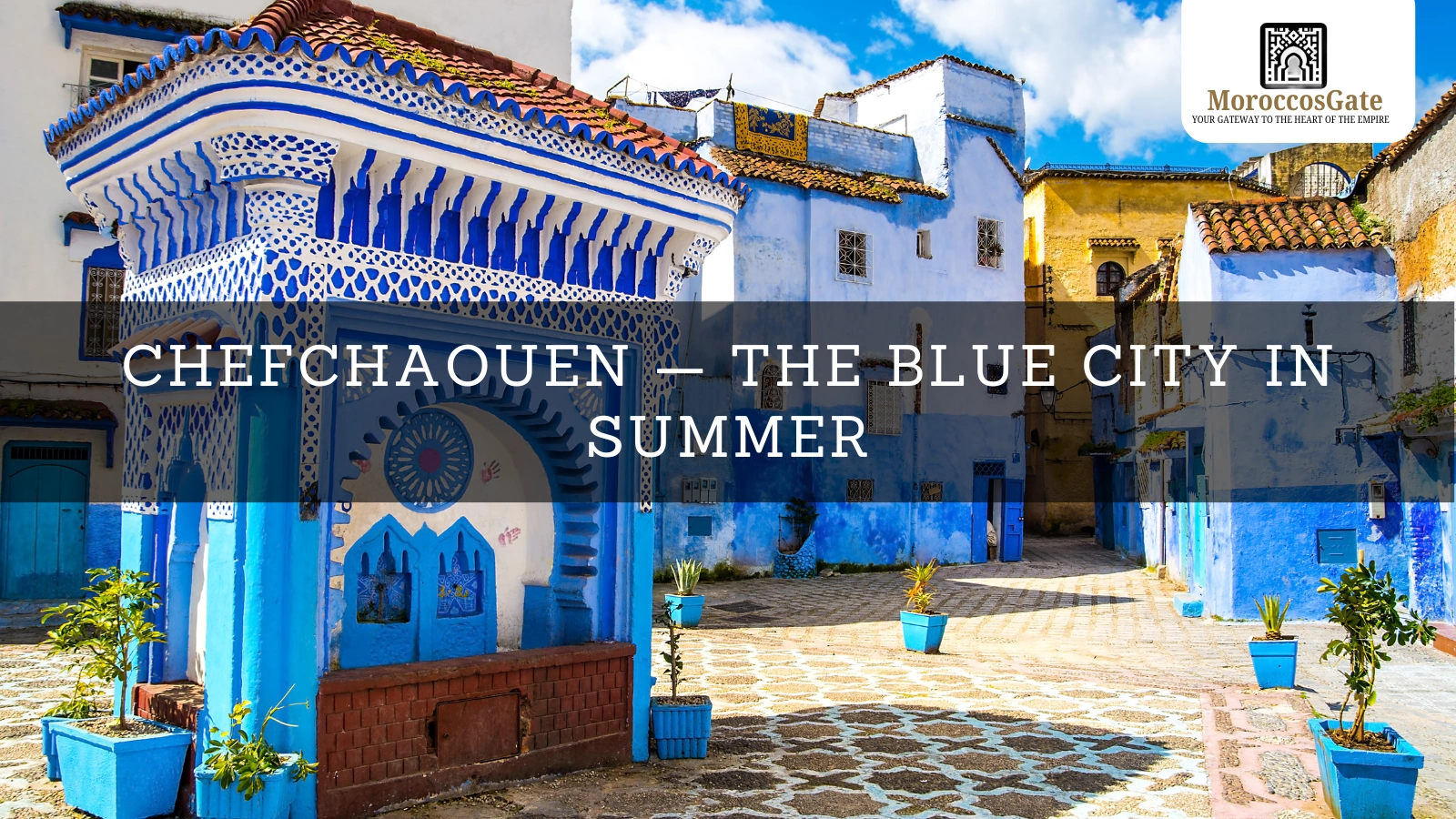
3. Chefchaouen — The Blue City in Summer
At 600 metres altitude in the Rif Mountains, Chefchaouen stays beautifully cool in July — typically 24–30°C during the day with fresh mountain evenings. It is one of the most photographed places in Morocco, and July’s long days (sunrise 6:15am, sunset 8:30pm) are ideal for golden-hour photography in the blue-painted streets. The famous blue and white medina is compact enough to explore thoroughly in 1–2 days, and the surrounding Rif Mountain trails offer excellent half-day hiking.
Insider tip: Stay at least two nights. Most visitors rush through in an afternoon on a day trip from Fes — staying overnight means you have the medina largely to yourself in the early morning before 9am.
4. Tangier — Morocco’s Coolest Northern City
Tangier sits at the meeting point of the Atlantic and the Mediterranean, which gives it a naturally moderated July climate — daily average around 24°C (75°F). The city’s restored medina, the iconic Café de Paris, the American Legation Museum (the only US National Historic Landmark outside America), and the Caves of Hercules make for a full 1–2 day programme. Tangier also serves as the natural starting point for a northern Morocco road trip along the Mediterranean coast to Tétouan, Martil, and Saidia.
5. Al Hoceima — Morocco’s Hidden Mediterranean Gem
If you haven’t heard of Al Hoceima, you’re not alone — most foreign visitors walk straight past it. Located on Morocco’s northern Mediterranean coast, Al Hoceima offers turquoise water, sandy coves, and sea temperatures of 22–24°C in July that are warmer and calmer than the Atlantic. Quemado Beach and the nearby Cala Bonita have the visual quality of the Greek islands at a fraction of the price. A full day on the beach with food and drinks costs under 200 MAD per person.
6. The High Atlas — For Hikers and Mountain Lovers
July is peak trekking season in the Atlas Mountains. The route to Jebel Toubkal summit (4,167m) is dry and clear. The Ourika Valley waterfalls are running strong. Imlil village, the trekking base, sits at 1,740m and stays cool throughout July. For non-hikers, the drive from Marrakech through the Tizi n’Tichka pass (2,260m) to Ouarzazate is one of the most spectacular road journeys in Africa, and the pass itself remains cool even in July.
Which Places Should You Avoid in July?
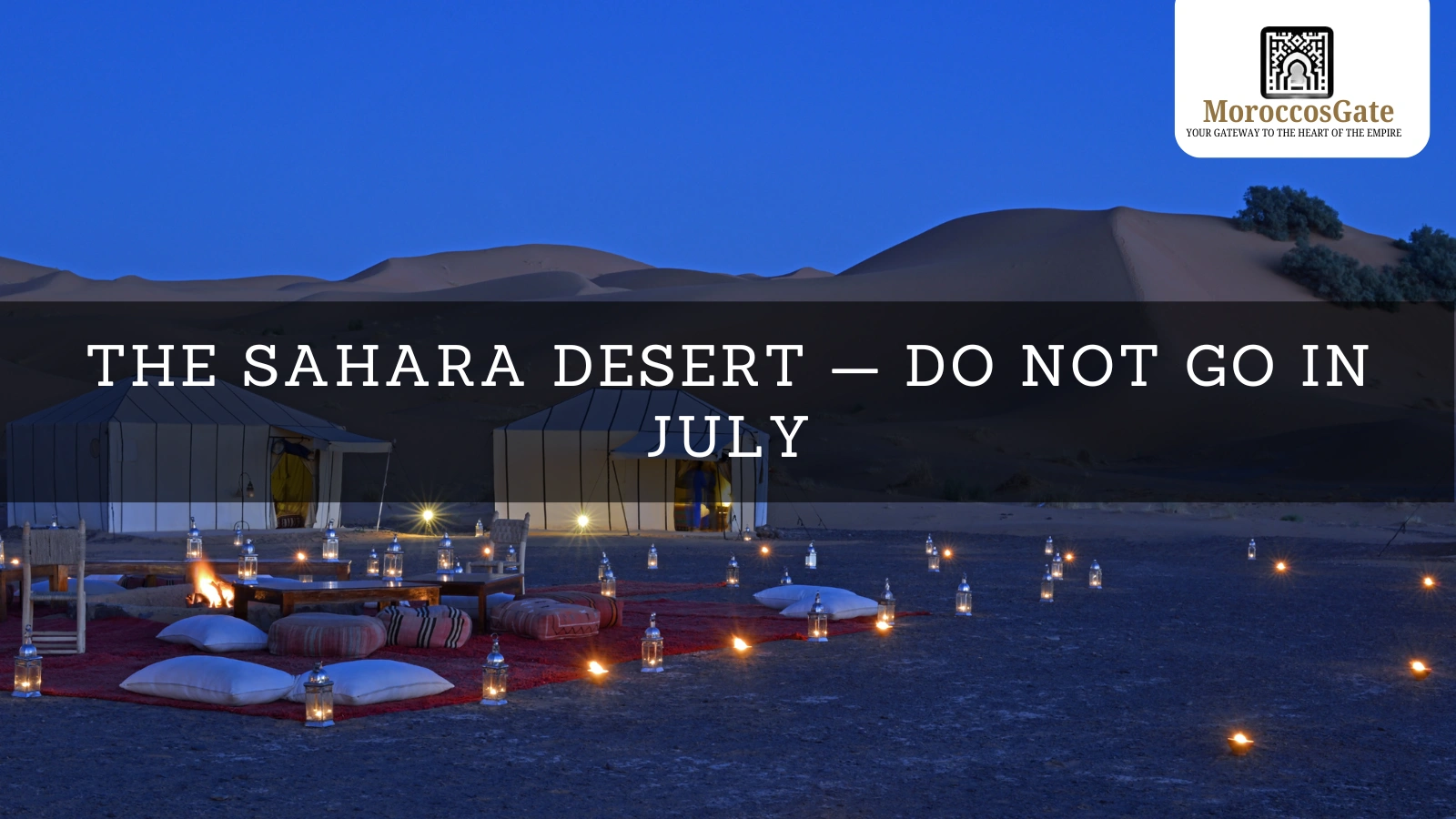
The Sahara Desert — Do Not Go in July
This point is non-negotiable. The Sahara in July reaches 45–50°C during the day, with sand surface temperatures exceeding 70°C. Many desert camps in Merzouga and Erg Chigaga close entirely between June and August. Those that remain open offer a severely limited experience. Camel treks — even short ones — become genuinely dangerous in this heat. Dehydration risk is severe and rapid. If the Sahara is your main Morocco dream, plan your trip for October through April when conditions are spectacular.
Alternative: If you’re committed to a July trip and want desert scenery, visit the Draa Valley or Ait Benhaddou (used as a film location for Game of Thrones). Both offer dramatic Saharan landscapes accessible by car in under 3 hours from Marrakech, without requiring you to sleep in desert heat.
Midday in Marrakech and Fes
Not places to avoid entirely — but midday (1pm to 6pm) in Marrakech and Fes in July requires a complete change of behaviour. Plan all outdoor exploration for 8am–noon and again from 6pm onwards. Book a riad with a pool or roof terrace. Use the afternoon for museums
Morocco in July: Festivals and Events 2026
July is one of Morocco’s richest months for cultural events. Here are the key festivals confirmed or expected for July 2026:
Timitar Festival — Agadir (July)
One of Morocco’s most important Amazigh music festivals, held in Agadir each July. The festival mixes Amazigh (Berber) performers with Moroccan and international artists across multiple outdoor stages. Agadir’s coastal location keeps evening temperatures comfortable. Many performances are free or low cost.
Marrakech Popular Arts Festival — Marrakech (July)
Held in Marrakech, this festival celebrates Moroccan folklore: dance, storytelling, music, and traditional performance arts from different regions of the country. Open-air performances take place in historic settings, with the best events happening in the evenings when Marrakech cools down.
International Cultural Festival — Asilah (July)
A two-week event that brings artists from around the world to temporarily transform public spaces in the coastal city of Asilah into large-scale art installations. Asilah sits on the Atlantic coast north of Tangier, with a pleasant July climate. The combination of beach town, whitewashed medina, and international art makes this one of Morocco’s most unique summer experiences.
Feast of the Throne — Nationwide (July 30)
Morocco’s major national holiday, marking the anniversary of King Mohammed VI’s ascendance to the throne. Expect fireworks, street parades, and a genuinely festive national atmosphere across the country. Cities are especially lively on the evening of July 30.
Note: Festival dates can shift year to year. Always verify 2026 dates directly with official sources before planning your trip around a specific event.
How Much Does Morocco Cost in July 2026?
Morocco remains one of the best-value destinations in the world for international travellers in 2026. The Moroccan Dirham (MAD) is weak against the Euro and Dollar, meaning your money stretches significantly. As a reference point, 1 EUR ≈ 10.5–11 MAD and 1 USD ≈ 9.5–10 MAD in 2026.
Important note for 2026: Hotel prices in Marrakech and Casablanca have increased 15–20% since 2024 as Morocco prepares for the 2030 FIFA World Cup. Smaller cities (Chefchaouen, Essaouira, Fes) remain largely unaffected. Book 2026 accommodation early — prices will continue rising through 2030.
Daily Budget Breakdown — July 2026
| Budget Level | Accommodation | Food | Transport | Daily Total |
|---|---|---|---|---|
| Budget | €15–25 (hostel/cheap guesthouse) | €8–12 (street food + local café) | €3–5 (buses/shared taxi) | €26–42/day |
| Mid-Range | €45–90 (riad, private room) | €20–35 (mix local + tourist restaurants) | €8–15 (private taxi + day trips) | €73–140/day |
| Luxury | €120–300 (boutique riad suite) | €50–100 (fine dining) | €30–60 (private driver) | €200–460/day |
Prices are approximate and exclude international flights. July is peak season — book accommodation at least 6–8 weeks in advance, especially for coastal cities.
Real Prices on the Ground (July 2026)
- Street food meal (harira soup, sandwich, fresh juice): 25–50 MAD (€2.30–4.50)
- Sit-down local restaurant (tagine, bread, mint tea): 60–100 MAD (€5.50–9)
- Tourist restaurant dinner (3 courses, wine): 200–400 MAD (€18–37)
- Budget riad room (private, breakfast included): 300–500 MAD/night (€27–45)
- Mid-range riad room: 500–1,000 MAD/night (€45–90)
- Marrakech–Essaouira bus (CTM): 80–100 MAD (€7–9)
- Marrakech–Casablanca train: 100–200 MAD (€9–18)
- Petit taxi within a city: 10–30 MAD (€1–3) — always agree price before getting in
- Entry to Bahia Palace, Marrakech: 70 MAD (€6.50)
- Guided day tour Atlas Mountains from Marrakech: 350–600 MAD per person (€32–55)
Money-Saving Tips Specific to July
Summer is peak season on the Atlantic coast — prices for coastal accommodation are at their highest. However, inland cities like Marrakech and Fes often drop prices 30–40% in July and August because many tourists avoid the heat. If you’re comfortable using an early-morning/late-evening schedule in these cities, you can access their best riads at off-season rates.
What to Pack for Morocco in July
Packing correctly for a Morocco July trip is not complicated, but getting it wrong makes the trip genuinely uncomfortable.
Clothing Essentials
- Lightweight, loose-fitting clothes: Linen and cotton only. Polyester traps heat. Pack light colours that reflect rather than absorb sun.
- Modest coverage: In cities and medinas, covering shoulders and knees shows cultural respect and helps you avoid unwanted attention. Lightweight linen trousers and a long-sleeved shirt weigh almost nothing in your bag.
- Swimwear: Essential for beaches, riad pools, and hotel pools.
- Lightweight scarf: Multi-purpose: sun protection, modesty when entering mosques or religious sites, improvised shade.
- Comfortable walking shoes: Sandals with support for medina cobblestones. Closed shoes for Atlas Mountain hiking.
- Light layer for evenings: The Atlantic coast and mountains cool significantly after sunset. A light cardigan or thin fleece for evenings in Essaouira and Chefchaouen.
Sun and Heat Protection
- SPF 50+ sunscreen: The Moroccan sun at latitude 32°N is intense. Reapply every 90 minutes outdoors.
- Wide-brim hat: Non-negotiable for July.
- Quality sunglasses: UV400 protection.
- Reusable insulated water bottle: Hydration is critical. Aim for 3–4 litres per day in heat. Tap water in
- Morocco is not safe to drink — refill from large water dispensers available in most riads and guesthouses.
Practical Essentials
- Moroccan SIM card: Buy on arrival from Maroc Telecom or Inwi — approximately 30–50 MAD ($3–5) with data included. Essential for maps, translation, and WhatsApp communication with riad hosts.
- Small day pack: For carrying water, sunscreen, and camera while exploring.
- Power adapter: Morocco uses Type C and E plugs (same as continental Europe).
- Travel insurance documents: Carry digital and paper copies.
- Emergency cash in MAD: ATMs are widely available in cities but carry 200–300 MAD cash for small medina purchases and street food.
Top Tips for Visiting Morocco in July
These are the practical strategies that experienced Morocco travellers use to make July trips excellent rather than exhausting.
1. Restructure your day around the heat. Early start (8am) → midday rest (1pm–6pm in your riad or café) → evening activity (6pm–midnight). This is how Moroccan locals live in summer. Fighting it means a miserable afternoon. Working with it means a surprisingly enjoyable trip.
2. Book riad accommodation with a pool or roof terrace. The afternoon downtime is not wasted if you’re cooling off in a riad courtyard pool with a mint tea. Many riads at the mid-range price point (€50–80 per night) include a small plunge pool or shaded terrace. This feature is worth prioritising above almost everything else in July.
3. Always agree on taxi prices before you get in. Particularly in Marrakech, some petit taxi drivers charge tourists three to four times the standard fare. Know the approximate correct price for your journey before getting in. Ask your riad host what the fare should be — they will tell you honestly.
4. Walk two streets from any major tourist attraction to halve your food prices. A meal steps from Djemaa el-Fna in Marrakech costs 150–200 MAD. A five-minute walk into the medina, the same quality meal costs 60–80 MAD. This rule applies in every Moroccan city.
5. Drink water constantly. Dehydration in Morocco’s summer heat arrives faster than you expect, especially if you’re from a cooler climate. Three to four litres per day is realistic when exploring. Bottled water costs 5–10 MAD per 1.5 litre from local shops — buy large bottles and refill your reusable bottle at the riad.
6. Book Atlantic coast accommodation 6–8 weeks in advance. Essaouira, Agadir, and Taghazout are popular with Moroccan families in July and August. The best-value riads and hotels sell out early. Coastal accommodation in July costs 20–30% more than spring or autumn — factor this into your budget.
7. Don’t try to do too much. In spring, you can move between Marrakech, Fes, and the Sahara comfortably. In July, long travel days across hot terrain are genuinely draining. Two or three destinations done well is better than five destinations done exhaustedly. Build slack into your itinerary.
8. Evening is when Morocco is best in summer. The Marrakech souks after 8pm, dinner in Essaouira at 9pm, the Fes medina lit up at night, the Feast of the Throne celebrations on July 30 — Morocco’s summer evening atmosphere is something Europe cannot offer. Lean into it.
Sample 7-Day July Itinerary for Morocco
This itinerary is designed specifically for July — using coastal and mountain destinations to avoid the worst of the heat, while still giving you the iconic Morocco experience.
| Day | Location | Highlights | Accommodation |
|---|---|---|---|
| Day 1 | Arrive Marrakech | Evening: Djemaa el-Fna, rooftop dinner | Riad in medina |
| Day 2 | Marrakech | 8am: Bahia Palace, souks, Majorelle. Afternoon: riad pool. Evening: food stalls | Same riad |
| Day 3 | Essaouira | Transfer 2.5hrs. Afternoon: medina walk, port seafood, beach | Medina riad |
| Day 4 | Essaouira | Full beach day, surf lesson, kite-boarding, local restaurants | Same riad |
| Day 5 | Chefchaouen | Fly or bus via Casablanca. Evening: blue streets at golden hour | Mountain riad |
| Day 6 | Chefchaouen | Morning: hiking trail from medina. Afternoon: café culture, pottery shopping | Same riad |
| Day 7 | Tangier / Depart | 1.5hrs from Chefchaouen. Café de Paris, Caves of Hercules, depart | N/A |
Note: This itinerary works best flying into Marrakech and out of Tangier (or Casablanca). Domestic flights between Marrakech and Tangier (via Casablanca) cost approximately 50–150 EUR with Royal Air Maroc or Ryanair.
Frequently Asked Questions About Morocco in July
Q1. Is Morocco worth visiting in July?
A1. Yes — Morocco is absolutely worth visiting in July if you choose the right destinations. The Atlantic coast (Essaouira, Agadir) and the northern mountains (Chefchaouen, Tangier) are particularly excellent in summer. July also has Morocco’s best festival calendar and the energy of peak season without European-style crowds. The key is avoiding the Sahara and planning inland city visits around the heat rather than fighting it.
Q2. What is the temperature in Morocco in July?
A2. Morocco’s July temperatures vary dramatically by region. Atlantic coast cities like Essaouira and Agadir stay at 22–28°C. The Atlas Mountains reach 18–25°C depending on altitude. Northern cities like Tangier average 24°C. Inland cities Marrakech and Fes reach 35–42°C. The Sahara Desert exceeds 45–50°C. Always check the specific region you’re visiting rather than a single “Morocco” temperature.
Q3. Should I avoid Marrakech in July?
A3. You don’t need to avoid Marrakech entirely in July, but you do need to adapt. The key is exploring from 8am–noon and again from 6pm onwards, and retreating to your riad or an air-conditioned café during the hottest afternoon hours (1pm–6pm). Book a riad with a pool. Marrakech’s evening atmosphere in July — Djemaa el-Fna after 9pm, rooftop dinners, illuminated souks — is genuinely spectacular and worth the heat management.
Q4. Is July a good time to visit the Sahara Desert in Morocco?
A4. No. July is the worst time of year for the Sahara Desert in Morocco. Temperatures exceed 45°C during the day with sand surface temperatures above 70°C. Many desert camps close in July and August. Even short camel rides become dangerous. If the Sahara is your main Morocco goal, plan your trip between October and April for the best experience.
Q5. How much does a week in Morocco cost in July?
A5. A budget week in Morocco in July costs approximately €180–300 per person (excluding flights), covering hostel accommodation, street food, and public transport. A mid-range week — riad accommodation, restaurant dinners, day tours — costs approximately €500–1,000 per person. Coastal accommodation (Essaouira, Agadir) costs 20–30% more in July than in spring. Book 6–8 weeks in advance to secure the best rates.
Q6. What should I wear in Morocco in July?
A6. Pack lightweight linen or cotton clothing that covers shoulders and knees for city and medina exploration — both for heat management and cultural respect. A wide-brim hat and SPF 50+ sunscreen are essential. Swimwear for beaches and riad pools. A light layer (cardigan or thin fleece) for Atlantic coast evenings, which cool significantly after sunset. Comfortable sandals with support for medina cobblestones.
Q7. Is Morocco safe in July 2026?
A7. Morocco is generally safe for tourists in 2026 and has one of the most stable governments in North Africa. The main practical considerations in July are heat-related: dehydration, sunburn, and heat exhaustion are the biggest risks, not crime. Standard urban travel precautions apply — keep valuables secure in busy medinas, agree on taxi fares before travelling, and use your riad’s safe for passports and extra cash. Female solo travellers should read our dedicated Morocco solo female travel guide for practical advice on navigating medinas comfortably.
Q8. Are flights to Morocco cheap in July?
A8. July is peak season for Morocco flights from Europe and Ireland. Ryanair and EasyJet both fly direct from Dublin and other Irish airports to Marrakech and Agadir — expect to pay €150–300 return in July versus €80–150 in spring. Booking 8–12 weeks in advance typically saves 20–30%. Flying mid-week (Tuesday–Thursday) is consistently cheaper than flying on Fridays or Sundays.
Overall
Morocco in July is not the country to avoid — it’s the country to plan correctly. The travellers who leave Morocco in summer raving about the experience are the ones who followed the coast, climbed into the mountains, built their days around the heat rather than against it, and leaned into the extraordinary evening atmosphere that makes Morocco in summer genuinely unique.
The Atlantic coast cities of Essaouira and Agadir are among the best beach destinations in the Mediterranean–Atlantic region, and they are at their best in July. Chefchaouen’s blue streets in long summer light are something photographs cannot fully capture. And Marrakech after 9pm in July — when the square is alive, the air has cooled, and 100 food stalls are grilling everything imaginable — is one of the great travel experiences in the world.
The only rule that matters: don’t go to the Sahara. Everything else is worth doing.
Ready to plan your Morocco trip? Browse our Morocco travel guides, check our 10-day Morocco itinerary, and read our Morocco packing list 2026 for everything you need before you go.
About the Author
Morocco’s Gate is an Ireland-based Morocco travel resource run by a team of Morocco specialists with over a decade of combined experience planning and leading trips across Morocco. We’ve visited every region covered in this guide, tested every budget tier, and updated all prices and information for July 2026. For questions or custom trip planning, contact us at moroccosgate.ie/contact.