
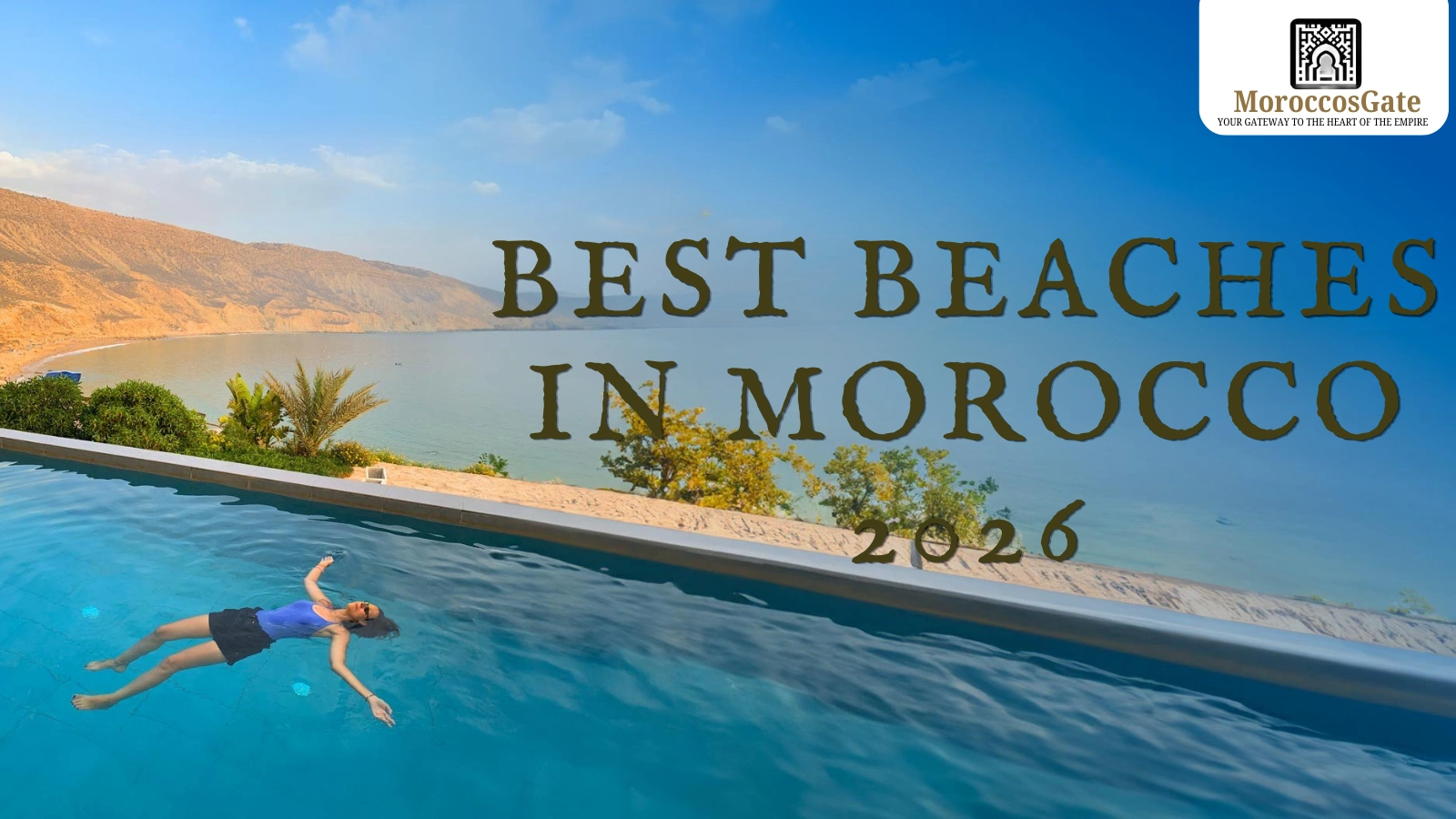
Best Beaches in Morocco 2026: The Definitive Coastal Guide
Quick Answer: Morocco has 3,500 kilometres of coastline split between two seas — the wild Atlantic in the west and the calm Mediterranean in the north. The Atlantic coast delivers world-class surf, dramatic red cliffs, and wind-sports paradises. The Mediterranean offers warm turquoise coves, calm family-friendly swimming, and a quieter pace. The best beaches in Morocco in 2026 include Essaouira and Taghazout on the Atlantic, and Al Hoceima and Saidia on the Mediterranean. This guide ranks Morocco’s top beaches by traveller type — surfers, families, solo adventurers, photographers, and luxury seekers — so you can match the right beach to your trip.
Affiliate Disclosure: This post contains affiliate links. If you book a hotel, surf camp, or tour through links on this page, Morocco’s Gate may earn a small commission at no extra cost to you. We only recommend places we genuinely stand behind.
Atlantic vs Mediterranean: Which Coast Is Right for You?
Morocco occupies one of the most geographically privileged positions on earth for coastal travel. It is the only country in Africa and the Arab world that borders both the Atlantic Ocean and the Mediterranean Sea — and those two bodies of water deliver completely different beach experiences.
Morocco sits at the crossroads of two great bodies of water. To the west, the Atlantic Ocean delivers powerful swells that have made Morocco one of the world’s premier surfing destinations. To the north, the Mediterranean Sea offers calm, warm waters framed by pine-clad mountains and secluded coves.
Understanding this distinction before you book is the single most useful piece of information in this entire guide. Getting it wrong means a family hoping for calm swimming ending up at a surfer’s beach with strong currents — or a surfer spending a week at a flat-water Mediterranean resort wishing they’d gone south.
The Atlantic Coast — Wild, Windy, World-Class
Morocco’s Atlantic coast runs wild and windswept from Tangier to Dakhla — consistent surf, cold water, dramatic cliffs. The water is cooler than the Mediterranean — typically 17–22°C — but that coolness drives the consistent wind that makes the Atlantic coast a global destination for surfers, kitesurfers, and windsurfers. The beaches are longer, wilder, and more dramatic. Sunsets over the Atlantic from Essaouira or Taghazout are extraordinary.
Best for: Surfers, kitesurfers, photographers, adventure travellers, solo travellers, those wanting a more authentic Moroccan beach experience.
The Mediterranean Coast — Calm, Warm, Family-Friendly
The Mediterranean coast in the north is calmer, warmer, and more sheltered — ideal for families and swimmers. Water temperatures reach 22–24°C in summer. Waves are gentle. The landscape shifts from dramatic Atlantic cliffs to pine-fringed coves that look more like Greece or Croatia than North Africa. The beach towns — Al Hoceima, Saidia, M’diq, Martil — are primarily Moroccan family holiday resorts rather than international tourist centres, giving them an authentic, unhurried atmosphere.
Best for: Families with young children, swimmers, couples seeking quiet coves, travellers who want calm water and summer warmth.
The Quick Decision Guide
| You want… | Choose |
|---|---|
| Surfing (advanced) | Taghazout — Anchor Point, Killer Point |
| Surfing (beginner) | Imsouane Bay, Sidi Kaouki |
| Family swimming (calm) | Oualidia lagoon, Saidia, Al Hoceima |
| Resort holiday + beach | Agadir |
| Kitesurfing (world-class) | Dakhla lagoon, Essaouira |
| Photography / dramatic scenery | Legzira arches, Essaouira |
| Culture + beach combo | Essaouira, Asilah |
| Hidden, uncrowded coves | Al Hoceima National Park, Mirleft |
| Luxury beach resort | Tamuda Bay (Tetouan), Agadir Sofitel |
Best Beaches for Surfers
Morocco is one of the world’s top surfing destinations — a fact that surprises many first-time visitors who associate the country only with medinas and deserts. The Moroccan coastline stretches for nearly 1,835 kilometres, providing a wide range of surf spots suitable for all levels, from beginners to experienced surfers.
1. Taghazout — Morocco’s Surf Capital
Location: 19km north of Agadir | Best for: Intermediate to advanced | Best season: October–April
Taghazout is the undisputed capital of Moroccan surfing. Taghazout is the surf capital: point breaks, daily surf culture, the most camps. The village sits on a rocky headland above a collection of world-class right-hand point breaks — Anchor Point, Killer Point, and Banana Point — that fire consistently from October through April.
Anchor Point on a clean day is one of the longest right-handers in Africa. The wave wraps around the point for 200–300 metres on a good swell. Killer Point holds bigger swells up to 5 metres and is strictly for experienced surfers. The village itself is charming — whitewashed buildings climbing a hillside, rooftop cafés serving mint tea and fresh fish, surf camps with yoga decks overlooking the break.
Surf schools and camps: Dozens of certified surf camps operate between Taghazout and nearby Tamraght. A 2-hour group lesson starts from 300 MAD; week-long surf camps from 3,500 MAD including accommodation, meals, lessons.
Getting there: 45-minute drive from Agadir Al Massira Airport (AGA). Shared taxis from Agadir approximately 20 MAD.
Insider tip: Book accommodation in Tamraght village (5km south of Taghazout) for lower prices and a quieter atmosphere with easy access to all the same breaks.
2. Imsouane — Africa’s Longest Right-Hand Wave
Location: 100km north of Agadir | Best for: All levels | Best season: October–March
Imsouane has one of Africa’s longest right-hand waves. The Bay wave is legendary — long, mellow rides of several hundred metres perfect for longboarding and beginners learning to surf green waves.
Imsouane Bay picks up swell from a wider window than most Moroccan spots thanks to the shape of the bay and its northwest-facing point. Even in the smaller summer months, it catches enough energy for mellow longboard sessions. The second break — Cathedral Point — is steeper and faster, suitable for intermediate surfers wanting more challenge.
The village is tiny, authentic, and completely unlike Taghazout’s surf-tourist infrastructure. Fresh fish is grilled on the beach every evening. Guesthouses are simple and cheap. It’s the kind of place where you stay three days and leave three weeks later.
Getting there: 2-hour drive from Agadir. No direct public transport — hire a car or join a surf camp transfer.
3. Sidi Kaouki — Best Beginner Beach
Location: 27km south of Essaouira | Best for: Beginners and learners | Best season: Year-round
Sidi Kaouki, Tamraght, Oualidia lagoon, and Taghazout beach breaks offer gentle waves ideal for learning. Sidi Kaouki has the most consistent gentle beach break on the Atlantic coast — forgiving, sandy-bottomed, and ideal for anyone taking their first lessons. The Essaouira trade winds also make it a secondary kitesurfing spot in the afternoons.
The setting is wild and beautiful: an enormous deserted beach backed by rolling sand dunes, with the wind almost always blowing offshore in the mornings. There are handful of small surf camps and guesthouses — nothing luxurious, but everything you need.
Best Beaches for Families
4. Oualidia — The Perfect Family Lagoon
Location: Between Casablanca and Essaouira | Best for: Families, children, swimmers | Best season: April–October
Oualidia is Morocco’s best-kept family beach secret. A natural lagoon sits behind a sandbar that filters out Atlantic swells, creating flat, warm, shallow water that stays calm regardless of ocean conditions. Children can wade in waist-deep water for hundreds of metres. Waves pass through a narrow channel before breaking over a sandy island, reducing their power and creating safe conditions for beginners.
The bonus: Oualidia is Morocco’s oyster capital. Local oyster farms cultivate Morocco’s finest shellfish in the lagoon, and you can eat them fresh at waterside restaurants for 30–50 MAD per dozen — one of the great cheap luxuries of Moroccan travel. Birdwatchers will also find flamingos and wading birds at the lagoon edges during migration season.
Getting there: 2.5-hour drive from Marrakech or 2-hour drive from Casablanca.
5. Agadir Beach — Morocco’s Premier Family Resort
Location: South Atlantic coast | Best for: Families, first-time visitors, all-inclusive holidays | Best season: Year-round (330 sunny days)
Agadir is Morocco’s most modern beach city — rebuilt entirely after a 1960 earthquake leveled the original. Its 10-kilometre crescent of Atlantic sand is organised and well-maintained, with beach clubs, parasols for hire, lifeguards in summer, and a long promenade of cafés and restaurants. Sea temperatures in July reach 20–22°C — the warmest on the Atlantic coast.
Agadir is the right choice for travellers who want a comfortable, predictable beach holiday with everything in place: resort hotels with pools, organised beach services, direct international flights, and easy access to Moroccan cuisine and culture. It is Morocco’s most tourist-oriented beach city, which some travellers love and others find too resort-like.
Whether you want a lazy resort vacation or an active surf trip, Agadir region delivers. The variety from city beach to surf villages means every type of Atlantic coast traveler finds exactly what they need.
Getting there: Direct flights from Dublin, London, Paris, and most major European cities to Agadir Al Massira Airport (AGA).
6. Saidia — The Mediterranean Family Resort
Location: Northeastern Mediterranean, near Algerian border | Best for: Families, resort holidays | Best season: June–September
Known as the “Blue Pearl,” Saidia boasts long sandy stretches and luxurious resorts, offering a wonderful fusion of relaxation and modern amenities. The Mediterranean here is noticeably warmer and calmer than the Atlantic — sea temperatures reach 24–26°C in August, and the water is cleaner and clearer than most Atlantic beaches. Saidia has Blue Flag certification — one of the few Moroccan beaches to hold this international standard for water quality and beach management.
The resort strip is modern and well-developed with large hotel complexes, a marina, and beach clubs. It is primarily a Moroccan and Algerian family destination, giving it an authentic local atmosphere that the more internationally oriented Agadir lacks.
7. M’diq and Martil — Moroccan Mediterranean at Its Best
Location: Mediterranean coast near Tetouan | Best for: Families, authentic local experience | Best season: June–September
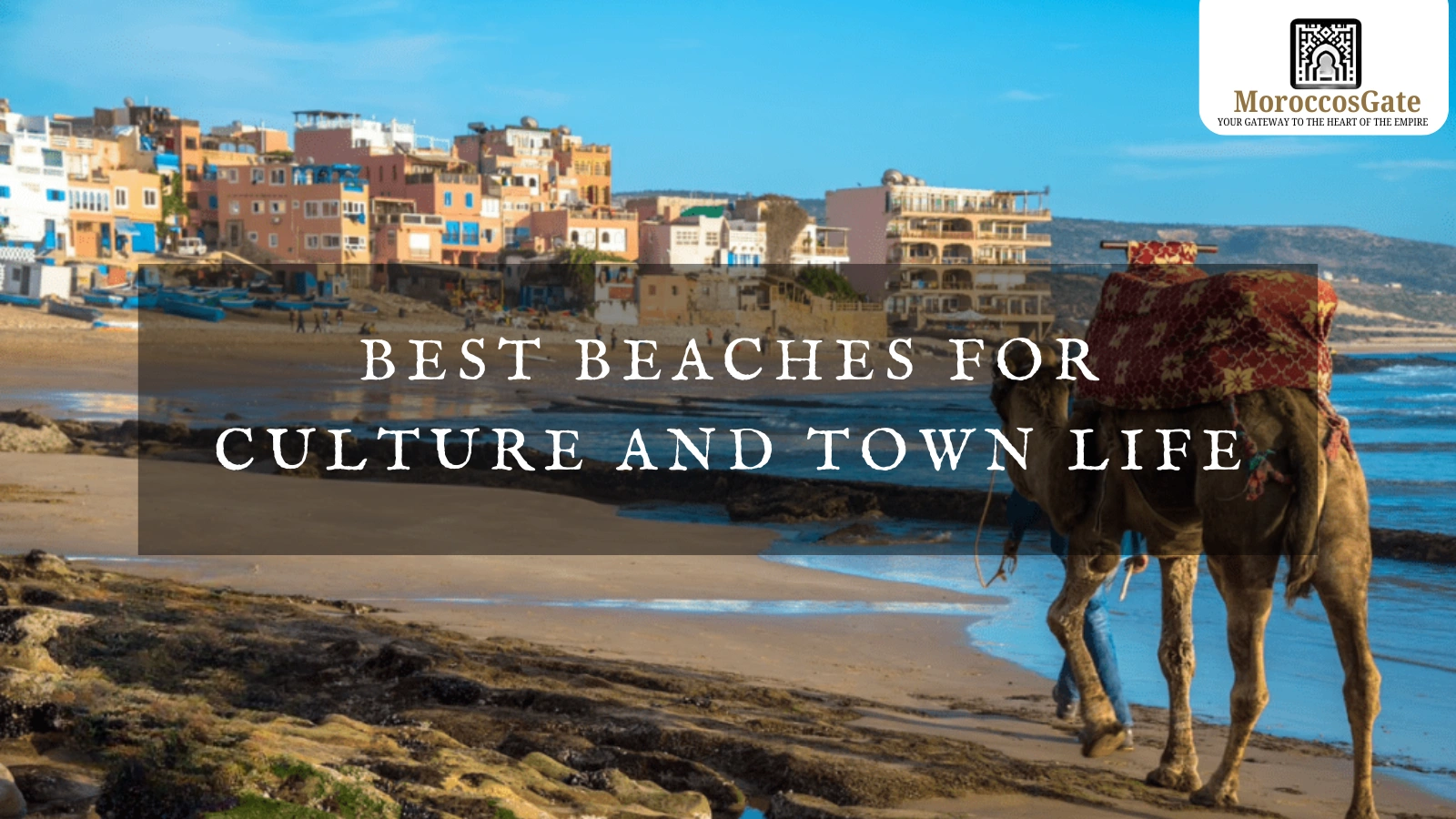
Martil Beach represents the quintessential Moroccan family beach experience. During summer months, this wide, sandy beach becomes a bustling hub where local families come to enjoy the Mediterranean waters. M’diq, its more upscale neighbour, has a smart marina, fish restaurants, and resort hotels that attract Moroccan and Spanish tourists from across the Strait of Gibraltar. The area around Tamuda Bay, just between the two towns, is Morocco’s most developed luxury beach resort zone.
The Mediterranean is calm, warm, and swimmable throughout summer. The towns have authentic Moroccan street life — souks, seafood restaurants, evening promenades. This is where Moroccan families go on holiday, not where package tour operators send European visitors.
Best Beaches for Photography and Scenery
8. Legzira — Morocco’s Most Dramatic Beach
Location: Near Sidi Ifni, southern Atlantic coast | Best for: Photographers, adventurers | Best season: October–April
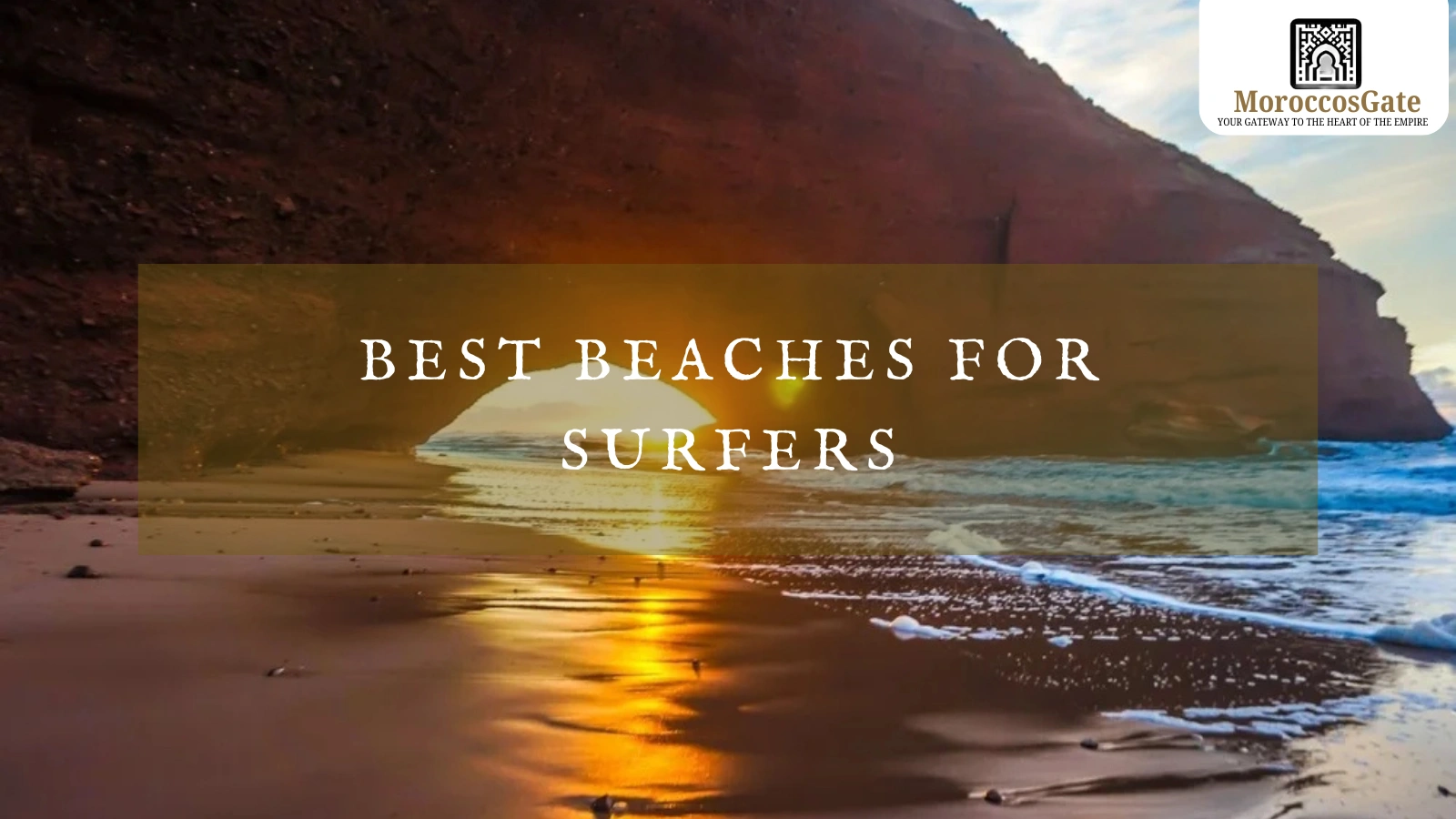
Legzira is famous for its enormous natural rock arches carved by Atlantic erosion, turning orange-red at sunset. One arch collapsed in 2016; the surviving one is now even more photogenic with its jagged remains as context.
Legzira is not a beach for sunbathing or swimming — the Atlantic here is powerful and the currents are dangerous. It is a beach for staring open-mouthed at geology. The remaining arch stands roughly 10 metres tall, framing the crashing Atlantic through its opening. At sunrise and sunset, the red sandstone turns extraordinary shades of amber and crimson against the blue-black ocean. Morocco has towering red sandstone arches sculpted by millennia of wave action.
Getting there requires effort — Legzira is not on a main tourist route — which keeps it relatively uncrowded even in peak season. Difficult to reach without a car. Completely worth the effort.
Getting there: Approximately 3.5-hour drive south of Agadir. A car is essential.
Photography tip: Arrive 45 minutes before sunset. The low-angle light on the red sandstone arch creates the images you’ve seen on Instagram. High tide partially submerges the beach and adds drama.
9. Essaouira — The Most Photogenic Beach Town in Morocco
Location: Atlantic coast, 170km from Marrakech | Best for: Photographers, culture seekers, wind sports | Best season: April–October
Essaouira is not just a beach — it is one of the most complete travel destinations in Morocco. The UNESCO-listed white-and-blue medina rises behind a long Atlantic beach. Portuguese ramparts overhang crashing waves. The port is active with blue wooden fishing boats at all hours. Essaouira is one of Morocco’s most beloved coastal towns, known for its relaxed atmosphere, historic medina, and strong artistic identity.
Essaouira is the only place in Morocco where you can surf in the morning, kitesurf in the afternoon, and walk a UNESCO medina at sunset. The beach itself is enormous — several kilometres of hard Atlantic sand — but the consistent trade winds make it better for wind sports and walking than for traditional beach lounging. For swimming, Essaouira is cooler and windier than Agadir.
Why photographers love it: The blue-painted medina, the whitewashed ramparts, the harbour light, the fish market at dawn, the stormy Atlantic at sunset. Every street corner is a frame.
10. Al Hoceima National Park Beaches — Mediterranean Perfection
Location: Northern Mediterranean coast | Best for: Photographers, snorkellers, nature seekers | Best season: June–September
Within Al Hoceima National Park, the hidden cove Cala Bonita is a small cove with crystalline turquoise water, accessible only by small boat or steep cliff path. The Al Hoceima National Park surrounds it. Almost no tourists even in summer. One of Morocco’s most beautiful beaches and completely unknown internationally.
The water here — clear, warm (22–24°C in July), turquoise — genuinely rivals the Aegean Sea in colour and clarity. The Mediterranean coast’s beaches feature stunning coves with incredibly clear turquoise water that seems almost tropical. Snorkelling over the rocky seabed reveals marine life that the more heavily fished Atlantic coast cannot match. The national park protects both land and sea, so the beaches are clean, the marine environment is healthy, and crowds are minimal.
Getting there: Fly to Al Hoceima Cherif Al Idrissi Airport (AHU) from Casablanca or Marrakech (approximately 1 hour). Boat trips to Cala Bonita depart from Al Hoceima port.
Best Beaches for Kitesurfing and Wind Sports
11. Dakhla — The World’s Best Kitesurfing Lagoon
Location: Southern Atlantic coast (Western Sahara) | Best for: Kitesurfers, windsurfers, adventure travellers | Best season: April–October (peak July–August)
Dakhla sits in a desert lagoon with side-shore wind and mirror-flat water — the perfect counterweight to the point breaks up north. The Dakhla lagoon is a 40-kilometre shallow lagoon of perfectly flat water, with water temperature hovering between 19–24°C all year. The trade winds blow over 300 days per year, with over 90% wind chance during July and August.
Dakhla’s 40km lagoon gives you glass-flat water, waist-deep for hundreds of metres — arguably the safest place on Earth to learn kitesurfing. International kitesurfing competitions take place in the lagoon. The White Dune — a white sandbar rising from the middle of the turquoise lagoon — has become one of the most photographed kitesurf locations on earth.
The landscape is remote and dramatic — desert meeting ocean. Not a typical beach holiday. Right for: kitesurfers, adventure travelers, those who want somewhere genuinely off the beaten track.
Getting there: Fly to Dakhla Airport (VIL), 20 minutes from the kite camps. 2-hour flight from Casablanca.
Budget note: IKO-certified beginner kite courses start from 4,000 MAD. Gear rental from 500 MAD per day.
12. Essaouira Beach — Africa’s Wind City
Location: Atlantic coast | Best for: Kitesurfers, windsurfers, experienced kiters | Best season: April–October
From the flat turquoise lagoon of Dakhla to the raw Atlantic power of Essaouira, Morocco delivers 300+ days of kitable wind at prices that make European spots look overpriced. Essaouira’s trade winds — the alizée — blow consistently and powerfully from April through October, making the long beach one of the world’s most reliable wind sports venues. Unlike Dakhla, Essaouira offers wave kitesurfing and freeriding in open Atlantic conditions.
The advantage of Essaouira over Dakhla is everything outside the water. Dakhla is remote and specialised. Essaouira has a UNESCO medina, some of Morocco’s best seafood restaurants, excellent accommodation across every budget, and a rich arts and music culture. You can kitesurf for four hours and spend the rest of the day exploring one of Morocco’s most beautiful towns.
Essaouira is Morocco’s wind sports hub: April to October trade winds, dedicated kite zone on the city beach, certified schools.
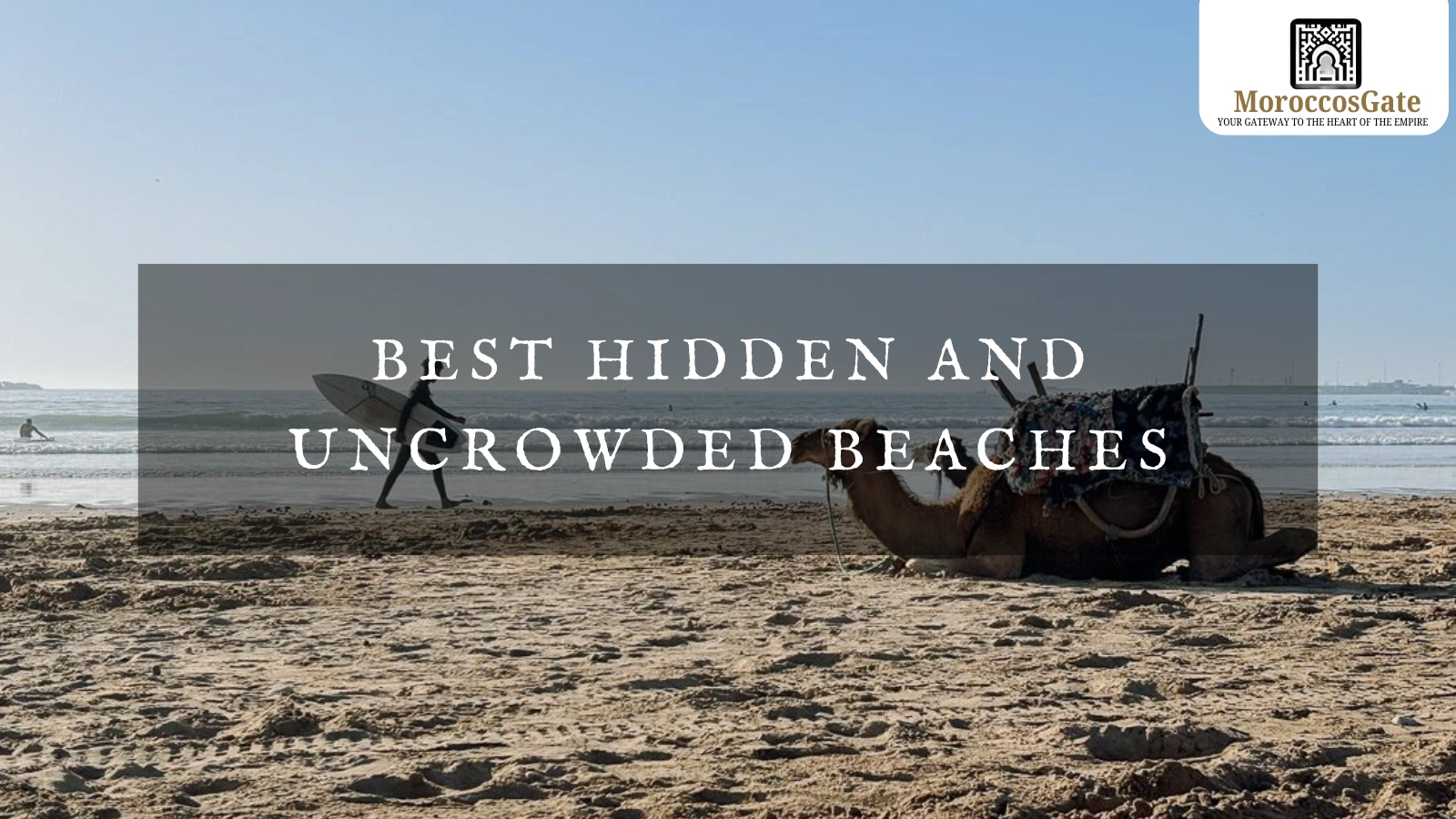
Best Hidden and Uncrowded Beaches
13. Mirleft — Southern Atlantic Authenticity
Location: Southern Atlantic coast between Tiznit and Sidi Ifni | Best for: Adventure travellers, photography, authentic experience | Best season: October–April
Mirleft offers an authentic, peaceful Moroccan beach experience with stunning cliff formations. The town sits on a plateau above a series of dramatic beaches separated by rocky headlands. Unlike Taghazout or Agadir, Mirleft has minimal tourist infrastructure — a handful of guesthouses, a couple of cafés, and almost no other foreign visitors outside a small community of surfers and overlanders who discovered it years ago.
Out of the seven beaches in the region, five offer excellent conditions for surfing. Many surfers visit this destination in search of the perfect wave within a calm and authentic natural setting.
The cliff walk connecting the various Mirleft beaches is one of Morocco’s finest short hikes — dramatic, uncrowded, and completely free.
14. Asilah — Culture and Coast Combined
Location: Atlantic coast, 45km south of Tangier | Best for: Art lovers, couples, photographers | Best season: June–September
Asilah combines beach relaxation with artistic charm. Portuguese ramparts. Murals on every wall (annual arts festival). A calm Atlantic bay protected from heavy swell. The beach is clean and family-friendly, backed by a beautiful medina. Better for art and culture combined with beach than for surf.
Asilah hosts the International Cultural Festival each July — artists from around the world temporarily transform the whitewashed walls of the medina into large-scale outdoor murals. The medina has Portuguese-era ramparts that run along the cliff edge above the Atlantic. The beaches just outside the medina walls are clean, relatively calm, and backed by rolling green headlands.
Getting there: 45-minute bus from Tangier (30 MAD). Train from Casablanca via Rabat takes approximately 5 hours.
Best Beaches for Culture and Town Life
15. El Jadida — Portuguese Heritage by the Sea
Location: Atlantic coast, 100km south of Casablanca | Best for: History lovers, day trips from Casablanca | Best season: June–September
El Jadida is a coastal city with one of Morocco’s most unusual historical legacies — a 16th-century Portuguese cistern carved underground into the city, filled with still black water that reflects the arched ceiling in perfect symmetry. The beach (Deauville Plage) is a wide, family-friendly Atlantic strand with summer lifeguards and basic facilities.
It is not Morocco’s most beautiful beach, but combining the Portuguese cistern, the walled medina, and a couple of hours on the beach makes El Jadida an excellent day trip or overnight stop between Casablanca and Essaouira.
Morocco Beach Quick-Reference Table
| Beach | Coast | Best For | Water Temp (July) | Difficulty to Reach | Best Month |
|---|---|---|---|---|---|
| Taghazout | Atlantic | Surfing (advanced) | 20–22°C | Easy (near Agadir) | Oct–Apr |
| Imsouane | Atlantic | Surfing (all levels) | 20–21°C | Moderate | Oct–Mar |
| Sidi Kaouki | Atlantic | Beginner surf, kite | 19–21°C | Moderate | Year-round |
| Oualidia | Atlantic lagoon | Families, swimming | 20–22°C | Easy | Apr–Oct |
| Agadir | Atlantic | Resort, families | 20–22°C | Very easy (airport) | Year-round |
| Saidia | Mediterranean | Families, swimming | 24–26°C | Moderate | Jun–Sep |
| Legzira | Atlantic | Photography, scenery | 18–20°C | Car required | Oct–Apr |
| Essaouira | Atlantic | Kite, culture, photos | 19–21°C | Easy | Apr–Oct |
| Al Hoceima / Cala Bonita | Mediterranean | Hidden cove, snorkel | 22–24°C | Boat needed | Jun–Sep |
| Dakhla | Atlantic lagoon | Kitesurfing | 19–21°C | Flight needed | Apr–Oct |
| Mirleft | Atlantic | Off the beaten path | 19–21°C | Car required | Oct–Apr |
| Asilah | Atlantic | Culture + beach | 19–21°C | Easy (bus/train) | Jun–Sep |
| M’diq / Martil | Mediterranean | Family local vibe | 22–24°C | Moderate | Jun–Sep |
| El Jadida | Atlantic | History + beach | 18–20°C | Easy | Jun–Sep |
Water temperatures are approximate averages. Always check conditions locally. Source: Morocco’s Gate research, 2026.
Morocco Beach Water Temperature Guide
One of the most common surprises for first-time visitors is that Morocco’s Atlantic waters are cooler than expected, especially compared to Mediterranean beaches in Spain or Greece. Understanding seasonal water temperatures helps you plan appropriately.
Atlantic Coast Water Temperatures by Season
| Season | Months | Atlantic Temp | Mediterranean Temp | Wetsuit Needed? |
|---|---|---|---|---|
| Winter | Dec–Feb | 15–17°C | 15–17°C | Easy (near Agadir) |
| Spring | Mar–May | 17–19°C | 17–21°0C | Moderate |
| Summer | Jun–Aug | 19–22°C | 22–24°C | Moderate |
| Autumn | Sep–Nov | 19–21°C | 20–22°C | Easy |
Source: Direction de la Météorologie Nationale Morocco (DMN), 2026 seasonal averages.
The Atlantic coast is cool but swimmable from June to October. The Mediterranean is warm and comfortable from June to September. Agadir’s bay is one of the warmest Atlantic spots.
Key point for surfers: The water sits between 17°C in winter and 22°C in summer. Most camps include wetsuit rental. If you are visiting October through April, budget 50–100 MAD per day for wetsuit rental if you don’t bring your own.
Practical Tips for Morocco’s Beaches
These are the things that experienced Morocco beach travellers wish they’d known before their first trip.
1. Dress codes apply near (not on) the beach. On the beach itself, swimwear is generally fine at tourist beaches. Walking through town in a bikini or board shorts is not appropriate and will attract uncomfortable attention. Pack a light sarong or shorts to cover up when leaving the beach.
2. Atlantic currents are serious. Atlantic surf beaches have strong currents and rip tides — swim between the flags at beaches where flags are present.On unorganised beaches with no lifeguards, ask locals before swimming. Several drownings occur each year from tourists underestimating Atlantic rip currents, especially at beaches like Legzira that are beautiful to look at but dangerous to swim.
3. Book coastal accommodation early for summer. Agadir, Essaouira, and the Mediterranean resort towns fill up significantly in July and August — both with European tourists and Moroccan families on holiday. It’s advisable to book accommodations in advance in peak season to secure a comfortable and convenient base.
4. Surf conditions are seasonal on the Atlantic. The Atlantic surf season runs October through April. The best time for surfing Morocco is generally from October to April, when the waves reach their maximum power. In July and August, the Atlantic surf is largely flat — good for swimming and beginner paddling, but not for the waves that make Morocco famous.
5. Transport between beach towns requires planning. Public transport connects the major coastal cities (Agadir, Essaouira, Tangier) but smaller beach spots like Imsouane, Mirleft, Legzira, and Al Hoceima are best reached by car. Renting a car from Agadir for a southern coastal road trip (Agadir → Taghazout → Imsouane → Legzira → Mirleft) is one of the finest drives in Morocco.
6. Bring cash to beach towns. Card machines are rare outside resort hotels. Budget 200–500 MAD daily cash for food, beach rentals, and tips at beach towns outside the main cities.
7. The Mediterranean north is underrated. Most international Morocco itineraries focus entirely on Marrakech, Fes, and the Sahara, with a beach day at Essaouira or Agadir. The Mediterranean coast — Al Hoceima, Saidia, M’diq — is genuinely beautiful, warm, uncrowded by international tourists, and significantly cheaper than the Atlantic resort towns. If your schedule allows a northern Morocco loop, the Mediterranean coast rewards the effort.
Frequently Asked Questions About Morocco’s Beaches
Q1. What is the best beach in Morocco for families?
A1. The best family beach in Morocco depends on which coast you choose. On the Atlantic, Oualidia lagoon is the top choice — the lagoon creates safe, calm, shallow water ideal for young children, and the oyster restaurants make it a genuine foodie destination too. Agadir beach is the best option if you want resort facilities, lifeguards, and easy access to hotels. On the Mediterranean, Saidia (Blue Flag certified) and M’diq offer calm, warm sea perfect for families. Family resorts on the Mediterranean: Agadir, Saidia, M’diq.
Q2. What is the best beach in Morocco for surfing?
A2. Taghazout area — Anchor Point, Killer Point — for experienced surfers. For beginners, Sidi Kaouki near Essaouira and Imsouane Bay are the best choices with consistent gentle waves, certified instructors, and affordable surf camps. October to April is the prime surf season on the Atlantic coast.
Q3. Is Morocco’s sea warm enough to swim?
A3. The Atlantic coast is cool but swimmable from June to October. The Mediterranean is warm and comfortable from June to September. Agadir’s bay is one of the warmest Atlantic spots. If you are accustomed to Mediterranean sea temperatures (25°C+), the Atlantic will feel noticeably cooler, especially outside July and August. The Mediterranean coast around Al Hoceima and Saidia reaches genuine warmth (22–26°C) in summer and is the better choice for those who prioritise warm swimming.
Q4. Which Morocco beach has the clearest water?
A4. Morocco’s clearest water is found at Legzira Beach (near Sidi Ifni) on the Atlantic and beaches around Al Hoceima National Park on the Mediterranean coast. These areas feature stunning turquoise waters and dramatic rock formations. Cala Bonita in the Al Hoceima National Park has water that is genuinely Caribbean-clear in calm summer conditions — the park’s protection status keeps both the coastline and marine environment in excellent condition.
Q5. What is Morocco’s best beach for kitesurfing?
A5. Dakhla is the best for kitesurfers, windsurfers, and adventure travellers. The 40-kilometre lagoon with consistent trade winds (300+ windy days per year) and flat water makes it one of the top kitesurfing destinations in the world. Essaouira is the better choice if you want world-class kitesurfing combined with a great town — its wind season runs from April to October and the UNESCO medina makes evenings excellent.
Q6. When is the best time to visit Morocco’s beaches?
A6. May, June, September, and October offer perfect weather, fewer crowds, and lower prices. Summer (July–August) is peak season with highest prices and most crowds at coastal resorts, but the weather is excellent and the Mediterranean is at its warmest. October to April is the Atlantic surf season — ideal for surfers but cooler for swimming. The Atlantic kitesurfing season (Essaouira, Dakhla) runs April through October.
Q7. Are Morocco’s beaches safe?
A7. Most tourist beaches in Morocco are safe, but some specific precautions matter. Tourist beaches in Agadir have lifeguards in summer. Atlantic surf beaches have strong currents and rip tides — swim between flags. Legzira and isolated beaches have no services — go prepared. Mediterranean beaches are calmer and safer for non-swimmers. The main safety risk is underestimating Atlantic ocean currents, particularly at scenic but unguarded beaches.
Q8. Can I get to Morocco’s beaches by public transport?
A8. Many beach destinations are accessible by bus or train. Agadir, Essaouira, Tangier, El Jadida, and Asilah all have reliable bus connections. Many beaches like Essaouira, Agadir, El Jadida, and Asilah are reachable by bus or train. Smaller spots like Imsouane, Legzira, Mirleft, and Al Hoceima’s national park coves require a car or a guided tour. For a full Atlantic coast road trip, renting a car from Agadir is the most flexible option.
At the End
Morocco’s 3,500 kilometres of coastline contain some of the most diverse beach experiences available anywhere in the Mediterranean–Atlantic region. The Atlantic coast offers wild drama, world-class surf, and kitesurfing conditions that rival any destination on earth. The Mediterranean north offers warm, turquoise water, hidden coves, and a relaxed pace that most international visitors entirely miss.
The single most important choice you will make is which coast suits your travel style. Surfers and adventurers belong on the Atlantic. Families wanting calm swimming water belong on the Mediterranean. If you want the best of both worlds — culture, beach, wind sports, and a beautiful medina — Essaouira remains the finest all-round coastal destination in Morocco, for any type of traveller.
Whatever brings you to Morocco’s coast, you will find that the beaches here offer something no European equivalent can: the texture of a country with deep culture, extraordinary food, and genuine warmth, wrapped around some of the finest coastline in the world.
Plan your Morocco beach trip: Browse our Morocco in July 2026, read our complete Morocco Summer Beach Festivals 2026, and check our Things to Do in Morocco Summer 2026 for everything you need before you go.
Save this guide to your Morocco Pinterest board for easy trip planning.
About the Author
Morocco’s Gate is an Ireland-based Morocco travel resource run by a team of Morocco specialists with over a decade of combined experience planning trips across Morocco’s Atlantic and Mediterranean coasts. We’ve surfed Taghazout, kitesurfed Essaouira, swum Cala Bonita, and eaten oysters in Oualidia — everything in this guide is based on direct experience. For custom trip planning, visit moroccosgate.ie/contact.