
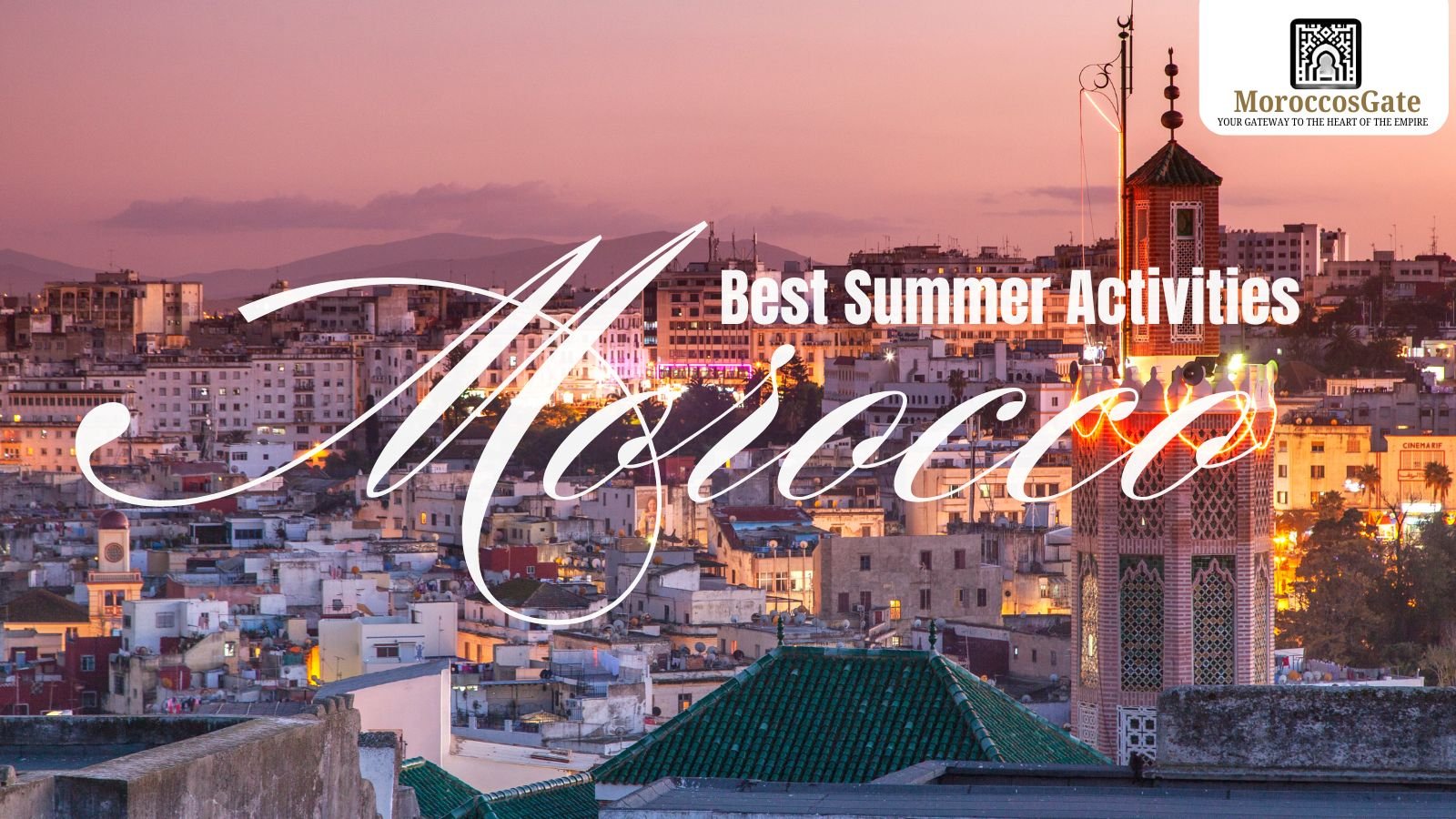
Best Summer Activities in Morocco 2026: Waterfalls, Beaches, Desert Nights & City Life
The best summer activities in Morocco 2026 are the ones that work with the heat, not against it: swimming at Ouzoud Falls or Akchour Waterfalls in the morning, surfing the Atlantic coast at Taghazout or Essaouira in the afternoon breeze, and riding a camel into the Agafay Desert at sunset for a starlit Berber tent dinner. Summer in Morocco runs June to August, with temperatures inland reaching 35–43°C and the coast staying a comfortable 22–28°C. June is the best of the three summer months — warm, festival-rich, and slightly cooler than July or August.
There is a wrong way and a right way to experience a Moroccan summer, and the difference between them is almost entirely about timing. The wrong way is to treat Marrakech in July like Marrakech in April — wandering the medina at 1 PM, queuing in direct sun for the Bahia Palace, walking the souks during the hottest hour of the day. That version of Moroccan summer is genuinely exhausting.
The right way is to do what Moroccans themselves do, and what seasoned travellers learn quickly: chase the cool. Waterfalls and mountain gorges in the morning. The Atlantic coast in the afternoon. The desert in the evening, when the heat drops and the stars come out. Cities explored at dawn and dusk, with the middle of the day spent in the shade of a riad courtyard or the steam of a hammam.
This guide gives you the complete picture: the best waterfalls, beaches, and desert experiences for summer 2026, the genuinely free activities that cost nothing, the real weather data for June, July, and August, and an honest answer to the question every prospective visitor asks — which month should I actually go? For the full year-round festival calendar that runs alongside these activities, see our companion guide to Things to Do in Morocco Summer 2026.
When Is Summer in Morocco? Quick Facts
| Detail | Information |
|---|---|
| Summer months | June, July, August |
| Inland daytime temps (Marrakech, Fes) | 32–43°C |
| Coastal daytime temps (Essaouira, Agadir, Casablanca) | 22–28°C |
| Sahara daytime temps (Merzouga) | 36–45°C (avoid midday) |
| Mountain/altitude temps (Chefchaouen, Ifrane) | 24–32°C |
| Best summer month overall | June |
| Rainfall | Minimal to none across all regions |
| Daylight hours | 14–15 hours (sunrise ~6am, sunset ~8:30–9pm) |
Summer in Morocco runs from June through August, and the country divides sharply along geographic lines during these months. Inland cities bake under intense heat. The Atlantic coast, cooled by the Canaries Current, stays remarkably comfortable. The Sahara becomes genuinely extreme at midday. And the mountains — both the High Atlas and the Rif — offer a cooler, fresher alternative to both the coast and the desert plains.
Understanding this geography is the single most important piece of summer Morocco planning. For the complete month-by-month seasonal breakdown across the whole year, see our Best Time to Visit Morocco 2026 guide.
Chase Waterfalls and Gorges: Morocco’s Best-Kept Summer Secret
Few visitors arrive in Morocco expecting waterfalls. Most people associate the country with desert dunes, medina alleyways, and mountain peaks — not cascading water and turquoise swimming pools. And yet Morocco’s Atlas Mountains, Rif ranges, and hidden gorges conceal some of North Africa’s most breathtaking cascades, fed by snowmelt from peaks above 4,000 metres, carving through red rock canyons and tumbling into natural swimming pools that genuinely rival anything found in more obviously tropical destinations.
In summer, these waterfalls are not simply beautiful — they are functional. They are where you go to actually cool down, physically, in a country where the midday heat in major cities can be genuinely overwhelming.
Ouzoud Falls: Morocco’s Tallest Cascade
Ouzoud Falls (Cascades d’Ouzoud) is the single most popular and most spectacular waterfall day trip from Marrakech — and for very good reason. Drive into the beautiful High Atlas Mountains on a day trip from Marrakech to Ouzoud Falls, the highest waterfalls in North Africa, travelling through a landscape of rolling foothills and olive groves before arriving at the thundering 110-metre cascade.
The full experience involves a guided hike down through olive terraces to the base of the falls, a hand-powered barge crossing of the river, free time to swim in the natural pools beneath the cascade, and the resident troop of Barbary macaques that live in the lush river valley — one of the few places in the world where you can watch wild macaques in their natural habitat at close range. Most tours include a traditional Berber-style lunch.
Ouzoud is approximately 150 km from Marrakech, making it a full-day commitment (typically 10–12 hours including transport). Shared group tours offer the best value, while private tours allow more flexible timing and an earlier departure to beat the crowds. Spring delivers maximum water flow from melting snow, but the falls remain spectacular and the swimming genuinely refreshing throughout summer.
Akchour Waterfalls: Chefchaouen’s Mountain Escape
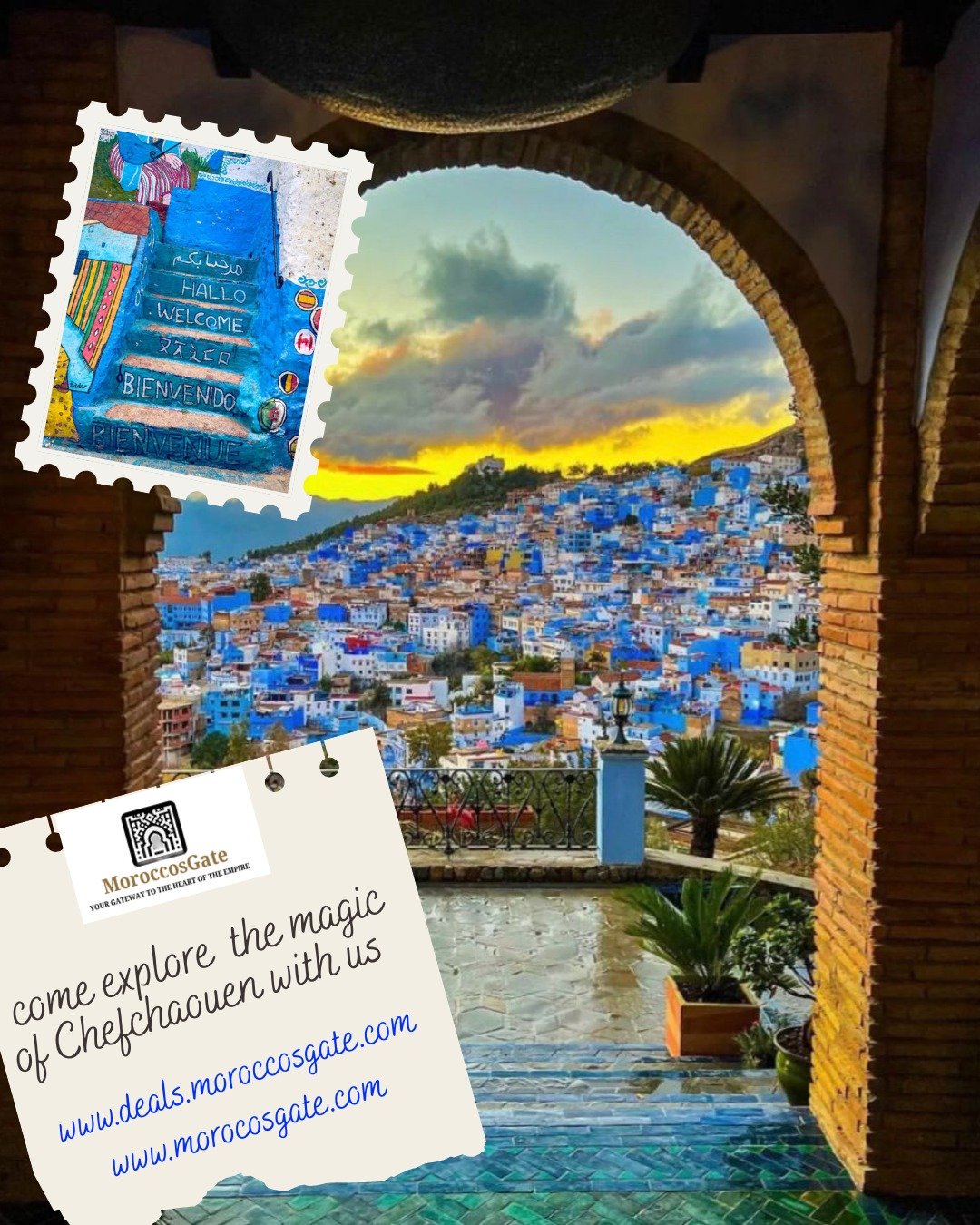
Near the Blue City of Chefchaouen, the Akchour Waterfalls offer a completely different but equally rewarding summer escape. The trail follows a turquoise river gorge through Talassemtane National Park, leading to two main destinations: God’s Bridge (Pont de Dieu), a dramatic natural limestone arch reached after roughly 1.5 hours of walking, and the Grand Cascade, a larger waterfall with deep, clear swimming pools reached after a longer 2.5–3 hour hike.
The Akchour trail involves multiple river crossings, rock scrambling, and narrow gorge sections — hiking shoes with ankle support are recommended, and reasonable fitness is required, with a guide genuinely helpful for navigating the river crossings safely, particularly after any rainfall. Akchour is approximately 45 minutes from Chefchaouen by grand taxi, making it the essential day trip for anyone basing themselves in the Blue City during summer. For the complete Chefchaouen picture — where to stay, what to eat, how to get there — see our Chefchaouen Travel Guide 2026.
Paradise Valley: Agadir’s Hidden Oasis
For travellers based on Morocco’s southern Atlantic coast, Paradise Valley offers a genuine oasis experience a short distance from Agadir. Natural turquoise pools set among palm groves and dramatic rock formations create one of the most photogenic and genuinely cooling summer experiences in the entire Souss-Massa region. The valley’s pools are fed by mountain streams that stay cold even in the height of summer — exactly the contrast you want after a hot Agadir beach day.
The hiking here is gentler than Akchour, with clear trails suitable for most fitness levels and minor river crossings rather than serious scrambling — comfortable for regular walkers and suitable for children eight and older with supervision. This makes Paradise Valley one of the best family-friendly summer activities on Morocco’s southern coast.
Setti Fatma and the Ourika Valley: The Easiest Waterfall Day Trip
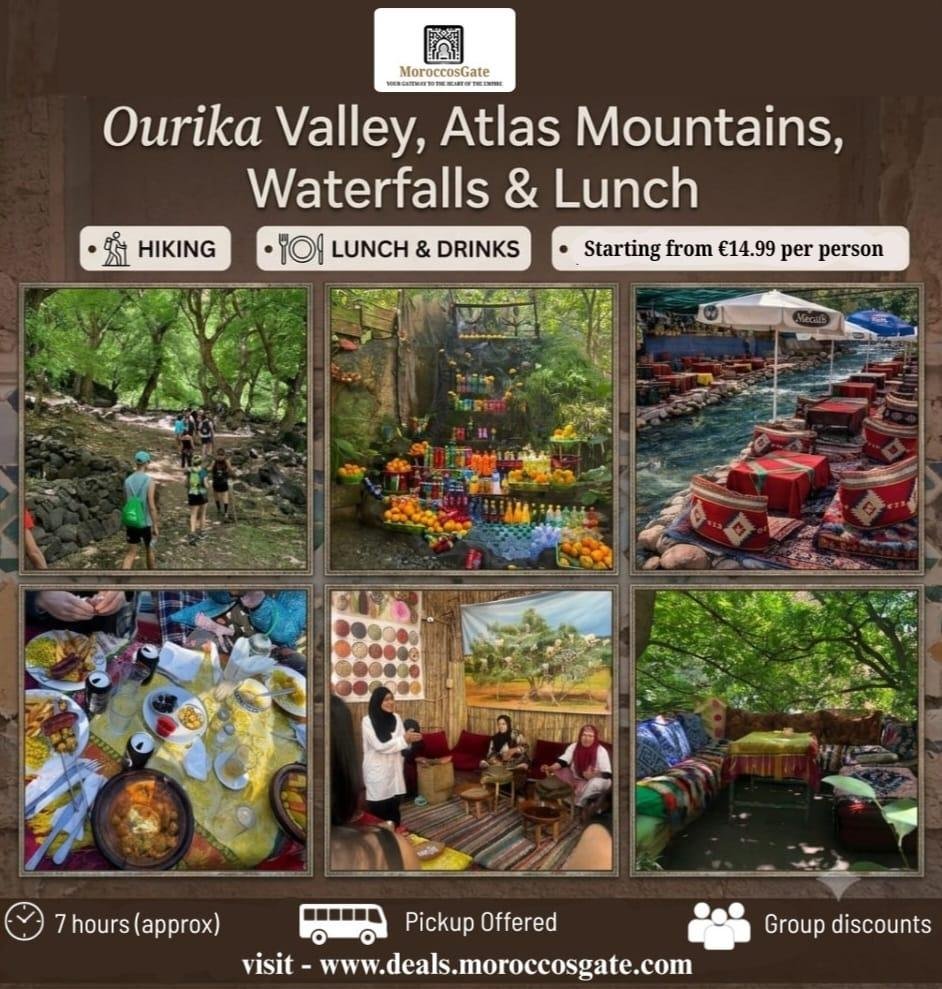
If you want a waterfall escape without committing a full day, Setti Fatma in the Ourika Valley is just an hour from Marrakech, making it the easiest day trip for waterfall seekers. The valley itself is a beautiful green corridor running up into the High Atlas, lined with Berber villages, roadside walnut and apple stalls, and small cafés built directly over the rushing river.
The lower waterfall at Setti Fatma is an easy 20–30 minute walk. The upper waterfalls require a guide (typically 100–200 MAD) due to exposed sections and wet rocks along the scramble. Many visitors combine Setti Fatma with a broader Atlas Mountains day trip — our guide to the Toubkal hike and Atlas Mountains experiences covers the wider Imlil and High Atlas trekking region in full.
Waterfall Safety Tips for Summer 2026
- Never swim alone at any Moroccan waterfall, and always check current water conditions with local guides before entering.
- At Akchour, river crossings can become genuinely dangerous after heavy rain — uncommon in summer but worth checking conditions regardless.
- For Setti Fatma’s upper waterfalls, hire a local guide — the scramble involves exposed sections and wet rocks that are easy to underestimate.
- Visit early morning (8–10 AM) for the coolest conditions, best light for photography, and the smallest crowds — particularly important at Ouzoud and Akchour, both of which become significantly busier by midday.
Hit the Coastal Beaches and Surf Spots: Morocco’s Atlantic Escape
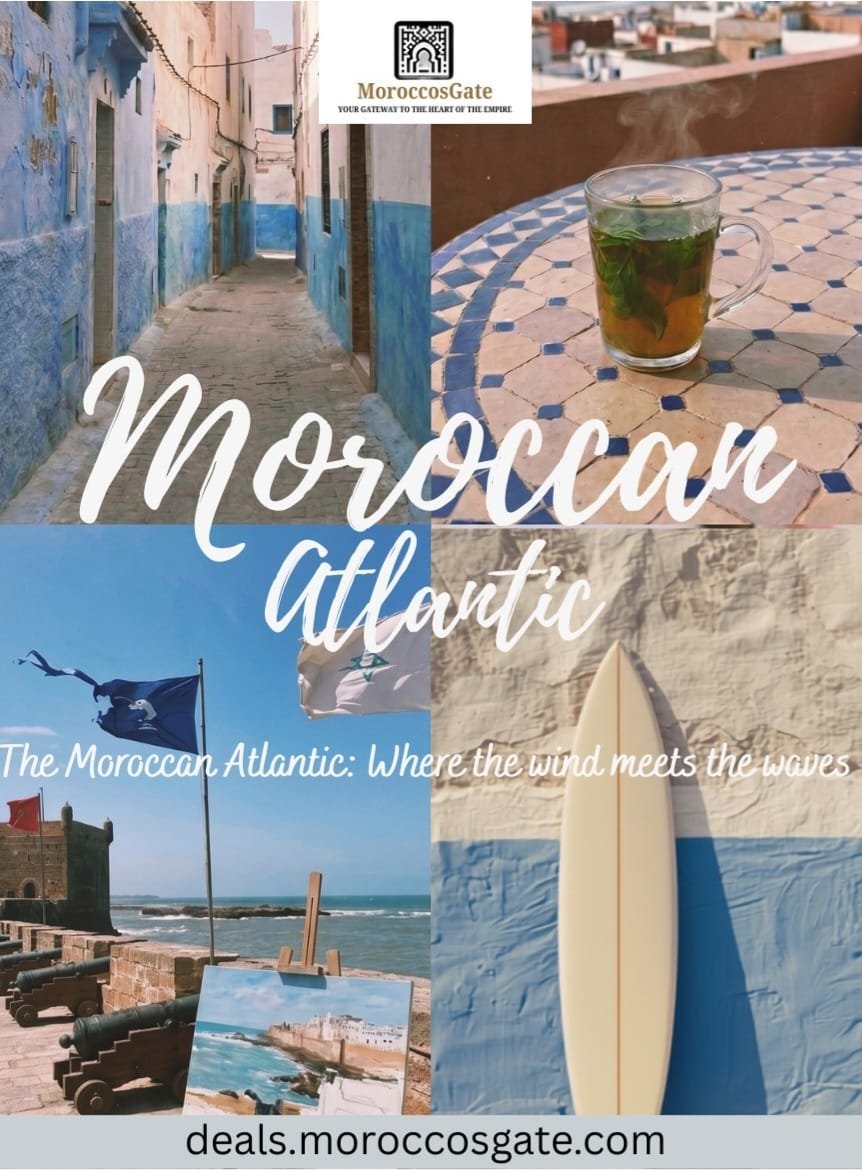
While the interior of Morocco bakes through summer, the Atlantic coast offers an entirely different climate — and an entirely different kind of holiday. The same Canaries Current that keeps Essaouira cool in midsummer makes Morocco’s western seaboard one of the world’s great under-the-radar surf and beach destinations.
Taghazout: Morocco’s Surf Capital
Taghazout, 20 minutes north of Agadir, has evolved from a small fishing village into Morocco’s premier surf destination without losing the relaxed, low-key atmosphere that drew the first wave of international surfers here decades ago. Summer brings consistent Atlantic swell, warm water, and reliably sunny conditions — a combination that suits both complete beginners taking their first surf lesson and experienced surfers chasing the area’s renowned point breaks.
Multiple surf schools in Taghazout offer lessons, board hire, and multi-day surf camps suitable for every level. The village itself, with its laid-back cafés, yoga studios, and beachfront accommodation, has become one of Morocco’s most appealing destinations for younger and more adventure-focused travellers.
Essaouira: Wind, Waves, and a UNESCO Medina
Essaouira — nicknamed the “Wind City of Africa” — combines world-class kitesurfing and windsurfing conditions with one of Morocco’s most beautiful walled medinas. The same Atlantic wind that powers the watersports keeps the city consistently 6–10°C cooler than Marrakech throughout summer, making it one of the most comfortable Moroccan destinations during the hottest months.
Beyond the watersports, Essaouira’s long sandy beach, excellent seafood restaurants, and historic ramparts make it an outstanding standalone beach holiday destination or a perfect addition to a Marrakech-based itinerary (2.5–3 hours by road). The city’s festival calendar — including the Gnaoua World Music Festival in late June — adds further reason to visit. See our complete Morocco Summer Beach Festivals 2026 guide for the full coastal events picture.
Rabat: The Capital’s Underrated Beach Scene
Rabat is rarely thought of as a beach destination, but Morocco’s relaxed capital has a genuinely good urban beach scene along its Atlantic-facing coastline near the Kasbah des Oudayas, popular with local surfers and bodyboarders. Combining a Rabat city visit — Chellah, the Hassan Tower, the medina — with beach time and, in late June, the Mawazine music festival, makes for one of Morocco’s most underrated summer city-beach combinations.
Lesser-Known Coastal Stretches
Beyond the well-known names, Morocco’s Atlantic coastline runs for nearly 3,000 kilometres, and travel experts can tailor beach excursions to lesser-known shorelines for those who want genuine solitude. Sidi Kaouki (south of Essaouira), the long beaches near El Jadida, and the stretch of coast around Asilah (north of Rabat) all offer beautiful, significantly less crowded alternatives to the main resort towns — ideal for travellers who have done Morocco’s coast before and want something quieter.
Experience Desert Nights: The Cool Way to Visit the Sahara and Agafay
The cardinal rule of Moroccan desert travel in summer is simple: avoid the midday sun, and embrace the evening instead. Daytime desert temperatures in summer regularly exceed 40°C, making midday camel treks and dune walks genuinely uncomfortable and, in the full Sahara, potentially hazardous. The solution that locals and experienced travellers have settled on is elegant: flip the schedule entirely, and let the desert come alive after 4 PM.
Agafay Desert: The Sunset Desert Closest to Marrakech
The Agafay Desert — a stony, lunar-like landscape just 30–40 minutes from Marrakech — has become one of the city’s most popular short desert experiences precisely because of how well it suits the late-afternoon and evening format. A typical Agafay sunset experience combines a camel ride or quad biking tour through the dramatic rocky terrain, arriving at a panoramic viewpoint as the sun drops behind the High Atlas Mountains, followed by a traditional Berber-style dinner under a tent, often accompanied by live music and a fire show.
Because Agafay is so close to Marrakech, it can be combined into a half-day or evening excursion rather than requiring an overnight commitment — ideal for travellers with limited time who still want the classic “dinner under a Berber tent, stargazing as the temperature drops” experience that Morocco is famous for. Many operators also offer combined experiences featuring a pool, lunch, and afternoon relaxation before the sunset activities begin — a smart way to escape Marrakech’s midday heat entirely.
The Marrakech Palmeraie: A Closer Desert-Adjacent Alternative
For those without time for even a half-day excursion, the Palmeraie — the historic palm grove on Marrakech’s northern edge — offers camel riding and quad biking experiences within a 20-minute drive of the city centre. While less visually dramatic than Agafay, it provides a genuine taste of the desert-adjacent Moroccan landscape and is particularly convenient for shorter stays or families with young children.
The Full Sahara Experience: Merzouga and Erg Chebbi
For travellers with more time, the full Sahara Desert experience at Merzouga and the Erg Chebbi dunes remains one of Morocco’s most extraordinary travel experiences — but summer requires careful planning. Daytime temperatures in the open Sahara regularly exceed 43–45°C in July and August, making any extended outdoor activity between 11 AM and 4 PM genuinely risky.
The summer-adapted approach: travel to Merzouga in the cooler morning or evening hours, rest during the hottest part of the day in a shaded or air-conditioned riad, then head out by camel into the dunes in the late afternoon as temperatures begin to drop, reaching your desert camp in time for sunset. The night itself — sleeping under a sky of unfiltered stars, the temperature finally comfortable — is the reward for the heat endured during travel. For full guidance on Sahara timing across all seasons, our Best Time to Visit Morocco guide covers this in detail.
Explore Cities the “Local Way”: Morning Monuments, Afternoon Shade, Evening Medinas
Morocco’s great imperial cities — Marrakech, Fes, Meknes — are at their most punishing in the midday summer heat and at their most magical in the early morning and evening. Adapting to local rhythms rather than fighting them is the single most important skill for a comfortable, enjoyable Moroccan city summer.
The Local Daily Rhythm
- Early morning (7–10 AM): Visit the major monuments — the Bahia Palace, the Saadian Tombs, the medina souks — while temperatures are still manageable and the light is at its most beautiful for photography. This is also when local Moroccan life is most visible: bakers delivering bread, shopkeepers opening their stalls, the city waking up before the tourist crowds arrive.
- Midday to mid-afternoon (12–5 PM): Retreat. This is when Moroccans themselves rest, and visitors should do the same. A riad courtyard, in the shade with a slow-turning ceiling fan and the sound of a fountain, is one of the most genuinely restorative environments in travel. A hammam visit — the traditional Moroccan steam bath and scrub ritual — is the perfect midday activity: cooling, cleansing, and a cultural experience in its own right.
- Evening (6 PM–midnight): This is when Moroccan cities truly come alive in summer. The medinas fill with locals and visitors alike once the heat breaks. Rooftop cafés open their best tables. In Marrakech, Jemaa el-Fna square transforms after sunset into one of the world’s great public spectacles — food stalls, musicians, storytellers, and a genuine sense of community celebration that simply does not exist at 2 PM.
City Versus Beach: How to Combine Both
The smartest Moroccan summer itineraries combine inland city culture with coastal relief, using each to balance the other. A common and highly effective pattern: 2–3 days in Marrakech (mornings for monuments, evenings for the medina, midday for hammam and rest), followed by 3–4 days on the coast (Essaouira or Agadir) to properly cool down and recover, before a final city stop (Casablanca or Rabat, both notably milder than Marrakech) before flying home.
This city-beach combination also makes excellent financial sense — coastal accommodation in summer is often better value than the peak spring pricing in Marrakech, and our Morocco budget travel 2026 guide covers exactly how to structure a trip like this affordably.
Free Summer Activities in Morocco: What Costs Nothing
One of the most appealing aspects of a Moroccan summer is how much of the best experience genuinely costs nothing at all.
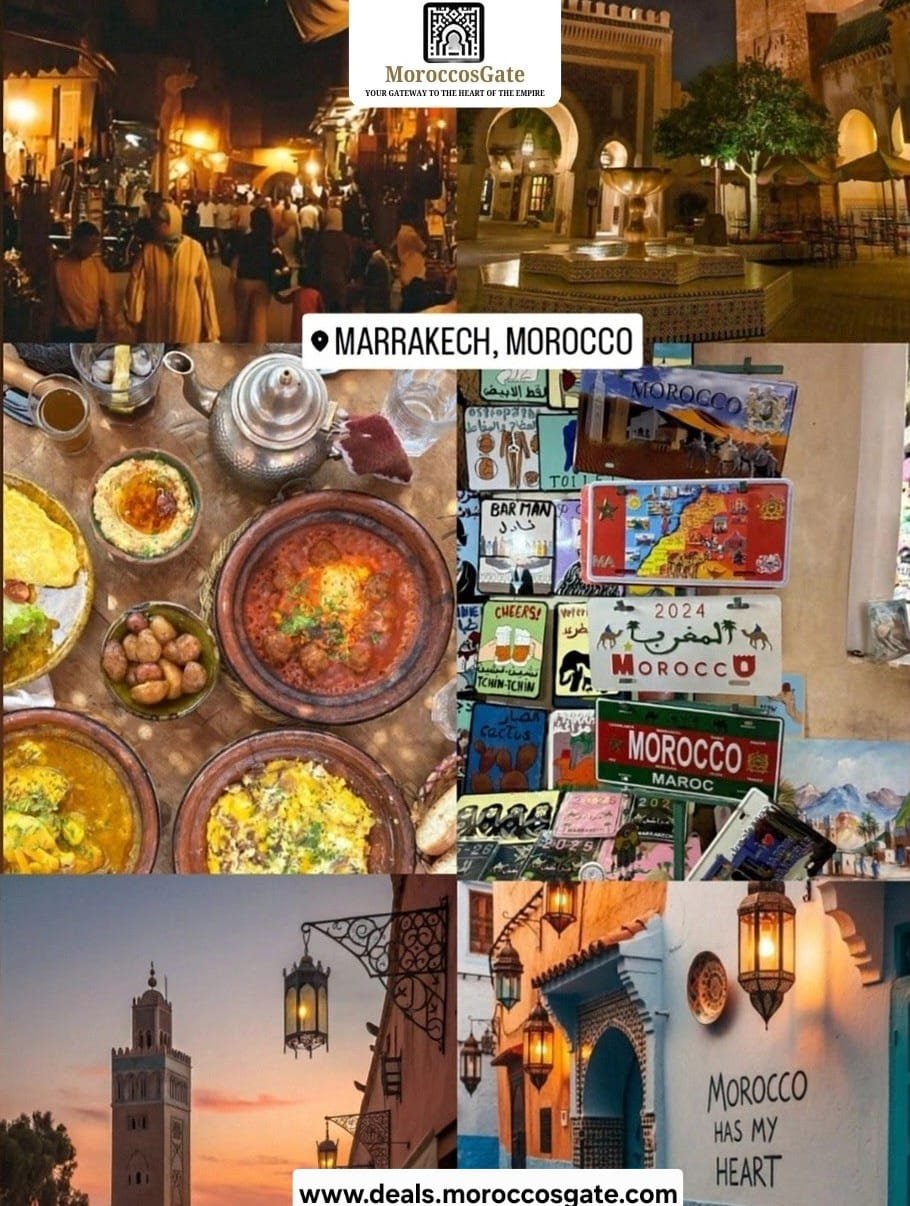
- Wandering any medina — Marrakech, Fes, Chefchaouen, Essaouira — is free and arguably the single best activity in the country regardless of budget.
- Jemaa el-Fna square in the evening in Marrakech costs nothing to experience (beyond whatever street food you choose to eat).
- Beach time at any of Morocco’s public Atlantic beaches — Agadir, Essaouira, Taghazout, Rabat — is entirely free.
- The Hassan II Mosque exterior and grounds in Casablanca can be admired and photographed from the public corniche without paying the interior tour fee.
- Watching the sunset from any rooftop café (the cost of a mint tea, typically under €1–2, buys you one of Morocco’s finest free views).
- The Ras el-Maa spring walk in Chefchaouen and the lower trail towards the Spanish Mosque are entirely free.
- Walking the Setti Fatma lower waterfall trail in the Ourika Valley costs nothing beyond transport to get there.
- Exploring the Kasbah des Oudayas in Rabat — one of Morocco’s most beautiful neighbourhoods — is completely free to wander.
The genuinely paid experiences worth the money — Ouzoud Falls guided tours, Agafay Desert evenings, monument entry fees, hammam visits — are covered in detail in our Morocco budget travel guide, which breaks down exactly how much each costs in 2026.
Best Month to Visit Morocco in Summer: June vs July vs August
This is one of the most common questions we receive, and the honest answer requires nuance — but if forced to choose one month, our consistent recommendation is June.
June: The Best Summer Month
June offers the best balance of all summer factors. Temperatures are warm but not yet at their peak (Marrakech averages 28–36°C versus 32–40°C in July/August). The Atlantic coast is already comfortably warm for beach time. Crucially, June hosts an extraordinary concentration of Morocco’s finest cultural events — the Fes Festival of World Sacred Music, the Marrakech Comedy Festival, Mawazine in Rabat, and the Gnaoua World Music Festival in Essaouira all take place within this single month. For full details on this remarkable festival concentration, see our Things to Do in Morocco Summer 2026 guide.
July: Hot, Vibrant, Festival-Rich
July is Morocco at its warmest and most intensely vibrant. Inland temperatures peak (32–40°C in Marrakech), making the coastal-versus-inland strategy essential. Jazzablanca (2–9 July, Casablanca) and Festival Timitar (mid-July, Agadir, free) make July an excellent month for those prioritising the coastal music festival circuit. The free Morocco Beach Festival series also runs through July across M’diq, Nador, and Tangier.
August: Peak Heat, Peak Atlantic Relief
August is Morocco’s hottest month inland, with Marrakech and the Sahara both reaching their annual peak temperatures. This is the month where the coastal strategy becomes most essential — Essaouira, Agadir, and Taghazout are at their busiest with both international and Moroccan domestic holidaymakers, but also at their most comfortable relative to the rest of the country. August is the month to prioritise an Atlantic-coast-based itinerary over an inland city-heavy one.
Our Honest Recommendation
If your dates are flexible: choose June for the best balance of weather, festivals, and manageable heat. If you can only travel in July or August: build your itinerary around the coast, treat inland cities as early-morning and evening destinations only, and embrace the desert-at-sunset and waterfall-at-dawn strategies covered throughout this guide.
Sample 7-Day Moroccan Summer Itinerary
| Day | Activity |
|---|---|
| 1 | Arrive Marrakech. Evening: Jemaa el-Fna and medina (cool evening hours). |
| 2 | Morning: Bahia Palace and Saadian Tombs. Midday: hammam and riad rest. Evening: rooftop dinner. |
| 3 | Full-day Ouzoud Falls trip — hike, swim, Berber lunch, return by evening. |
| 4 | Afternoon/evening Agafay Desert sunset — camel ride, Berber tent dinner, stargazing. |
| 5 | Travel to Essaouira (2.5–3 hours). Evening: medina and beachfront seafood dinner. |
| 6 | Essaouira beach day, optional surf or kitesurf lesson. Sunset on the ramparts. |
| 7 | Morning beach walk. Return to Marrakech or onward travel/flight home. |
Frequently Asked Questions — Best Summer Activities in Morocco 2026
What are the best summer activities in Morocco?
The best summer activities in Morocco 2026 are waterfall swimming (Ouzoud Falls, Akchour, Paradise Valley), coastal surfing and beach time (Taghazout, Essaouira, Rabat), sunset desert excursions (Agafay Desert camel rides and Berber tent dinners), and exploring cities in the cool morning and evening hours while resting during the hottest midday period.
What free activities are there in Morocco in summer?
Free summer activities in Morocco include wandering any medina, watching the evening atmosphere at Jemaa el-Fna square in Marrakech, spending time on public Atlantic beaches, walking the Ras el-Maa spring trail in Chefchaouen, exploring the Kasbah des Oudayas in Rabat, and admiring the Hassan II Mosque exterior in Casablanca.
When is summer in Morocco?
Summer in Morocco runs from June through August. Inland cities like Marrakech and Fes see daytime temperatures of 32–43°C, while the Atlantic coast (Essaouira, Agadir, Casablanca) stays significantly cooler at 22–28°C thanks to the Canaries Current.
How hot does Morocco get in summer?
Inland Morocco regularly reaches 32–43°C in summer, with the Sahara Desert at Merzouga exceeding 43–45°C in July and August. The Atlantic coast remains comfortable at 22–28°C, and mountain destinations like Chefchaouen stay at a manageable 24–32°C.
What is the best month to visit Morocco in summer — June, July, or August?
June is the best overall summer month — warm but not at peak heat, with an extraordinary concentration of festivals including the Fes Sacred Music Festival, Mawazine, and the Gnaoua World Music Festival. July and August are hotter inland but excellent for coastal-focused itineraries around Essaouira, Agadir, and Taghazout.
How much does an Ouzoud Falls day trip cost?
A shared group day trip to Ouzoud Falls from Marrakech, including transport, a guided hike, boat ride, and Berber lunch, typically costs €35–€65 per person depending on group size and operator. Private tours cost more but offer flexible timing and an earlier departure to beat the crowds.
Is it safe to swim at Akchour and Ouzoud waterfalls in summer?
Yes, generally safe in summer with normal precautions. Never swim alone, check water conditions with local guides, and be aware that river crossings at Akchour can become hazardous after rainfall (rare in summer). A local guide is recommended for the upper Setti Fatma waterfalls due to exposed, wet rock sections.
How do I beat the heat when visiting Marrakech in summer?
Visit major monuments (Bahia Palace, Saadian Tombs, souks) in the early morning before 10 AM. Rest during the midday heat (12–5 PM) in a shaded riad courtyard or visit a hammam. Explore the medina and Jemaa el-Fna in the evening when temperatures drop and the city comes alive. Combine your trip with 3–4 days on the cooler Atlantic coast.
Plan Your Moroccan Summer with Morocco’s Gate
A Moroccan summer rewards those who read the country correctly: chase the waterfalls in the morning, the coast in the afternoon, and the desert at sunset. Done right, summer is not Morocco’s compromise season — it is one of its very best, full of festivals, swimming, surfing, and the particular magic of a desert night under an enormous sky.
Morocco’s Gate has been planning exactly these kinds of trips for Irish and European travellers since 2015. Whether you want a waterfall-and-coast itinerary, a festival-focused city trip, or a complete circuit combining all of the above, we can help you build it.
- → Talk to our team and start planning your Morocco summer 2026 trip
- → Browse our curated Morocco travel deals
- → Read our complete Things to Do in Morocco Summer 2026 guide
- → Read the Best Time to Visit Morocco 2026 guide
- → Plan your Chefchaouen trip with our full 2026 guide
Morocco’s Gate is based between Dublin, Ireland, and Morocco. We have swum beneath Ouzoud Falls in the height of July heat, scrambled the Akchour gorge at dawn before the day-trip buses arrived from Chefchaouen, attempted (with mixed results) to surf at Taghazout, and watched the sun drop behind the High Atlas from the back of a camel in the Agafay Desert more times than we can count. Our summer Morocco advice reflects genuinely living through Moroccan summers — the heat, the relief of the coast, the magic of desert nights — not a list compiled from a desk. Morocco’s Gate has been helping Irish and European travellers plan extraordinary Morocco trips since 2015.