
Affiliate Disclosure: This article contains affiliate links. If you book a tour, hotel, flight, or experience through links on this page, MoroccosGate may earn a small commission at no additional cost to you. We only recommend products and services we genuinely trust. Thank you for supporting our independent travel content — it allows us to keep writing guides like this one.
Morocco Summer Beach Festivals 2026: Jazzablanca, Timitar, Moga & The Complete Guide
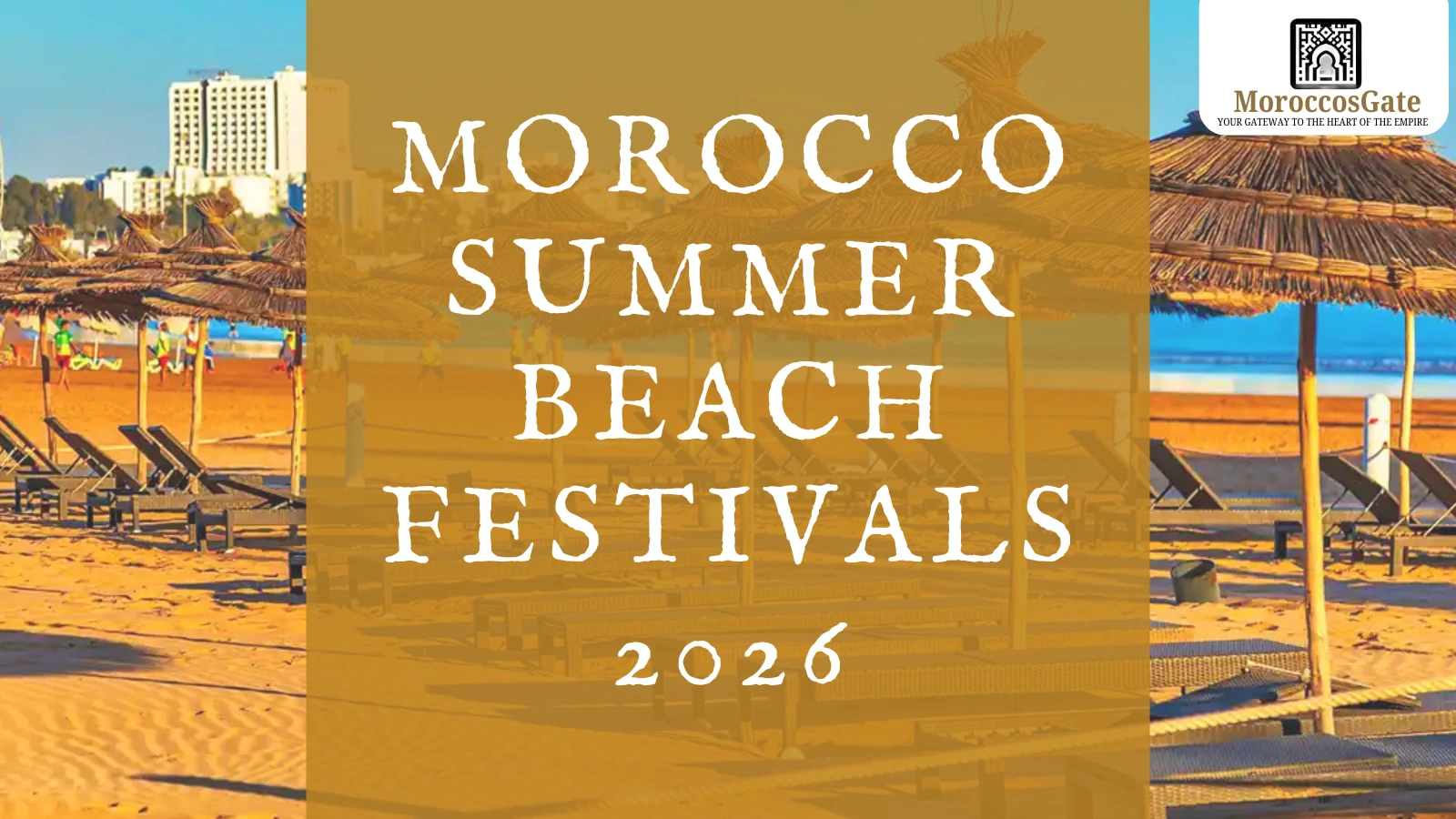
The best summer beach festivals in Morocco in 2026 are Jazzablanca in Casablanca (2–11 July), Festival Timitar in Agadir (early July), the free 21st Edition Beach Festival Series across coastal cities like Tangier, M’diq and Nador (mid-July to late August), and the Moga Festival in Essaouira (30 September–4 October). Morocco’s summer festival season runs from early July to late summer, concentrated on the Atlantic coast where cool ocean breezes make outdoor music events genuinely enjoyable — unlike the sweltering heat of inland cities.
Morocco is a country most travellers associate with spring and autumn. The “shoulder season” advice is everywhere — and it is good advice, as far as it goes. But it misses something important: Morocco in summer, particularly along its Atlantic coast, is spectacular. The beaches are golden, the evenings are warm without being oppressive, and from early July to late August, the coastline comes alive with one of the most vibrant and varied live music programmes in Africa.
Whether you want to see Robbie Williams perform under the Casablanca stars, dance barefoot on an Essaouira beach to electronic music from around the world, or discover the deep roots of Amazigh musical tradition in Agadir with 800,000 of your closest new friends — Morocco’s 2026 summer festival calendar has something for you. And much of it is entirely free.
In this guide, the team at MoroccosGate — who have spent years planning trips around Morocco’s festival calendar — takes you through every major summer beach and coastal festival in 2026, with confirmed dates, lineups, practical travel tips, and honest advice about which events suit which kinds of travellers.
Morocco Summer Festival Calendar 2026: At a Glance
| Festival | Location | 2026 Dates | Genre | Cost |
|---|---|---|---|---|
| Jazzablanca | Casablanca | 2–11 July 2026 | Jazz, pop, rock, soul, hip-hop | Ticketed (from ~315 MAD) |
| Festival Timitar | Agadir | Early July 2026 (TBC) | Amazigh, world music, fusion | Free |
| 21st Edition Beach Festival Series | M’diq, Nador, Tangier | Mid-July – Late August 2026 | Pop, folk, family entertainment | Free |
| Festival Alegria | Chefchaouen | Mid-July 2026 (TBC) | Cultural, world music | Ticketed/some free |
| Festival National des Arts Populaires | Marrakech | Mid-July 2026 (TBC) | Traditional Moroccan music & dance | Ticketed/some free |
| Moga Festival | Essaouira | 30 Sept – 4 Oct 2026 | Electronic, world beats, wellness | Ticketed (21+) |
MoroccosGate tip: Combine Jazzablanca (Casablanca, early July) with Timitar (Agadir, early July) on a single Atlantic coast road trip — the two cities are 250 km apart and easily connected by train or hired car. For our complete year-round festival guide, see Morocco’s Major Music Festivals 2026.
1. Jazzablanca 2026 — Casablanca’s World-Class Summer Music Festival
What Is Jazzablanca?
If you ask anyone who has attended Jazzablanca what surprised them most, the answer is almost always the same: the scale. Most visitors expect a pleasant boutique jazz event. What they find is one of Africa’s most ambitious music festivals — a ten-day, multi-stage celebration of live music that has, over 19 editions, earned its place among the finest urban music events in the world.
Jazzablanca was founded in Casablanca as a city festival with a jazz identity, but its programming has always been far broader than its name suggests. Soul, R&B, funk, pop, rock, hip-hop, flamenco, African music, and contemporary urban sounds all share the Jazzablanca stages. It is a festival for people who love music — all music — experienced in the open air of Morocco’s most dynamic and cosmopolitan city.
Confirmed 2026 Dates and Lineup
The 19th edition of Jazzablanca takes place from 2–11 July 2026 in Casablanca, Morocco — ten days of live concerts across multiple indoor and outdoor stages. This edition expands to four concerts per evening, the largest format in the festival’s history.
The confirmed 2026 lineup is exceptional. Headliners include Robbie Williams, Scorpions (celebrating 60 years of career), Mika, Jorja Smith, Juanes, and Charlotte Cardin, alongside jazz luminaries including Cory Wong, Hiromi, Shabaka, and José James. African and world music artists include Wizkid, Keziah Jones, Bonga, and Fantastic Negrito. Moroccan artists are strongly represented across the programme’s secondary stages.
The festival bridges pop, rock, funk, soul, jazz, hip-hop, and urban influences — aligning Casablanca with major global music capitals.
Where It Takes Place
Jazzablanca is an urban festival rather than a traditional outdoor site, with stages spread across Casablanca’s most significant public spaces:
- Anfa Park: The festival’s main outdoor arena in the Anfa district, capable of hosting large headline concerts with full production.
- United Nations Square (Place des Nations Unies): A central city square that transforms into an open-air concert venue for mid-scale performances, creating a festive atmosphere throughout central Casablanca.
- Théâtre Mohammed V: A more intimate indoor venue hosting jazz performances and special showcases that sell out fastest — book these first.
- Stage 21 and additional intimate stages across the city for emerging artists and more experimental programming.
Practical Guide to Jazzablanca 2026
Tickets: Jazzablanca is a ticketed event, with prices ranging from approximately 315 MAD for general admission to premium packages. Tickets are available via the official Jazzablanca website (jazzablanca.com). Evening concerts featuring headline international acts sell out weeks in advance — purchase as soon as the programme is finalised. The festival was voted the best event in Morocco in 2025, so demand for 2026 is higher than ever.
Getting there: Casablanca Mohammed V International Airport (CMN) has extensive direct connections from Europe, including Dublin, London, Paris, Madrid, and Amsterdam. The airport express train (ONCF) connects the airport to Casa Voyageurs station in approximately 35 minutes. From there, the city’s tram network and taxis serve all festival venues easily.
Where to stay: Casablanca has excellent hotel infrastructure across all price points, from international chains (Four Seasons, Sofitel, Hyatt) to boutique hotels in the historic art deco district. Book during festival week at least two months in advance. The Anfa and Gauthier neighbourhoods are ideally positioned for festival access.
Exploring Casablanca around the festival: Jazzablanca is also an excellent excuse to spend time in Casablanca — a city that is frequently underestimated by travellers heading straight to Marrakech. The Hassan II Mosque (the third-largest mosque in the world, built directly over the Atlantic — extraordinary at sunset), the beautiful art deco city centre, the Corniche seafront, and the Morocco Mall offer genuine rewards. The city’s restaurant scene is the finest in Morocco.
2. Festival Timitar, Agadir — Free Amazigh Music Under the Atlantic Stars
What Is Timitar?
Festival Timitar is, in the opinion of MoroccosGate, one of the most underrated major festivals in Africa. It lacks the brand recognition of Jazzablanca or the tourist profile of the Gnaoua Festival, but for sheer atmosphere, cultural authenticity, and the extraordinary experience of hearing Amazigh music performed live on its home territory — with 800,000 fellow festival-goers on the warm Agadir seafront — it is genuinely irreplaceable.
Founded in 2004, Timitar (the word means “signs” or “symbols” in Tachelhit, the Amazigh language of the Souss region) has grown into one of the top music festivals in Africa, with its motto of “Amazigh artists welcome world music” capturing its founding philosophy perfectly. This is a festival rooted deeply in the cultural identity of southern Morocco’s indigenous Amazigh (Berber) community — its music, its language, its values, its relationship with the extraordinary landscape of the Souss plain and the High Atlas Mountains. But it is also a festival that looks outward, welcoming international artists and genres ranging from Malian kora to Cape Verdean morna, Senegalese mbalax to Colombian vallenato.
2026 Dates and What to Expect
Timitar 2026 takes place in early July 2026 in Agadir (exact dates to be confirmed by the festival committee — historically first or second week of July). The festival runs for four days, with free daytime stages along the seafront and evening concerts at the main venues near the marina.
The festival takes place across multiple iconic venues in Agadir: Al Amal Square, Bijawane Square, and the Open-Air Theatre — each offering a different scale and atmosphere. All mainstage concerts are free, making Timitar one of the most accessible major music events in Morocco for families, budget travellers, and spontaneous visitors.
The Sound of Timitar: What to Expect Musically
A typical Timitar evening might begin with an afternoon workshop on traditional Amazigh percussion — the bendir (frame drum used in healing ceremonies) or the tindé (a women’s drum tradition from the southern Sahara). By early evening, the stages are warming up with local Amazigh artists singing in Tachelhit, their voices carrying the emotional weight of a musical tradition several centuries old. As midnight approaches, the atmosphere peaks: a Malian blues guitarist might share the stage with a female Amazigh singer whose lyrics speak of land, memory, and identity; a Gnawa master might fuse with a jazz bassist from the United States into something that belongs to neither tradition alone.
What Timitar gets right — and what sets it apart from more commercially driven festivals — is intentionality. Organisers do not book acts for buzz. They curate conversations between traditions, and the results are frequently unforgettable.
Agadir: Morocco’s Coastal Resort Capital
Agadir is Morocco’s most resort-orientated coastal city — rebuilt after a catastrophic earthquake in 1960 on a modern grid plan that makes it the most navigable of Morocco’s cities. It has a magnificent 9-km beach (voted one of the best in Africa), excellent waterfront hotels, a reliable Atlantic climate that keeps temperatures comfortable even in peak summer, and a relaxed, family-friendly atmosphere quite different from the intensity of Marrakech or Fes.
During festival week, the city’s already-vibrant energy intensifies dramatically. The corniche fills with families, musicians, street food vendors, and visitors from across Morocco and beyond. Book accommodation early — MoroccosGate can help you find and book the right property for your festival visit.
3. The 21st Edition Beach Festival Series — Free Concerts Across Morocco’s Coast
For families, budget travellers, and those who want to experience Morocco’s summer coastal culture without committing to a single ticketed event, the annual beach festival series running across Morocco’s northern Atlantic and Mediterranean coast is one of the country’s best-kept travel secrets.
The 21st Edition Beach Festival runs from mid-July to late August 2026 across several coastal cities, including M’diq, Nador, and Tangier. The series features free concerts, children’s activities, cultural performances, and a festive atmosphere that brings Moroccan families to the beach in their tens of thousands throughout the summer.
The Key Locations
M’diq
A small, beautiful Mediterranean resort town 13 km south of Tetouan in northern Morocco, M’diq is one of the most pleasant summer destinations in the country. Its beach — clean, sheltered, and backed by low hills — is excellent, and during the festival season the town’s promenade fills with music, food, and a thoroughly local atmosphere. This is summer Morocco as Moroccan families experience it, and sharing in that is genuinely special.
Nador
Nador, on the eastern Mediterranean coast near the Spanish enclave of Melilla, is a city that relatively few international tourists visit — which makes it, paradoxically, a fascinating destination during the beach festival series. The lagoon of Marchica, stretching south of the city, is one of Morocco’s most beautiful coastal landscapes: a vast, shallow, azure expanse of water separated from the sea by a narrow sandy barrier. The city itself is lively and authentic, and the festival brings an energy to its waterfront that reveals a side of Morocco entirely removed from the Marrakech tourist trail.
Tangier
Morocco’s most literary and cosmopolitan city — the former International Zone where Beat Generation writers lived and wrote, the city where Africa looks across the Strait of Gibraltar towards Europe — Tangier is already one of Morocco’s most interesting destinations. Add a free summer beach festival and the result is a city in full, joyful celebration mode. The beach at Tangier, curving west from the port, is excellent in summer, and the city’s legendary café culture and music scene provide the perfect complement to festival evenings.
Who This Festival Series Is Perfect For
The Beach Festival Series is ideal for families travelling with children, travellers on a budget who want to experience Moroccan coastal culture authentically, and those doing a northern Morocco road trip who want their timing to coincide with local celebrations. It is entirely free, entirely genuine, and entirely Moroccan — a different experience from the more internationally produced festival events, but no less rewarding for that.
4. Festival Alegria, Chefchaouen — Mountain Culture Meets Coastal Vibes
Festival Alegria Chefchaouen 2026 dates
Technically not a beach festival, but within easy reach of Morocco’s Mediterranean coast and set in one of the most photogenic towns in the world, Festival Alegria in Chefchaouen deserves a place on any summer Morocco itinerary.
Chefchaouen — the famous “Blue City” of Morocco’s Rif Mountains — is a 90-minute drive from the Mediterranean coast and two hours from Tangier. Festival Alegria, held in mid-July 2026, brings international and Moroccan artists to this extraordinary setting for a multi-day celebration of world music and culture that takes on a deeply cinematic quality against the blue-painted walls of the medina and the wooded mountain slopes above the town.
The combination of Chefchaouen for the festival with a few days on the nearby Mediterranean at M’diq or Tetouan makes for an excellent northern Morocco summer itinerary. Explore our guide to Morocco’s hidden gems for more on the north’s undiscovered treasures.
5. Moga Festival, Essaouira — Boutique Electronic Music on the Atlantic
What Is Moga?
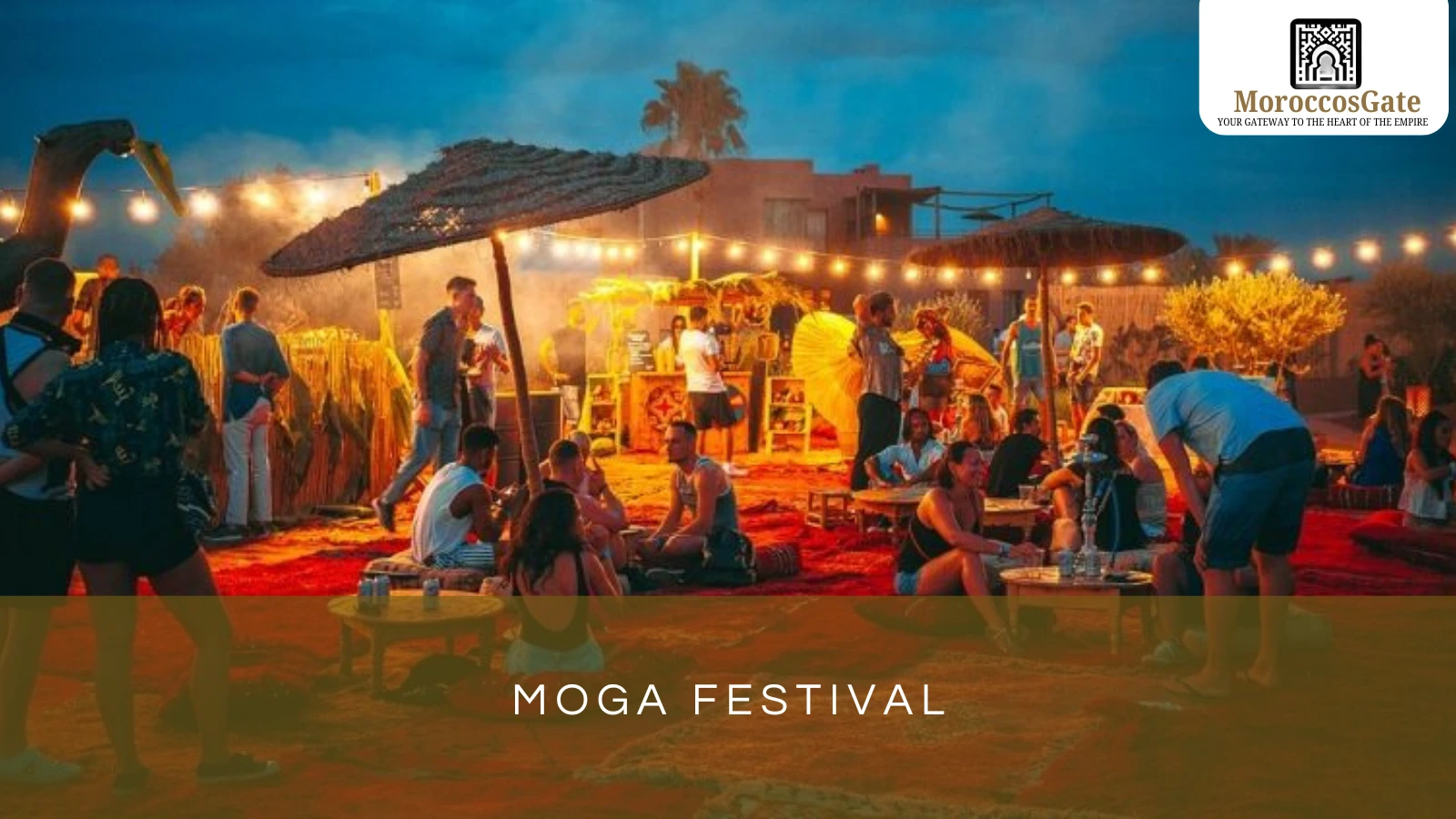
Moga is unlike any other festival on Morocco’s calendar — and genuinely unlike any festival on most calendars anywhere. It is a boutique electronic music festival set in and around the Sofitel Essaouira Mogador Golf & Spa hotel complex on the Atlantic coast, pairing world-class electronic music programming with Atlantic ocean sunsets, wellness activities, art installations, and the extraordinary backdrop of Essaouira’s UNESCO-listed medina.
The festival’s concept — described by its founders as “inspired by Atlantic vibes, connecting people from all over the world through music, dance, art, and wellness” — draws a distinctly international crowd: European festivalgoers who might otherwise be heading to Ibiza or Dunk! or Dekmantel, but who find in Moga an experience that is simultaneously more intimate, more aesthetically distinctive, and more culturally rooted.
2026 Dates and Significance
The 10th anniversary edition of Moga Festival takes place from 30 September to 4 October 2026 in Essaouira, Morocco — five days of music, art, movement, and unforgettable experiences to celebrate a decade of Atlantic beats. The festival is strictly 21+ and ticketed, with packages ranging from day passes to full five-day accommodation-and-festival bundles.
The lineup has not yet been fully announced for 2026’s landmark edition, but previous Moga festivals have featured artists including Dixon, Ben UFO, Floating Points, Peggy Gou, Âme, and Bicep — a standard of electronic music programming that rivals the most respected boutique festivals in Europe.
Why Moga Is Worth the Trip
Beyond the music, Moga’s setting is extraordinary. Essaouira’s famous alizé wind — the Atlantic trade wind that keeps the city 10°C cooler than Marrakech throughout the year — makes late September/early October here genuinely perfect festival weather. Sunrise sets on the beach, daytime wellness and yoga sessions, art installations in the hotel gardens, and evening headline performances that run until dawn create a total experience that many festival veterans rank among the finest they have ever attended.
The 10th anniversary edition in 2026 promises something special — a decade of Atlantic beats deserves celebration, and the Moga team has a track record of delivering exactly that. Book early: Moga sells out months in advance, and accommodation packages through the festival itself are the most convenient option. See our Morocco travel deals page for partner offers.
6. Festival National des Arts Populaires, Marrakech
Marrakech arts festival July 2026 traditional music
Not a coastal festival, but an important entry in Morocco’s summer cultural calendar that many travellers combine with a beach trip along the Atlantic: the Festival National des Arts Populaires takes place in mid-July 2026 in Marrakech, typically in the dramatic setting of El Badi Palace — a 16th-century ruined palace whose roofless grandeur makes it one of the most extraordinary performance spaces in Africa.
The festival showcases traditional Moroccan folk music and dance from every region of the country: Gnawa, Amazigh, Andalusian, Saharan, and Arabic traditions all represented in performances that range from intimate to spectacular. It is a rare opportunity to see the full breadth of Morocco’s regional musical heritage in a single venue, and the Badi Palace setting at night — torchlit, ancient, magnificent — is unlike anything else.
Marrakech in July is hot (typically 35–40°C during the day), but the festival’s evening performances avoid the midday heat. Combine with the Atlantic coast — Essaouira is just 2.5 hours from Marrakech — for a balanced summer itinerary of culture and coast.
Travel Tips for Morocco’s Summer Beach Festival Season
What Is the Weather Like at Morocco’s Summer Festivals?
Morocco’s summer climate varies dramatically between the coast and inland areas — understanding this is essential to enjoying the festival season.
- Casablanca (Jazzablanca, July): Atlantic-tempered, pleasantly warm. July daytime temperatures typically 24–28°C, evenings around 18–22°C — perfect for outdoor concerts. Occasional morning coastal mist clears by mid-morning.
- Agadir (Timitar, July): Morocco’s sunniest city, warm and dry. July highs 25–30°C with Atlantic breeze keeping humidity low. Evening outdoor concerts are extremely pleasant.
- Essaouira (Moga, September/October): Famous for its alizé wind, which keeps temperatures 8–10°C below inland Morocco even in summer. September/October is ideal: 22–26°C, low humidity, minimal wind by late September. Bring a layer for late-night sets.
- Northern coast (M’diq, Nador — Beach Festival, July/August): Mediterranean climate, warm and dry. July 27–33°C with sea breezes providing relief. Nador can be slightly hotter than M’diq.
- Inland (Marrakech — Arts Populaires, July): Hot. 35–42°C daytime. Plan any non-evening activities for early morning. Evenings at El Badi Palace are warm but manageable.
How to Get to Morocco’s Atlantic Coast
Ireland and the UK are exceptionally well connected to Morocco’s summer festival cities in 2026:
- Casablanca (CMN): Direct from Dublin (Aer Lingus, Ryanair), London Heathrow, London Gatwick, Manchester. Flight time approximately 3–3.5 hours.
- Marrakech (RAK): Direct from Dublin, London Heathrow, London Stansted, Bristol, Manchester, Birmingham. Closest airport for Essaouira (2.5 hours by road/bus).
- Agadir (AGA): Direct charter and scheduled flights from Dublin, London Gatwick, Manchester, Bristol. Approximately 3.5 hours.
- Tangier (TNG): Direct from London Gatwick, Madrid. Or arrive by ferry from Tarifa/Algeciras, Spain — a spectacular way to enter Morocco.
- Fes (FEZ): Good access for northern Morocco; Ryanair and Royal Air Maroc from London Stansted and Dublin.
Getting Between Festival Cities
Morocco’s ONCF rail network efficiently connects Tangier, Rabat, Casablanca, and Marrakech. The Casablanca–Tangier high-speed Al Boraq service covers the route in under two hours. Agadir and Essaouira have no train stations — use CTM/Supratours buses from Casablanca or Marrakech, or hire a car for flexibility. For the northern coast (M’diq, Nador), Grand Taxis from Tetouan are the standard local option. MoroccosGate can arrange private transfers between all festival destinations — get in touch to plan your route.
Booking Accommodation for Morocco’s Summer Festivals
A critical point: Morocco’s summer festival cities are popular with Moroccan domestic tourists as well as international visitors, meaning accommodation pressure during peak events is very real. Our advice:
- Jazzablanca (Casablanca, 2–11 July): Book 2–3 months ahead. The city has abundant hotel stock but festival week sees surge pricing.
- Timitar (Agadir, early July): Book early — Agadir’s beach hotels fill fast in summer regardless of the festival. Guesthouses in neighbourhoods like Talborjt and Anza offer more budget-friendly alternatives.
- Beach Festival Series (M’diq/Nador, July–August): M’diq in particular is extremely popular with Moroccan families in July and August. Book months in advance for anything decent.
- Moga (Essaouira, September): Festival accommodation packages direct from Moga (via their website) are the cleanest option. Independent riads in the Essaouira medina are an alternative — see our luxury riads guide.
Packing for Morocco’s Summer Festival Season
- Sun protection: High-SPF sunscreen (reapply often), a wide-brimmed hat, and UV-protective sunglasses are essential on Morocco’s summer coast. The Atlantic sun is deceptively intense.
- Layers for evenings: Atlantic coastal cities cool significantly after dark — particularly Essaouira. Always bring a light jacket or cardigan for evening concerts.
- Comfortable walking shoes: Festival sites involve a lot of standing. Trainers or supportive sandals are far more sensible than flip-flops for long evening sets.
- Cash: Most festival food stalls, street vendors, and small ticket booths are cash-only. Keep a supply of Moroccan Dirhams separate from your main wallet.
- Modest daywear: While beach and festival areas are relaxed about clothing, when exploring medinas and town centres please dress modestly (covering shoulders and knees). It is respectful and will significantly improve your interactions with local people.
- Reusable water bottle: Essential. Staying hydrated in Morocco’s summer heat is critical. Filtered water is available everywhere at very low cost.
Safety at Morocco’s Summer Festivals
As of April 2026, Morocco is safe and fully accessible for international tourists. Summer festivals are family-orientated, well-policed events. The main practical precaution is keeping your belongings secure in crowded areas — use a small crossbody bag that can be worn in front during busy concerts. For more current travel advice, the Irish Department of Foreign Affairs (dfa.ie) maintains up-to-date Morocco guidance.
Planning the Perfect Summer Festival Road Trip: Suggested Itineraries
7-Day Atlantic Coast Music Festival Trip (July)
- Days 1–2: Arrive Casablanca. Jazzablanca concerts at Anfa Park — headline international acts. Explore Casablanca: Hassan II Mosque, art deco city centre, Corniche seafront.
- Day 3: Travel to Agadir by bus or hired car (4.5 hours, or fly direct — frequent domestic flights). Check in, beach afternoon.
- Days 4–5: Festival Timitar in Agadir — free daytime events and main stage evening concerts. Day trip to Taghazout surf village (15 km north).
- Day 6: Drive or bus to Essaouira (2.5 hours). Explore the medina, windswept beach, ramparts.
- Day 7: Return to Marrakech (2.5 hours) or fly home direct from Agadir.
10-Day Northern Morocco Coast and Festival Trip (July/August)
- Days 1–2: Fly to Tangier. Beach Festival Series events on the Tangier seafront. Explore the Kasbah, Petit Socco, and American Legation Museum.
- Days 3–4: Drive or bus to M’diq (1.5 hours). Beach Festival events. Day trip to Tetouan and its Andalusian medina.
- Day 5: Travel to Chefchaouen (1 hour from M’diq). Explore the Blue City — wander the painted alleyways, swim in Ras el-Maa waterfall.
- Day 6: Festival Alegria events in Chefchaouen (if timing aligns).
- Days 7–8: Travel east to Nador (4 hours). Beach Festival events. Explore Marchica Lagoon.
- Days 9–10: Return to Tangier for departure, or continue to Fes (4 hours south).
For the full Morocco seasonal planning context, see our Best Time to Visit Morocco in 2026 guide.
Why Morocco’s Summer Coast Is Better Than You Think
The conventional wisdom about Morocco — “go in spring or autumn, avoid summer” — is correct for inland destinations like Marrakech and the Sahara Desert. But it sells Morocco’s Atlantic coast entirely short.
The Atlantic coast of Morocco in summer is genuinely one of the finest places in the Mediterranean-adjacent world to be. The Canaries Current keeps coastal temperatures moderate (24–30°C in most cities), the beaches are magnificent, the seafood is extraordinary, and the combination of Moroccan cultural richness with seaside relaxation is genuinely hard to find anywhere else at this latitude. Add a festival calendar that ranges from free family concerts to world-class ticketed events with headliners of the calibre of Robbie Williams and Jorja Smith, and the argument for a summer Morocco trip becomes very compelling indeed.
Morocco is also an outstanding value destination by European standards. A 10-day festival trip — flights from Dublin or London, comfortable mid-range accommodation, food, transport, and a mix of free and ticketed events — is achievable for considerably less than an equivalent trip to Spain, Italy, or Portugal during peak summer season.
For a complete picture of what Morocco offers across all seasons, see our comprehensive seasonal travel guide and our major music festivals guide covering Mawazine, Gnaoua, and the Fes Festival of World Sacred Music.
Frequently Asked Questions
Q1. When is Jazzablanca 2026?
A1. Jazzablanca 2026 runs from 2–11 July 2026 in Casablanca, Morocco. The 19th edition features 10 days of concerts across multiple stages including Anfa Park and United Nations Square, with headliners including Robbie Williams, Scorpions, Mika, Jorja Smith, and Juanes.
Q2. Are summer beach festivals in Morocco free?
A2. Many are. The 21st Edition Beach Festival Series (M’diq, Nador, Tangier — mid-July to late August) is entirely free. Festival Timitar in Agadir (early July) is also free for all mainstage concerts. Jazzablanca is ticketed from around 315 MAD, and Moga is a premium ticketed event (21+). Entry prices are generally very reasonable by European standards.
Q3. When is the Moga Festival 2026?
A3. The Moga Festival 2026 — celebrating its 10th anniversary — takes place from 30 September to 4 October 2026 at the Sofitel Essaouira Mogador Golf & Spa in Essaouira, Morocco. It is a 21+ boutique electronic music festival. Tickets and accommodation packages are available via the official Moga website.
Q4. When is Festival Timitar 2026?
A4. Festival Timitar 2026 takes place in early July 2026 in Agadir, Morocco. Exact dates are to be confirmed by the festival committee — historically held in the first or second week of July. All mainstage concerts are free to attend.
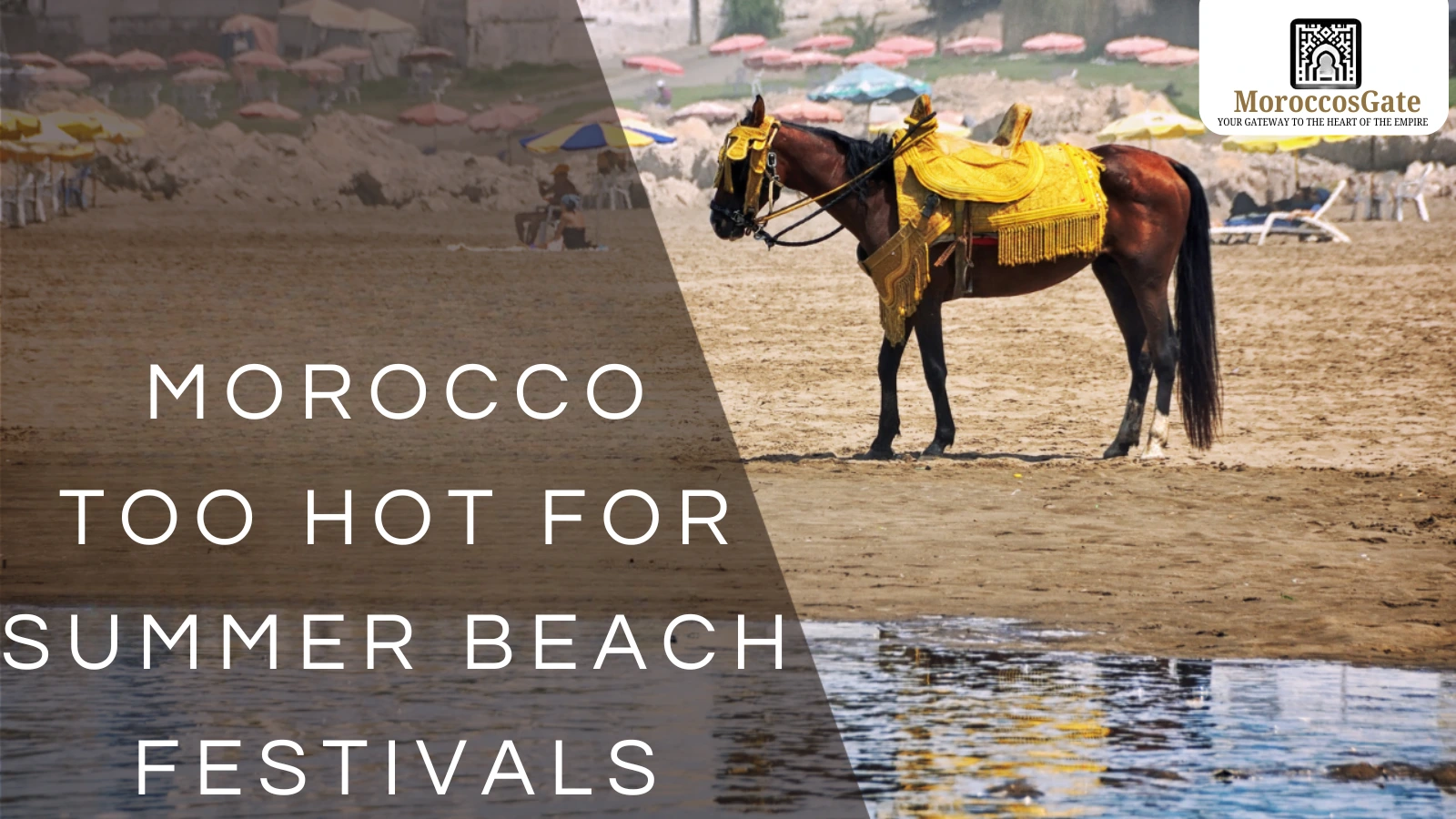
Q5. Is Morocco too hot for summer beach festivals?
A5. On Morocco’s Atlantic coast — Casablanca, Agadir, Essaouira — summer temperatures are moderate (24–30°C) thanks to the cool Canaries Current ocean influence. Evening concerts are very comfortable. Inland cities like Marrakech are hot in July and August (35–42°C), but coastal festival destinations are genuinely pleasant for summer travel.
Q6. What is the best summer festival in Morocco for families?
A6. The free Beach Festival Series across M’diq, Nador, and Tangier (mid-July to late August) is ideal for families — free entry, children’s activities, and a thoroughly Moroccan atmosphere. Festival Timitar in Agadir is also family-friendly and free. Jazzablanca is all-ages. Moga Festival is strictly 21+.
Q7. How do I buy tickets for Jazzablanca 2026?
A7. Tickets are available through the official Jazzablanca website at jazzablanca.com. Premium packages and intimate venue tickets sell out first — purchase as soon as the programme is announced, ideally 4–6 weeks before the festival opens on 2 July.
Q8. Can I combine Morocco’s summer beach festivals with a Sahara Desert trip?
A8. The summer months (July–August) are not ideal for Sahara Desert tours — temperatures in Merzouga can exceed 43°C. We recommend combining summer festivals with coastal Morocco only, and saving the Sahara for spring (March–May) or autumn (September–November). See our full seasonal guide for details.
About MoroccosGate Editorial Team
The MoroccosGate Editorial Team is based between Dublin and Casablanca, with contributors who have lived, worked, and travelled extensively across Morocco for over a decade. Our festival guides are written from direct experience — we attend these events, we know the cities, we know the best riads and the best local restaurants and the exact spot to stand for a Gnawa maâlem performance at midnight in Essaouira. We write for travellers who want to experience Morocco as it actually is: complex, warm, spectacular, and endlessly rewarding. If you have a question about planning a Morocco festival trip, we are here to help.
Ready to Plan Your Morocco Summer Festival Trip?
From the roar of 150,000 people at Jazzablanca’s Anfa Park to the dawn stillness of a Moga sunrise set above the Atlantic, Morocco’s summer festival season in 2026 is genuinely one of the finest travel opportunities in the world. You will find world-class music, extraordinary food, beautiful beaches, and the warm hospitality that makes Morocco one of the most beloved destinations on earth — all at a fraction of what an equivalent experience would cost in Western Europe.
- → Talk to our travel experts and start planning your 2026 summer festival trip
- → Browse curated Morocco travel deals for summer 2026
- → Read our complete guide to Morocco’s major music festivals 2026
- → See our full seasonal travel guide for Morocco 2026
- → Get all offer on https://deals.moroccosgate.com/
Affiliate Disclosure (Reminder): Some links in this article are affiliate links. MoroccosGate may earn a commission if you book tours, accommodation or travel services through these links, at no extra cost to you. All recommendations reflect our genuine editorial opinion. This commission helps us continue producing free, independent Morocco travel content.