
Affiliate Disclosure: This article contains affiliate links. If you book a tour, hotel, flight, or travel service through links on this page, Morocco’s Gate may earn a small commission at no additional cost to you. We only recommend products and services we genuinely trust. Thank you for supporting our independent travel content.
Morocco’s Major Music Festivals in 2026: Mawazine, Gnaoua, Fes Sacred Music & More
Imagine standing in the open air of a centuries-old imperial city as Sufi voices rise into the night sky above your head, mingling with the scent of orange blossom and old stone. Or picture yourself pressed into a joyful crowd on the Atlantic coast of Essaouira as a Gnawa master — a maâlem — locks eyes with a jazz musician from New Orleans and, without a word, they begin to play something entirely new. And then picture the grandest scale of all: two and a half million people gathered in Rabat’s open-air arenas as a global superstar closes the night to a roar that shakes the city.
These are not dreams. They are three entirely real, entirely different, and utterly extraordinary events that take place in Morocco every single year — and in 2026, all three are happening within just a few weeks of each other.
Morocco’s music festival calendar is one of the most compelling in the world, blending deep spiritual tradition with contemporary global pop culture, ancient Amazigh and African rhythms with jazz, blues, hip-hop, and electronic music. Whether you are a music obsessive, a cultural traveller, or simply someone who wants to experience Morocco at its most vibrantly alive, planning your 2026 trip around the festival season is one of the finest travel decisions you can make.
In this guide, Morocco’s Gate takes you through the country’s four major music festivals, with confirmed 2026 dates, what to expect at each, practical planning advice, and everything else you need to make the most of Morocco’s extraordinary summer of sound.
Morocco’s Music Festival Season 2026: Quick Overview
| Festival | Location | 2026 Dates | Genre Focus | Admission |
|---|---|---|---|---|
| Fes Festival of World Sacred Music | Fes | 4–7 June 2026 | Sacred & spiritual world music | Ticketed (some free events) |
| Mawazine — Rythmes du Monde | Rabat | 19–27 June 2026 | Global pop, hip-hop, Afrobeats, rock, Arabic | 90% free; some ticketed stages |
| Gnaoua World Music Festival | Essaouira | 25–27 June 2026 | Gnawa, jazz, blues, world fusion | Free main stage; ticketed intimate venues |
| Tanjazz | Tangier | September 2026 (TBC) | Jazz &a world music | Ticketed |
Note: Mawazine and Gnaoua overlap by three days (25–27 June), creating a rare opportunity to attend both within a single Morocco trip with strategic planning.
1. Mawazine — Rythmes du Monde, Rabat: Africa’s Biggest Music Festival
What Is Mawazine?
Let us begin with the sheer scale of it, because nothing quite prepares you for what Mawazine actually is. Mawazine — Rythmes du Monde (Rhythms of the World) is not merely one of Morocco’s biggest music events. It is consistently ranked among the top music festivals on the planet, drawing nearly 2.5 million music enthusiasts from around the world. For nine nights in June, Morocco’s capital city transforms into what can genuinely be described as the largest open-air concert venue on earth.
The festival was founded in 2001 under the patronage of King Mohammed VI, supervised by the personal secretary of the King of Morocco and the president of Maroc Culture, the cultural foundation that also organises other events in Morocco. Its name, Mawazine, translates loosely as “scales” or “rhythms” — a nod to balance, harmony, and the dialogue between different musical traditions that sits at the festival’s philosophical heart.
2026 Dates and Venues
The 2026 Mawazine Festival runs from 19–27 June 2026 in Rabat, Morocco. The edition spreads across 9 stages over 9 days with a lineup spanning global pop superstars, African legends, Arabic music icons, and emerging Moroccan talent.
The main stages are:
- OLM Souissi: The festival’s flagship arena, capable of holding over 150,000 spectators at a time. This is where the headline international acts perform — the stage that has hosted names such as Mariah Carey, Rihanna, Jennifer Lopez, Beyoncé, Kanye West, and David Guetta in past editions.
- Bouregreg Stage: An open-air riverside stage set against the dramatic backdrop of the Bou Regreg estuary separating Rabat from its twin city Salé, with the Hassan Tower visible on the skyline.
- Théâtre National Mohammed V: A more intimate indoor venue for Arabic music, classical, and jazz performances.
- Nahda Stage and additional community stages throughout the city, offering performances that bring the festival to Rabat’s neighbourhoods.
The Programme: What to Expect
Mawazine offers diverse genres — from pop and hip-hop to traditional Moroccan rhythms — with something for every music lover, and provides a cultural fusion where Morocco’s rich musical heritage sits alongside international sounds that unite audiences. Artists confirmed or expected for 2026 include Afrojack, Becky G, Kid Cudi, aespa, Will Smith, Wizkid, and Julian Marley.
What is perhaps most remarkable about Mawazine — and what distinguishes it from almost every comparable festival in the world — is its accessibility. Entrance to most stages is free, making this one of the most democratically accessible mega-festivals in the world. The beauty of the festival is that it has events which are both paid and free of cost, with a majority of concerts free, done to entertain people from all walks of life.
Only the headline OLM Souissi concerts require purchased tickets, and even these are priced accessibly by international standards. The result is a festival that genuinely reflects its host country: open, generous, and designed for everyone rather than the privileged few.
Beyond the Music: Rabat During Mawazine
Mawazine is also a magnificent reason to spend time in Rabat — a city that is often overlooked by travellers heading straight to Marrakech or Fes, but which is one of Morocco’s most cultured and liveable capitals. During festival week, the city takes on an extraordinary energy: streets fill with visitors from across Africa, Europe, and the Arab world; food vendors line the riverfront; and the sense of collective celebration is palpable at every hour of the day and night.
Beyond the festival itself, Rabat offers the magnificent Chellah necropolis (a Roman and medieval Moroccan ruin of extraordinary beauty), the Hassan Tower and Mausoleum of Mohammed V, the Kasbah of the Udayas overlooking the Atlantic, and a small but excellent medina. The Mohammed VI Museum of Modern and Contemporary Art is one of the finest art institutions in North Africa. Spending two or three days in Rabat around the festival — exploring the city by day, attending concerts at night — is a deeply rewarding itinerary.
Practical Tips for Mawazine 2026
- Book accommodation early: Rabat hotels fill rapidly during festival week. Book at least three months in advance. Alternatively, consider staying in nearby Casablanca (45 minutes by train) and commuting to the festival by rail.
- Arrive early for headline shows: The OLM Souissi arena begins filling hours before major acts. Arriving 90 minutes before a headline performance is advisable for a good position.
- Use public transport: Rabat has an efficient tram network that connects the city centre to the OLM Souissi area. Taxis are also plentiful but surge in price during peak festival hours.
- Free vs ticketed stages: Most community stages are entirely free — you can experience an extraordinary amount of music without purchasing a single ticket.
- Check the official lineup: Final lineup announcements typically come 4–6 weeks before the festival opens. Follow the official Mawazine website and social channels for updates.
2. Gnaoua World Music Festival, Essaouira: A UNESCO-Recognised Celebration of Living Heritage
What Is the Gnaoua Festival?
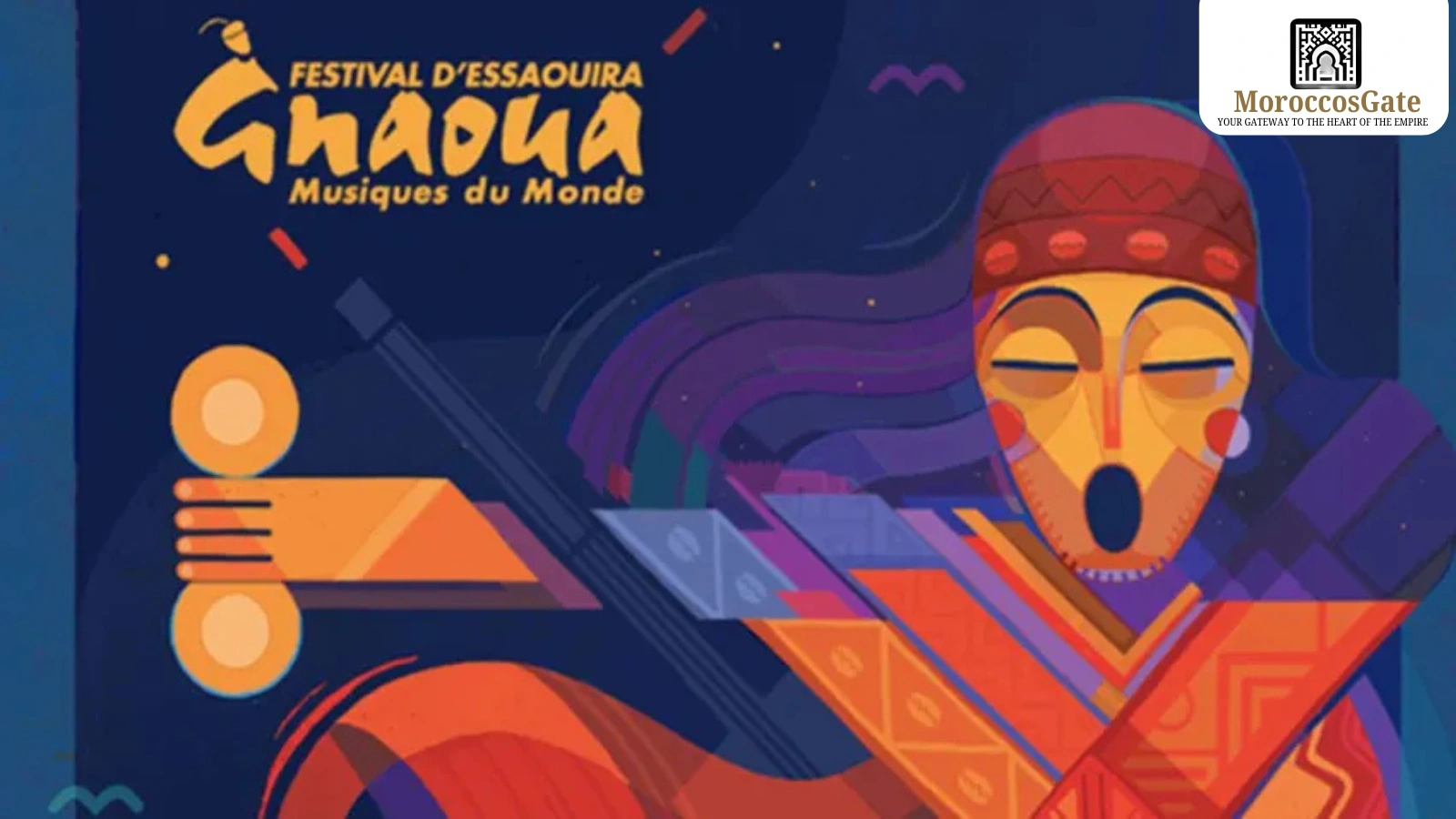
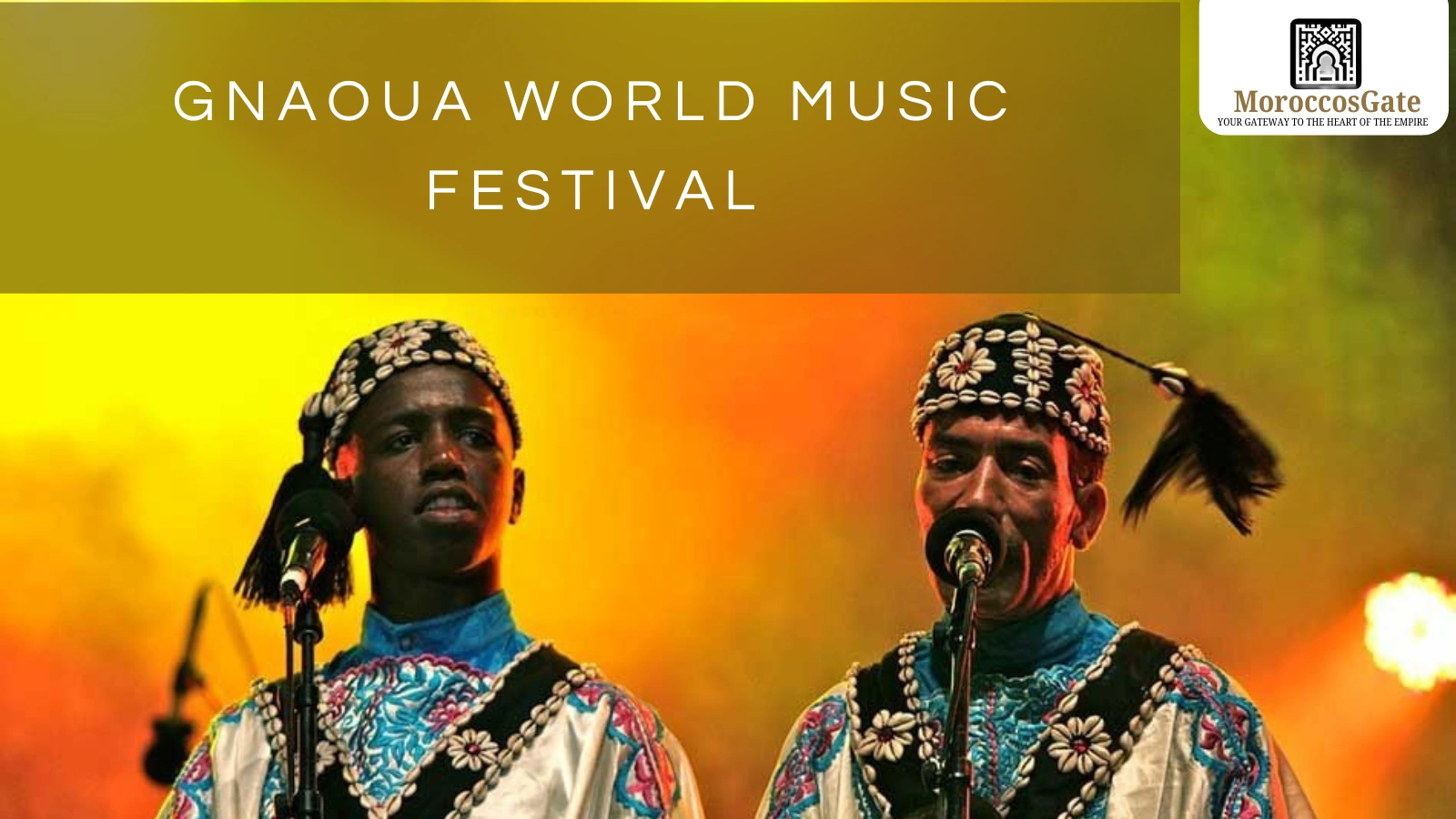
If Mawazine is a spectacle of global scale, the Gnaoua World Music Festival in Essaouira is something altogether more intimate, more rooted, and — for many who attend both — more profound. Dating back to 1998, the Gnaoua Festival is the largest festival of its type in the world, with a strong emphasis on showcasing Gnawa music, culture and traditions, which go back over three hundred years, having originated in West Africa and brought to Morocco where it continues to flourish.
Gnawa music — the spelling varies between Gnawa and Gnaoua — is one of the most distinctive and spiritually charged musical traditions in the world. Rooted in the experience of sub-Saharan Africans who were brought to Morocco centuries ago, it blends percussion, call-and-response vocal chanting, the hypnotic sound of the guembri (a three-stringed bass lute), and the metallic percussion of qraqeb (iron castanets) into trance-inducing ritual performances of extraordinary power. UNESCO recognised Gnawa music and its associated cultural practices as Intangible Cultural Heritage of Humanity in 2019 — a recognition that underscores the festival’s significance as a living custodian of this tradition.
2026 Dates and Location
The 27th edition of the Gnaoua World Music Festival takes place from 25 to 27 June 2026, in Essaouira, Morocco. The edition will bring together over 400 artists, including 42 maalems.
The festival takes place in the beautiful Moroccan coastal city of Essaouira, with the main stage located at Moulay Hassan Square. Beyond the main stage, intimate concerts take place at historic venues including Zaouia Issaoua, Zaouia Sidna Blal, Bayt Dakira, and Dar Souiri — each available at 250 MAD per night.
The Programme: Maalems Meet the World
The heart of the Gnaoua Festival is the maâlem — the Gnawa master musician, inheritor of a tradition passed down through generations of oral transmission, ritual practice, and apprenticeship. Each year, the festival brings together the most accomplished maalems from across Morocco and pairs them in improvised fusion collaborations with international artists from jazz, blues, soul, reggae, electronics, and global music traditions.
The 2026 lineup features 47SOUL, Yasmine Hamdan, Hoba Hoba Spirit, and Oudaden, among others, with the theme of “port cities” — artists coming from regions deeply shaped by maritime exchanges — from Lebanon to Cameroon, Brazil to the United States, India to Ethiopia, and Palestine to Morocco.
These fusion performances are the festival’s most magical moments. There is something genuinely alchemical about watching a Gnawa master and a jazz bassist find each other in an improvised dialogue — two musical languages, ancient and modern, African and American, converging into something that belongs to neither tradition alone and yet speaks to both.
Beyond the main stage, the festival transforms Essaouira’s entire medina into a performance space. Street musicians play in the alleyways. Lilas ceremonies — the sacred all-night Gnawa ritual — take place in private settings for those fortunate enough to be invited or guided there. The beach becomes an impromptu stage. The city does not merely host the festival; it becomes it.
The 2026 Edition: Special Programmes
In 2026, the festival hosts Human Rights forums — a series of roundtable discussions centred on human mobility and cultural dynamics. The Berklee at the Gnaoua and World Music Festival programme runs from June 22–27, 2026 — a music intensive for professional and semi-professional musicians to engage in performances with musicians from diverse corners of the world. This partnership with Berklee College of Music reflects the festival’s commitment to musical education and cross-cultural exchange that goes beyond the concerts themselves.
Essaouira: The City That Makes the Festival
The Gnaoua Festival would be extraordinary in any setting. In Essaouira, it is transcendent. This small, white-and-blue walled city on Morocco’s Atlantic coast is one of the most beautiful places in North Africa — a UNESCO World Heritage Site with an extraordinary history as a meeting point of African, Arab, Sephardic Jewish, Portuguese, and European cultures. Its medina is compact enough to walk entirely in an hour yet rich enough to absorb days of exploration.
During the festival, the city’s character deepens dramatically. Every square, every rooftop, every café terrace becomes part of the experience. The famous Essaouira wind — the alize — keeps the June heat perfectly in check, making the city far more comfortable than inland Morocco at the same time of year. A riad within the medina walls is the ideal base.
Practical Tips for the Gnaoua Festival 2026
- Book accommodation immediately: Essaouira is a small city and the festival utterly overwhelms its accommodation capacity. Book accommodation months in advance — the city fills up completely during the Gnaoua World Music Festival.
- Arrive early for Moulay Hassan Square: Arrive at Moulay Hassan Square at least one hour before headline acts — the square fills fast.
- Stay inside the medina: Staying inside the medina walls offers the most immersive experience — you’ll stumble upon street performances at every corner.
- Book intimate venue tickets in advance: The zaouia and private venue concerts (250 MAD per night) sell out early and offer a completely different — far more intimate and spiritually resonant — experience than the main stage.
- Getting there: Essaouira is approximately 175 km from Marrakech — a scenic 2.5–3 hour drive or regular CTM/Supratours bus service. Many visitors fly into Marrakech and transfer to Essaouira specifically for the festival.
- Layer up for evenings: The festival runs late into the night — wear layers as Atlantic evenings can be cool in June.
- Bring cash: Bring cash for food stalls, artisan markets, and intimate venue tickets.
3. Fes Festival of World Sacred Music: Spirituality and Sound in Morocco’s Ancient Capital
What Is the Fes Festival?
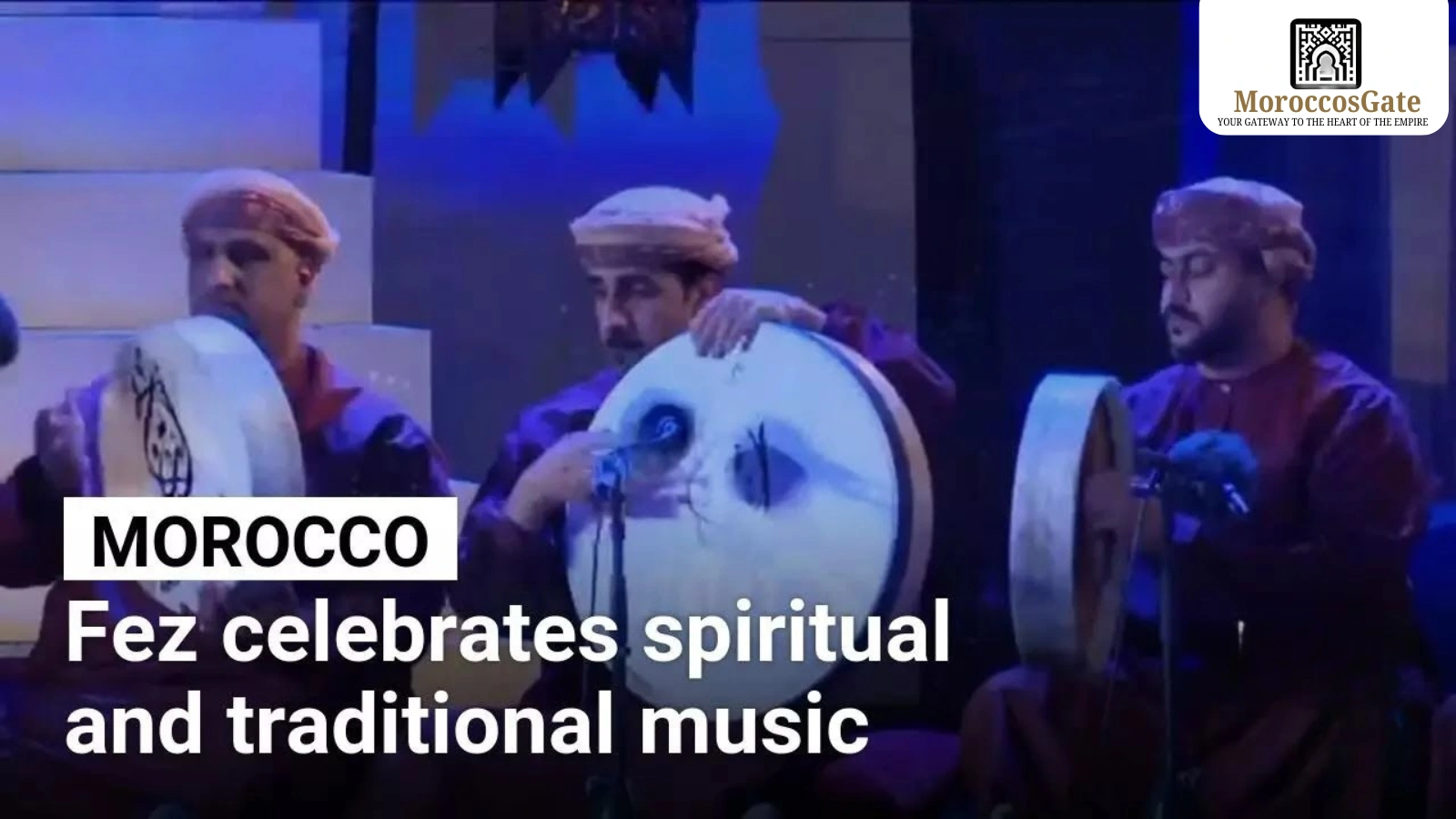
The third and most spiritually profound entry in Morocco’s major festival calendar is the Fes Festival of World Sacred Music — or, in French, the Festival des Musiques Sacrées du Monde. The festival was established in 1994 by Faouzi Skali, a philanthropist and the president of the Spirit of Fez Foundation, with the goal of promoting unity among individuals of all races and religions through spiritual and humanitarian values, inspired by Andalusian principles. Skali believed that music, being a universal language, has the power to communicate with people from all walks of life.
In the three decades since its founding, the Fes Festival has grown into one of the world’s most respected cultural events — not merely a music festival but a genuine platform for interfaith and intercultural dialogue. The festival includes concerts, debates, and joint performances of Muslim and Christian devotional music from artists from all over the world. Over the years, the festival has showcased artists such as Patti Smith, Kadim Al-Sahir, Youssou N’Dour, Sami Yusuf, Salif Keita, Ravi Shankar, Miriam Makeba, Björk and Joan Baez.
2026 Dates and Theme
Fes will host the 29th edition of the Fes Festival of World Sacred Music from 4 to 7 June 2026. The event is organised by the Foundation Esprit de Fès and will focus on the theme “Fes and the Mâalemines: Guardians of the Gesture and Heritage.”
This year’s programme will include more than 160 artists and 18 main performances over four days. In addition to evening concerts, there will also be morning sessions designed to make the experience more relaxed and personal.
The opening show will take place on 4 June at Bab Makina, with a performance called “Anima Ex Materia — From Heaven to Earth”, dedicated to craftsmanship. A special performance titled “Bodies” will also mark 70 years of diplomatic ties between Morocco and Germany under the “Sabeinya” initiative, bringing together German artist Kat Frankie and women’s groups from the High Atlas, Lebanon and India.
The Music: A World Without Borders
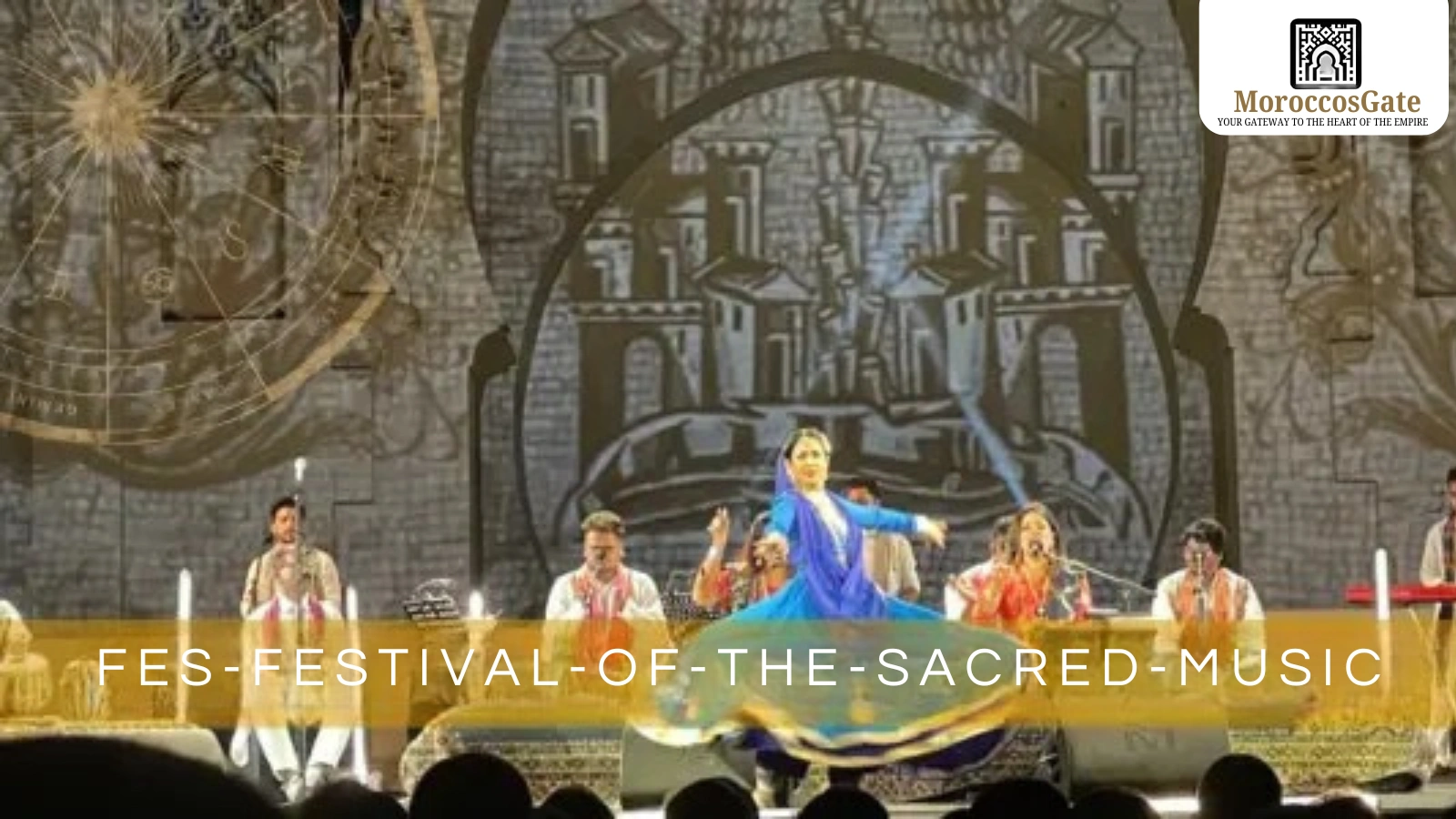
The Fes Festival defines “sacred music” in the broadest and most generous possible sense. This is not a festival of any single religious tradition — it is a celebration of the spiritual dimension of music itself, across all traditions and all cultures. Sufi devotional chanting, Gregorian plainchant, Hindu classical ragas, Jewish liturgical music, gospel, flamenco, indigenous spiritual songs from the Americas — all have found a place on the Bab Makina stage.
What the festival does with particular brilliance is to create intentional dialogue between traditions. A Persian flute player and a Galician bagpiper might find themselves improvising together. A Moroccan Sufi brotherhood might share a stage with a South Indian percussion ensemble. These are not contrived encounters — they are carefully curated artistic conversations that reveal, unexpectedly and movingly, the shared grammar of the human spiritual impulse.
A new award called the “Breath of the Hand” prize will be launched this year to support young people working in traditional crafts — reflecting the festival’s deepening engagement with Morocco’s wider cultural heritage, not only its musical traditions.
The Venues: Fes as a Living Stage
The venues of the Fes Festival are as important as the music itself. The primary concert space is Bab Makina — a vast, floodlit plaza in front of the Royal Palace gates, its walls of carved stucco and cedar glowing under festival lights, its scale perfectly suited to large-scale orchestral and ensemble performances. This is one of the most visually extraordinary concert settings in the world.
Alongside Bab Makina, concerts take place in Jnan Sbil Gardens — a fragrant, tree-canopied park adjacent to the medina where more intimate performances create a completely different atmosphere — and in various historic courtyards and palace spaces throughout the Fes el-Bali medina. The morning concerts, a recent and popular addition to the programme, take place in smaller, more personal settings that allow genuine closeness between artist and audience.
Fes: Beyond the Festival
The Fes Festival is an exceptional reason to spend time in what many consider Morocco’s greatest city. Fes el-Bali — the old medina — is a UNESCO World Heritage Site and one of the largest car-free urban areas in the world: a labyrinth of 9,000 alleyways, traditional workshops, ancient madrasas, hammams, and souks that has remained essentially unchanged for a thousand years. Exploring it by day — the tanneries with their vivid dye vats, the Bou Inania madrasa’s exquisite tilework, the medieval Kairouyine University — and attending concerts in its historic spaces at night is an experience of extraordinary density and richness.
Practical Tips for the Fes Festival 2026
- Book accommodation early: Festival week sees strong demand for Fes’s best riads and guesthouses. Book two to three months in advance.
- Tickets: Main evening concerts at Bab Makina are ticketed and sell out. Purchase through the official festival website (fesfestival.com) as soon as the programme is announced.
- Attend a morning session: The smaller morning concerts offer a completely different and deeply personal experience — less crowd, more intimacy, and a chance to hear extraordinary music in an unhurried setting.
- Allow time for the medina: Budget at least two days for exploring Fes el-Bali. Hire a licensed local guide for your first excursion — the medina is genuinely labyrinthine and a good guide will open doors, literally and figuratively, that you would never find alone.
- Dress modestly: Fes is a deeply traditional city. Covering shoulders and knees is respectful and appropriate, both in the medina and at festival venues.
- Getting there: Fes has its own international airport (FEZ) with direct connections from several European cities. Alternatively, Casablanca’s Mohammed V Airport (CMN) is approximately 3.5 hours by train.
4. Tanjazz, Tangier: Morocco’s Jazz Capital
What Is Tanjazz?
Morocco’s fourth major music festival is smaller in scale than the three above, but deeply beloved by jazz fans and those in the know. Tanjazz — the Tangier International Jazz Festival — has been running since 2000, making it one of Morocco’s oldest annual music events and a significant institution in the African jazz world.
It is held in Tangier, the cosmopolitan port city at Morocco’s northwestern tip where the Atlantic Ocean meets the Mediterranean Sea and Africa looks across a narrow strait towards Europe. Tangier’s position at this geographical and cultural crossroads — a city that has been shaped by Phoenician traders, Arab conquerors, Portuguese colonisers, Spanish administrators, and the extraordinary cast of Beat Generation writers and artists (William Burroughs, Jack Kerouac, Paul Bowles, Allen Ginsberg) who made it their home in the 1950s and 60s — gives it an atmosphere of cultural hybridity unlike anywhere else in Morocco.
Tanjazz takes place in September, making it an excellent addition to an autumn Morocco itinerary. The festival typically runs for four to five days, with performances at multiple venues across the city — outdoor stages, hotel terraces, intimate jazz clubs, and the beautiful Villa Harris gardens. It features a blend of Moroccan jazz artists, African musicians, and international guests from Europe, the Americas, and beyond.
For visitors who love the atmosphere of a jazz festival without the overwhelming scale of Mawazine, Tanjazz offers something uniquely appealing: a relatively intimate event in one of the world’s most intriguing cities, at one of the year’s most beautiful times to visit Morocco.
Exploring Tangier Beyond the Festival
Tangier is a city that richly rewards exploration. The Kasbah — a hilltop fortified quarter with panoramic views across the Strait of Gibraltar — houses a beautiful palace museum and some of Morocco’s most characterful small guesthouses. The Grand Socco and Petit Socco squares buzz with café life. The American Legation Museum (the United States’ first overseas diplomatic property, established in 1821) houses an extraordinary collection of art relating to Morocco’s international connections. And the city’s relationship with music, literature, and the arts runs deep — Paul Bowles lived here for over half a century, and the atmosphere he described in The Sheltering Sky still clings to certain corners of the medina.
Planning a Morocco Festival Trip: How to Combine Multiple Events
One of the most compelling aspects of Morocco’s 2026 festival calendar is how combinable the events are. With smart planning, it is entirely possible to attend two or even three major festivals on a single extended trip.
The Ultimate Morocco Music Festival Itinerary (June 2026)
Here is a suggested 14-day itinerary that captures the Fes Festival, Mawazine, and the Gnaoua Festival in a single trip:
- Days 1–2: Arrive Fes. Explore the medina. Attend morning and evening sessions at the Fes Festival of World Sacred Music (4–7 June).
- Days 3–4: Continue in Fes. Festival closing concerts. Day trip to the Roman ruins of Volubilis and the holy city of Moulay Idriss.
- Days 5–6: Travel to Rabat (3 hours by train). Explore the city — Hassan Tower, Chellah, Kasbah des Oudayas.
- Days 7–11: Mawazine Festival in Rabat (19–27 June — join for its final five nights). Multiple free stages by day; headline concerts in the evenings.
- Days 12–14: Travel to Essaouira (via Casablanca or Marrakech). Gnaoua World Music Festival (25–27 June). Explore the medina, attend street performances and the main stage.
This itinerary also pairs beautifully with a few additional days in Marrakech at either end of the trip. For full seasonal context and travel planning around these festivals, see our comprehensive Best Time to Visit Morocco 2026 guide.
What to Budget
A significant advantage of Morocco’s festival calendar is that the majority of performances are free or very affordably priced. Mawazine’s community stages and Gnaoua’s main stage are both free. The Fes Festival’s ticketed concerts represent the largest individual expense — but even these are modest by European festival standards. Your main costs will be accommodation (book early for best prices), flights (direct routes from Dublin and London to Rabat, Casablanca, Fes, and Marrakech), food, and travel between cities.
Morocco’s Gate can arrange curated festival packages — accommodation, transfers, and guided support — for all three festivals. Get in touch to start planning.
Why Morocco’s Music Festivals Matter Beyond the Music
It is worth pausing to consider what makes Morocco’s festival culture something more than just a very good reason to visit. These are not festivals invented to attract tourists. They are living expressions of a country navigating its own identity — a country that is simultaneously deeply rooted in Amazigh, Arab, and African traditions and genuinely open to the world.
Mawazine’s extraordinary free admission policy is a political as well as cultural statement: music, in Morocco, is not a luxury reserved for those who can afford premium tickets. The Gnaoua Festival’s founding mission was explicitly to protect and transmit a musical heritage that the modern world could easily have allowed to fade. The Fes Festival was created in the aftermath of the Gulf War as an act of intercultural faith — the conviction that music can do what diplomacy sometimes cannot.
Attending these events is not simply entertainment. It is participation in something that Morocco is genuinely proud of: its role as a cultural crossroads, its tradition of hospitality and openness, its understanding that the world’s musical traditions, heard together, reveal far more about human commonality than about difference.
As our New Morocco 2026 guide explores, the country is investing heavily in its cultural infrastructure ahead of the 2030 FIFA World Cup. The festival season is part of this story — a demonstration that Morocco’s cultural ambition matches its economic and sporting ambitions.
Practical Planning: Essential Information for Festival Visitors
Getting to Morocco from Ireland and the UK
Direct flights connect Dublin and London to Rabat (RBA), Casablanca (CMN), Fes (FEZ), and Marrakech (RAK). Ryanair, EasyJet, Aer Lingus, and Royal Air Maroc all offer competitive routes, with flight times typically between 3–4 hours. For the June festival season, booking three to four months in advance is strongly recommended to secure reasonable fares.
Getting Between Festival Cities
Morocco’s rail network (ONCF) efficiently connects Tangier, Fes, Meknes, Rabat, Casablanca, and Marrakech. The Casablanca-Tangier high-speed line (Al Boraq) covers the northern route in under two hours. For Essaouira (no train station), regular CTM and Supratours bus services run from Marrakech, Casablanca, and Agadir. For a comfortable multi-festival itinerary, Morocco’s Gate can arrange private transfers between cities.
Accommodation Recommendations
- Rabat (Mawazine): Stay in the city centre near the medina or Agdal neighbourhood for easy tram access to festival venues. Alternatively, Casablanca (45 minutes by train) offers more accommodation options.
- Essaouira (Gnaoua): A riad within the medina walls is the optimal choice — you will be steps from festival activity. Book at least three months ahead.
- Fes (Sacred Music): A riad in Fes el-Bali (the old medina) or Fes el-Jdid (the newer medina quarter) puts you within walking distance of Bab Makina and the medina venues. See our guide to Morocco’s finest riads for inspiration.
Packing for Festival Season
- June is warm across Morocco (22–35°C depending on city and time of day) but Essaouira and coastal areas are cooled by Atlantic breezes — bring a light jacket for evening concerts.
- Comfortable walking shoes are essential — you will be on your feet for long periods.
- Modest dress (covering shoulders and knees) is respectful across all festival locations.
- Cash (Moroccan Dirhams) is useful for street food, souvenirs, and smaller venue tickets.
- A small daypack, a portable phone charger, and earplugs (for sleeping in a noisy festival city) complete the essentials.
Frequently Asked Questions
Q1. When is the Mawazine Festival 2026?
A1. The Mawazine Festival 2026 runs from 19–27 June in Rabat, Morocco. Most concerts across the nine community stages are free to attend, with ticketed performances at the main OLM Souissi arena.
Q2. When is the Gnaoua World Music Festival 2026?
A2. The 27th edition of the Gnaoua World Music Festival takes place from 25 to 27 June 2026, in Essaouira, Morocco. The main stage at Moulay Hassan Square is free; intimate venue concerts cost 250 MAD per evening.
Q3. When is the Fes Festival of World Sacred Music 2026?
A3. The 29th edition of the Fes Festival of World Sacred Music runs from 4 to 7 June 2026 in Fes, with the opening concert at Bab Makina on 4 June. The festival features more than 160 artists across 18 main performances.
Q4. Are Morocco’s music festivals free?
A4. Largely yes. Mawazine’s 90% free ticket policy makes it one of the most democratically accessible mega-festivals in the world. The Gnaoua Festival’s main stage is also free. The Fes Festival of World Sacred Music has ticketed evening concerts but also offers free daytime events and morning sessions.
Q5. Can I combine multiple Morocco festivals in one trip?
A5. Absolutely — and the 2026 calendar makes it particularly feasible. The Fes Festival (4–7 June), Mawazine (19–27 June), and Gnaoua (25–27 June) can all be attended on a 14–16 day trip with efficient travel planning. Morocco’s Gate can help you design the perfect itinerary.
Q6. What is Gnawa music?
A6. Gnawa (also written Gnaoua) music is a UNESCO-recognised spiritual and musical tradition originating in sub-Saharan Africa and deeply rooted in Moroccan culture. It combines the deep bass of the guembri (three-stringed lute), the metallic percussion of qraqeb castanets, and call-and-response chanting into trance-inducing ritual performances. The Essaouira festival is the world’s premier celebration of this living heritage.
Q7. Is Morocco safe for festival travel in 2026?
A7. Yes — Morocco is safe and welcoming for international tourists. All major festival cities (Rabat, Essaouira, Fes, Tangier) are secure, well-policed during events, and experienced in hosting large international visitor numbers. Standard travel precautions apply.
Q8. Where can I buy tickets for Morocco’s music festivals?
A8. Official ticketing is available through each festival’s website: mawazine.ma, festival-gnaoua.net, and fesfestival.com. Tickets for premium stages and intimate venues sell out quickly — purchase as soon as the programme is announced.
Plan Your Morocco Festival Trip with Morocco’s Gate
From the thundering main stage of Mawazine to the candlelit zaouia of the Gnaoua Festival and the moonlit courtyard of Bab Makina, Morocco’s 2026 music festival season offers experiences that cannot be replicated anywhere else on earth. These are not events you watch from the outside — they are events that pull you in, that place you within a living tradition of music, culture, and collective humanity that stretches back centuries.
Morocco’s Gate is here to help you plan every detail of your festival trip — whether that means a single-festival long weekend in Essaouira or a three-city, two-week odyssey through the full spectrum of Morocco’s musical culture.
- → Talk to our Morocco travel experts and start planning your 2026 festival trip
- → Browse curated Morocco travel deals
- → Read our full seasonal guide to visiting Morocco in 2026
- → Discover the Morocco Rose Festival 2026
Affiliate Disclosure: Some links in this article are affiliate links. Morocco’s Gate may earn a commission if you book tours, accommodation or travel services through these links, at no extra cost to you. This helps us continue producing free, independent Morocco travel content. We only recommend services we genuinely believe in.