
Affiliate Disclosure: This post contains affiliate links. If you book a hotel, tour, flight, or travel service through links on this page, Morocco’s Gate may earn a small commission at no extra cost to you. We only recommend services we genuinely trust and believe will make your Morocco 2030 World Cup trip exceptional. Thank you for supporting our independent travel content.
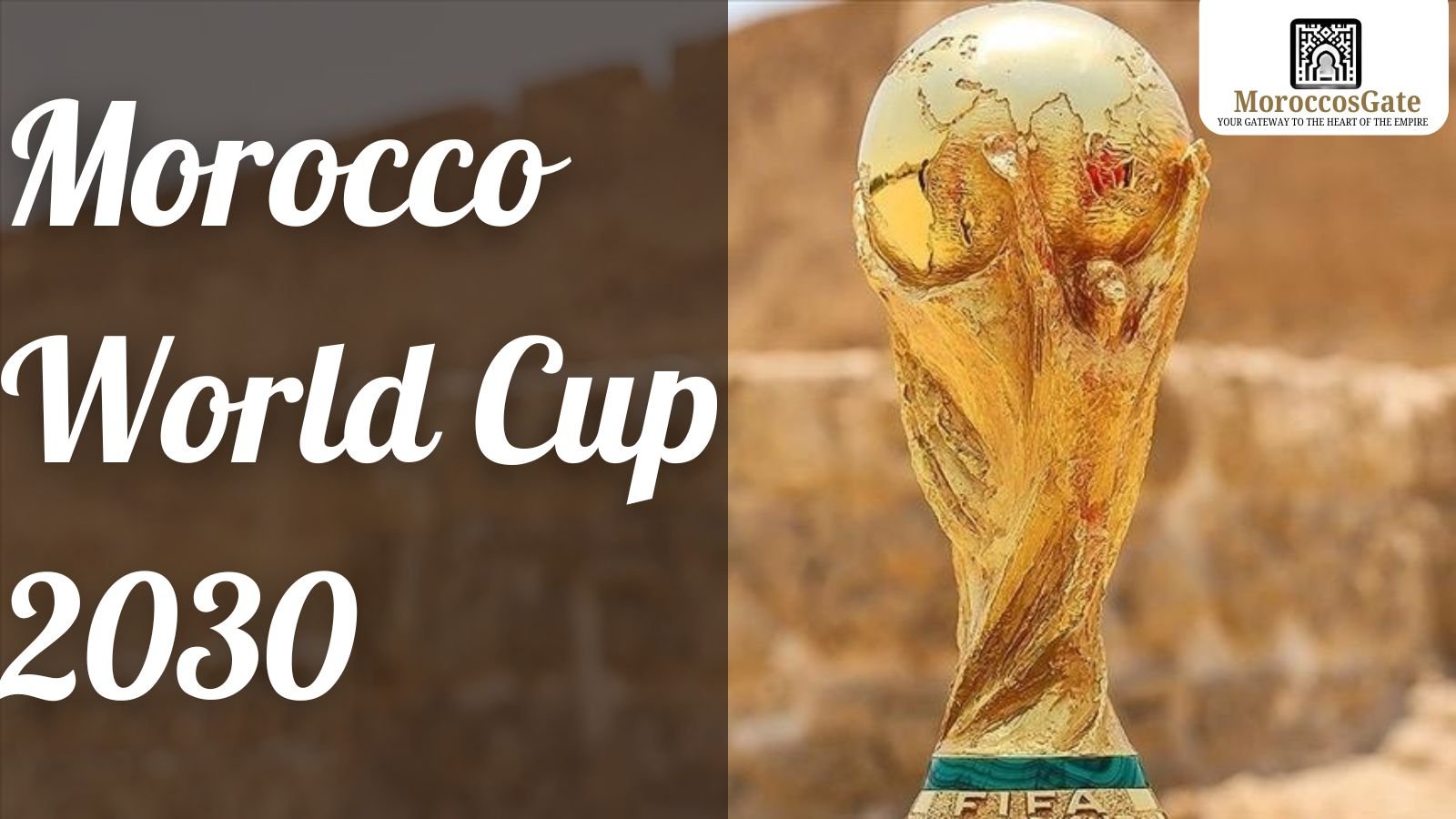
Morocco World Cup 2030 Travel Guide: Host Cities, Stadiums, Transport & Tips
Morocco is co-hosting the 2030 FIFA World Cup alongside Spain and Portugal, with matches played across six Moroccan cities: Casablanca, Rabat, Marrakech, Tangier, Fes, and Agadir. The centrepiece is the Grand Stade Hassan II in Casablanca — currently under construction with a planned capacity of 115,000, it will be the largest football stadium in the world. Morocco is investing over $10 billion in infrastructure including high-speed rail extensions, airport expansions, and new motorway connections. For fans travelling from Ireland or the UK, Morocco’s World Cup cities are 3–4 hours by direct flight, with excellent onward transport between venues.
When Morocco was confirmed as a co-host of the 2030 FIFA World Cup at the FIFA Extraordinary Congress on 11 December 2024 — alongside Spain and Portugal — the announcement did not surprise anyone who had been watching the country’s extraordinary transformation over the previous decade. Morocco had already reached the semi-finals of the 2022 World Cup in Qatar, becoming the first African nation to do so. The country had spent years investing in stadium infrastructure, transport networks, and tourism capacity. The bid, which scored an impressive 4.2 out of 5 in FIFA’s evaluation, was always going to succeed.
What it means in practice is this: in 2030, the world’s greatest sporting event will be held across three countries and two continents — and one of those countries is Morocco. Six of its cities will host matches. The world’s largest stadium will be built in Casablanca. More than 200 km of new high-speed rail line will connect Tangier to Marrakech for the first time. Airports will be expanded in every host city. And millions of football fans from across Europe, Africa, the Arab world, and beyond will descend on a country that has been preparing to welcome exactly this moment.
This guide is for fans from Ireland, the UK, and Europe who are planning to attend the Morocco 2030 World Cup. It covers the six host cities and their stadiums, the new infrastructure being built, how to get around between venues, where to stay, what to budget, and — crucially — what to do in each city beyond the football. Because attending a World Cup in Morocco is not just about the matches. It is about everything that surrounds them.
For background on Morocco’s broader travel landscape — festivals, trekking, seasonal travel advice — see our Best Time to Visit Morocco guide and our Morocco Music Festivals guide.
Morocco 2030 World Cup: Quick Reference
| Host City | Stadium | Capacity (2030) | Status | City Vibe |
|---|---|---|---|---|
| Casablanca | Grand Stade Hassan II | 115,000 | Under construction | Urban, cosmopolitan, Atlantic |
| Rabat | Grand Stade de Rabat (new) | 65,000 | New build | Capital city, cultural, coastal |
| Marrakech | Stade de Marrakech (upgraded) | 45,000+ | Upgrade planned | Iconic medina, Atlas backdrop |
| Tangier | Grand Stade Ibn Batouta | 65,000 | Upgrades planned | Port city, gateway to Europe |
| Fes | Grand Stade de Fès | 45,000 | Built (AFCON 2025) | Ancient medina, spiritual capital |
| Agadir | Grand Stade Adrar (expanded) | 70,000 | Expansion underway | Beach resort, surf coast |
Capacities are planned figures for 2030 and subject to final FIFA confirmation. The Grand Stade Hassan II in Casablanca is bidding to host the World Cup Final.
The Grand Stade Hassan II, Casablanca: The World’s Largest Stadium
Why This Stadium Matters
Let us begin with the headline: the Grand Stade Hassan II in Casablanca is planned to become the largest football stadium on earth. With a record-breaking planned capacity of 115,000 seats, it will surpass the current world record holders — the Rungrado 1st of May Stadium in Pyongyang (114,000) and the Narendra Modi Stadium in India (132,000 for cricket) — to become the biggest purpose-built football venue in history.
The Moroccan Football Federation has submitted plans to build a 115,000-capacity ground, and Morocco is fighting with Spain to host the 2030 World Cup Final in Casablanca. Federation President Fouzi Lekjaa has been explicit: “We hope to live an extraordinary final that honours the whole continent and the young generation in a stadium in Casablanca that will be extraordinary and wonderful.” The other contenders for the final are the Estadio Santiago Bernabéu in Madrid and the Camp Nou in Barcelona — formidable competition, but Morocco’s ambition is unapologetic.
Beyond its scale, the Hassan II Stadium is designed to be an architectural statement — Morocco’s declaration to the world that this is a country of serious sporting and cultural ambition. Its location on the outskirts of Casablanca, Morocco’s largest city and commercial capital, positions it within one of Africa’s most dynamic urban environments.
What to Do in Casablanca Beyond the Football
Casablanca is a city that consistently surprises visitors who arrive expecting little. The Hassan II Mosque — built on a promontory over the Atlantic, with the world’s tallest minaret at 210 metres and a retractable roof — is one of the most extraordinary buildings on earth and one of the very few mosques in Morocco open to non-Muslim visitors. The city’s extensive 1930s Art Deco architecture (the Maarif and Gauthier neighbourhoods, the Old Medina, the Habous quarter) rewards walking exploration with the same pleasure you might find in Lisbon or Buenos Aires. The Ain Diab Corniche beachfront offers Morocco’s finest seafood restaurants with Atlantic views.
During the World Cup, the Jemaa el-Fna of Casablanca’s fan experience will be the Corniche — imagine the entire beachfront alive with fans from fifty nations, giant screens above the seafood restaurants, Atlantic breezes carrying the sound of football chants into a warm July night. It will be unlike any World Cup fan zone in history.
The Six Morocco World Cup 2030 Host Cities: Full Guide
1. Rabat — The Capital with a Royal Medina
Rabat is Morocco’s capital city and royal seat — a city of wide, tree-lined boulevards, whitewashed medina walls, and a UNESCO World Heritage Site old town that is considerably less overwhelming than Fes or Marrakech but no less beautiful. The new Grand Stade de Rabat (65,000 capacity, replacing the demolished Prince Moulay Abdellah Stadium) is one of the headline new-build projects of the 2030 programme.
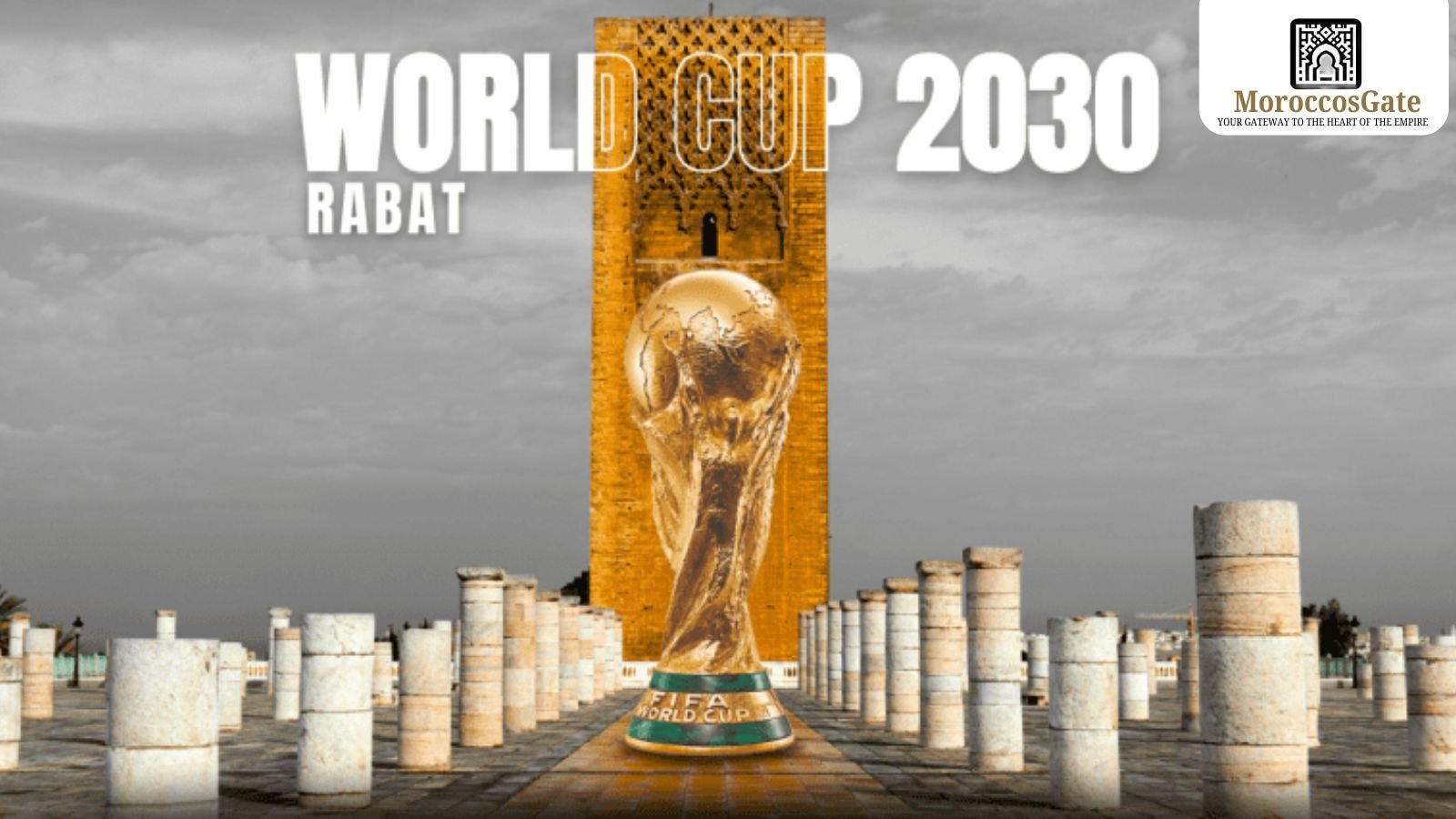
What to do in Rabat beyond the football: The Chellah necropolis — a Roman and medieval Moroccan ruin of extraordinary beauty, home to nesting storks and wild cats — is one of Morocco’s most underrated attractions. The Hassan Tower and Mausoleum of Mohammed V command the Atlantic skyline. The Kasbah of the Udayas, a 12th-century fortified quarter with blue-and-white painted alleyways and views over the Bou Regreg estuary, is the most photogenic neighbourhood in any Moroccan city outside Chefchaouen. And the Mohammed VI Museum of Modern and Contemporary Art is the finest art institution on the African continent.
Rabat is also the city of Mawazine — Africa’s largest music festival — and its cultural infrastructure is as impressive as its sporting ambitions. In 2030, Rabat will be one of the liveliest and most rewarding host cities of the entire tournament.
2. Marrakech — The Rose City with the Atlas Mountains
If there is one Morocco World Cup city that needs no introduction, it is Marrakech. Morocco’s most famous city — the ancient imperial capital of the rose-pink medina walls, the thundering Jemaa el-Fna square, the souks selling everything from saffron to hand-hammered copper lanterns, the High Atlas Mountains rising dramatically to the south — will be one of the most extraordinary host cities in World Cup history.
The Stade de Marrakech (home to Kawkab Marrakech, upgraded to 45,000+ capacity for 2030) sits on the outskirts of the city. Getting there from the medina is straightforward by taxi or the expanded urban transport network being developed for 2030.
What to do in Marrakech beyond the football: The question is what not to do. The Jemaa el-Fna in 2030 — packed with fans from a hundred nations, the call to prayer mixing with football chants, traditional snake charmers performing beside giant screens — will be genuinely unlike anything else at any World Cup in history. Beyond the square: the Bahia Palace, the Saadian Tombs, the Majorelle Garden (created by Yves Saint Laurent), the hammams of the medina, the rooftop restaurant sunset views, and day trips to the Atlas Mountains or the red-earth kasbahs of the Ouarzazate road. For cultural and adventure travel beyond Marrakech, see our guide to the Toubkal hike and Atlas Mountains trekking.
3. Tangier — Morocco’s Gateway to Europe
Tangier occupies a geographical and cultural position unlike any other city in Africa. Perched at Morocco’s northwestern tip where the Atlantic Ocean meets the Mediterranean, just 14 kilometres across the Strait of Gibraltar from Spain, it is a city that has always looked both ways — at once profoundly Moroccan and deeply shaped by its centuries of contact with Europe.
The Grand Stade Ibn Batouta (65,000 capacity, named after the legendary 14th-century explorer born in Tangier) is already one of the finest stadiums in Africa. It hosted FIFA Club World Cup matches and regularly stages major international fixtures. For the 2030 World Cup, it will receive targeted upgrades to technology, media facilities, and hospitality. Fans can literally take a 35-minute ferry from Tarifa, Spain, to watch a World Cup match in Africa — a crossing that will be one of the defining travel experiences of the entire tournament.
What to do in Tangier beyond the football: The Kasbah district on the hilltop above the port — with panoramic views across the Strait of Gibraltar — is the city’s most atmospheric neighbourhood. The American Legation Museum (the United States’ first overseas diplomatic property, established in 1821) is extraordinary. The beaches north of the city are long, clean, and genuinely beautiful. And the city’s deep connection to 20th-century literary and artistic culture — William Burroughs, Paul Bowles, the Beat Generation — gives it an intellectual atmosphere unlike anywhere else in Morocco.
4. Fes — The Ancient Spiritual Capital
Fes is arguably Morocco’s greatest city — certainly its most complex and historically layered. The Fes el-Bali medina is a UNESCO World Heritage Site, one of the largest car-free urban areas in the world, and a labyrinth of 9,000 alleyways, ancient madrasas, the Kairouyine University (founded in 859 AD), and traditional craft workshops that have operated continuously for a millennium.
The Grand Stade de Fès (45,000 capacity) was built for AFCON 2025 and can host both football and athletics events. It is a modern, well-equipped venue already tested at international level before the 2030 World Cup arrives.
What to do in Fes beyond the football: Hire a licensed local guide for your first day in Fes el-Bali — the medina genuinely requires a guide to navigate properly, and the experience of seeing it through knowledgeable local eyes is one of the finest things Morocco offers any traveller. The Chouara tanneries, the Bou Inania madrasa, the Attarine Medersa, the Nejjarine Museum, the Mausoleum of Moulay Idriss — each is extraordinary individually; together they constitute one of the world’s great concentrated architectural and cultural experiences.
Fes is also home to the Fes Festival of World Sacred Music (annually in June) — one of the world’s most respected cultural events. In 2030, attending a World Cup match in Fes and then spending an evening in the ancient medina will be a combination of experiences available nowhere else on earth.
5. Agadir — Morocco’s Beach Resort World Cup City
Agadir is the most resort-like of Morocco’s six World Cup host cities — and that makes it uniquely appealing for fans who want to combine football with a genuine beach holiday. The city’s 10-kilometre Atlantic beach, rebuilt after a 1960 earthquake into Morocco’s most modern coastal resort, offers a gently shelving sandy shore, a well-developed beachfront Corniche, excellent seafood restaurants, surf culture (the world-class waves of Taghazout are 20 minutes north), and the most laid-back atmosphere of any host city.
The Grand Stade Adrar is being expanded to accommodate 70,000 fans by 2030. Located in Agadir, it serves a city that will offer World Cup fans the unique option of watching a match and then spending the following day on one of Morocco’s finest beaches.
What to do in Agadir beyond the football: The Kasbah ruins above Agadir offer panoramic views over the bay. The Souk El Had is one of Morocco’s largest traditional markets. Taghazout surf village (20 minutes north) is one of the finest surf destinations in Africa. And the Souss-Massa National Park, 30 minutes south, is home to flamingos, bald ibis, and a rare coastal ecosystem. Agadir is also the home of the Festival Timitar — one of Morocco’s finest free music festivals — which will no doubt be a fixture of the 2030 summer season.
Getting Around Morocco’s World Cup Host Cities: Transport Guide 2030
The Al Boraq High-Speed Rail Revolution
The single most important infrastructure development for World Cup fans travelling between Morocco’s host cities is the expansion of the Al Boraq high-speed rail network. Morocco was the first African country to build a high-speed train, inaugurating the Al Boraq service in 2018 between Tangier and Casablanca. Operating at up to 320 km/h, it covers the Tangier–Casablanca corridor in approximately 2 hours — a journey that previously took nearly 5 hours by conventional rail.
For 2030, Morocco is extending the high-speed network southwards from Casablanca to Marrakech — a new 430-kilometre line costing approximately 53 billion Moroccan Dirhams (~$5.5 billion). Once operational, travel time between Tangier and Marrakech is expected to drop to roughly two hours and 40 minutes. This means that a fan attending matches in Tangier, Rabat, Casablanca, and Marrakech — four different host cities — could travel between all of them in under an hour by high-speed train.
Morocco has approved a national railway expansion programme costing approximately $10.3 billion, with plans to expand the network from 2,200 km today to 3,800 km by 2040, connecting 43 cities, up from the current 23. The programme also includes a new high-speed link between Fes and Rabat via Meknes, reducing that journey from 3.5 hours to 1 hour 40 minutes.
For World Cup fans, this means something that no previous tournament has offered in Africa: a reliable, fast, affordable, air-conditioned high-speed rail network connecting the majority of host cities within a few hours. Getting from Tangier to Rabat to Casablanca to Marrakech — four different matches, four extraordinary cities — becomes entirely feasible within a 10–14 day World Cup trip.
Airport Connections
All six Morocco World Cup host cities have international airports, and all are receiving expansion investment as part of the 2030 infrastructure programme. Direct flights from Ireland and the UK serve:
- Casablanca (CMN — Mohammed V): The main hub, with the most extensive international connections. Direct from Dublin, London, Manchester, Birmingham.
- Marrakech (RAK — Menara): Second-largest international gateway. Direct from Dublin, London, Manchester, Bristol, and many other UK/Irish airports year-round.
- Tangier (TNG — Ibn Batouta): Direct flights from London and other European cities. Also accessible by ferry from Tarifa or Algeciras, Spain (35 minutes).
- Agadir (AGA — Al Massira): Year-round direct flights from Dublin, London, Manchester, and other UK/Irish cities.
- Fes (FEZ — Saïss): Direct flights from several European cities; connections through Casablanca for other origins.
- Rabat (RBA — Salé): Direct flights from Europe; also efficiently served via Casablanca (45 minutes by Al Boraq).
The strategic recommendation for most fans flying from Ireland or the UK is to fly in to Casablanca or Marrakech (the two most connected airports) and travel between other host cities by high-speed train and domestic flight. Morocco’s domestic aviation network, operated primarily by Royal Air Maroc, is well-developed and affordable.
Urban Transport in Host Cities
All six Morocco World Cup host cities are investing in urban transport infrastructure for 2030. Casablanca and Rabat both have existing tram networks being extended. Marrakech, Tangier, Fes, and Agadir are expanding bus rapid transit systems and taxi networks. Morocco is also investing in dedicated stadium transport corridors — park-and-ride and shuttle services from city centres to venues — as part of the 2030 hosting requirements agreed with FIFA.
Where to Stay: Morocco World Cup 2030 Accommodation Guide
The Scale of the Challenge — and the Response
Morocco’s hospitality industry is undergoing the most significant expansion in its history in preparation for 2030. The country is adding thousands of new hotel rooms, expanding riad capacity, investing in hostel and budget accommodation, and developing fan village infrastructure — large-scale temporary accommodation facilities similar to those deployed at the Qatar 2022 World Cup — across all host cities.
For fans planning ahead, the key principle is: book early. World Cup accommodation — particularly in the high-demand cities of Casablanca, Marrakech, and Tangier — will be at a premium during the tournament. Our strong advice is to secure accommodation as soon as official sales open, which typically occurs 12–18 months before the tournament.
Accommodation Style: Riad vs Hotel
Morocco offers a unique choice that no other World Cup host country provides: the riad. A traditional Moroccan townhouse built around a central courtyard, the riad is the finest accommodation experience in Morocco — intimate, beautifully decorated with zellige tilework and carved cedar, typically family-run, and located within or adjacent to the historic medina of each city. Staying in a riad during the World Cup gives you the full Morocco experience: negotiating the medina alleyways to your front door, breakfast on a rooftop terrace with medina views, and the particular pleasure of having a genuinely beautiful private space to retreat to after the football.
International hotels — Sofitel, Marriott, Movenpick, Accor, and many others — are well-established across all host cities and will expand their Morocco portfolios significantly before 2030. These offer predictable international standards and are often the most convenient option for fans who prioritise ease of check-in and proximity to transport hubs.
See our guide to Morocco’s finest luxury riads for inspiration on riad-style accommodation across the host cities. And browse our curated Morocco travel deals for packages that will be updated as 2030 approaches.
City-by-City Accommodation Recommendations
- Casablanca: Ain Diab beachfront area for resort atmosphere; Maarif and Gauthier neighbourhoods for central city access. New hotels near the Hassan II Stadium site will open before 2030.
- Marrakech: A riad in Fes el-Bali… correction, a riad in the Marrakech medina is the ultimate World Cup accommodation — put yourself within the old city walls and let the atmosphere come to you. Book 12–18 months ahead for the best options.
- Tangier: The medina and Kasbah area for atmosphere; hotels along Avenue Mohammed V for practicality. The new developments near the Ibn Batouta Stadium will add capacity before 2030.
- Fes: A riad in Fes el-Bali is the only choice that makes sense — you will have walked through a UNESCO World Heritage Site to get to your front door. The Batha and Rcif areas are closest to the major attractions.
- Rabat: The Agdal neighbourhood and the medina area both offer good options. Casablanca (45 minutes by Al Boraq) is a viable base for Rabat matches if Rabat accommodation is full.
- Agadir: The Corniche beachfront hotels are the obvious choice — you are here for the beach as much as the football. Talborjt neighbourhood for a more local, affordable alternative.
Budgeting for Morocco World Cup 2030
Attending the World Cup in Morocco will be — by the standards of recent tournaments — excellent value. Morocco is a significantly more affordable destination than Qatar (2022) or Russia (2018) for European fans, and the combination of free or low-cost festival events, affordable local food, and competitive accommodation pricing makes it one of the most accessible World Cups in recent memory for fans on a budget.
Indicative Budget Ranges (Per Person, Per Day)
| Category | Budget | Mid-Range | Premium |
|---|---|---|---|
| Accommodation (per night) | €30–50 (hostel/guesthouse) | €60–120 (riad/3-star) | €150–400 (luxury riad/5-star) |
| Food & drink (per day) | €15–20 | €25–45 | €60–100+ |
| Al Boraq train (per journey) | €8–15 (2nd class) | €15–25 (1st class) | Private transfer |
| Match tickets | €50–100 (group stage) | €100–250 (knockouts) | €500–2,000+ (final) |
| Local activities/tours | €0–15 | €20–50 | €50–150+ |
All prices are indicative estimates based on 2026 pricing; World Cup premium pricing will apply across all categories. Official ticket prices will be confirmed by FIFA closer to the tournament. All estimates assume euros as a reference currency for Irish/European readers.
Money in Morocco
Morocco’s currency is the Moroccan Dirham (MAD), which is not freely exchangeable outside the country — bring euros or pounds to exchange on arrival. ATMs are widely available in all host cities. Most hotels and restaurants in tourist areas accept credit cards, but always carry cash (Dirhams) for souks, taxis, and smaller establishments. The exchange rate from euros in 2026 is approximately 1 EUR ≈ 10.7–11 MAD; World Cup visitor volumes may affect rates slightly.
Cultural Guide: What Every World Cup Fan Should Know About Morocco
Moroccan Hospitality: Marhaba — Welcome
The first thing every World Cup fan needs to understand about Morocco is this: Moroccan hospitality is not a tourist performance. It is a genuine cultural value, rooted in centuries of tradition and religious practice. The concept of diyafa — hospitality to guests — is central to Moroccan identity. As a foreign visitor, particularly one who has come for a celebration like the World Cup, you will be treated with warmth and generosity that may surprise you if you have not experienced it before. Accept the invitations to tea. Learn a few words of Arabic or Tamazight. Be curious and respectful. Morocco will give you back ten times what you bring to it.
Religion and Respect
Morocco is a Muslim-majority country, and its cultural practices reflect that. During the five daily prayer times, mosques broadcast the call to prayer (adhan) — one of the most beautiful and distinctive sounds in the country. During Ramadan (which in 2030 falls approximately in late February/early March, well before the summer tournament), daytime dining in public is limited, though this will not affect July World Cup visitors.
Practical respect points for World Cup fans: dress modestly when visiting mosques or entering medinas (shoulders and knees covered); be mindful of noise levels near mosques during prayer times; and note that while alcohol is available in licensed bars, restaurants, and hotels, it is not universally sold and should be consumed respectfully.
Food: The World Cup’s Best Culinary Destination
Morocco may offer the finest food of any 2030 World Cup host nation. The country’s culinary tradition — slow-cooked tagines of lamb and preserved lemon, spiced couscous, fresh-grilled seafood along every coastal host city, harira soup, bastilla (the extraordinary pigeon or chicken pastry), msemen flatbread with argan oil and honey, fresh orange juice, mint tea — is one of the most distinctive and delicious in the world.
In Marrakech, the Jemaa el-Fna food stalls (operating from dusk) will be one of the defining World Cup experiences — hundreds of open-air food vendors setting up their grills and steam pots in a square already famous for snake charmers and storytellers, now packed with football fans from across the world. In Casablanca, the Corniche seafood restaurants offer Morocco’s finest fish. In Tangier, the old medina restaurants serve some of the most authentic northern Moroccan cooking in the country. And in Agadir, the freshness of the day’s catch — grilled while you watch — is a reminder that you are in a genuine fishing culture, not a tourist simulation.
Morocco Beyond the Football: What to See in 2030
The 2030 World Cup will almost certainly be the first time many fans from Ireland, the UK, and Europe visit Morocco. For those who have never been, the country’s non-football attractions are extraordinary enough to justify a significant extension of the trip beyond the tournament itself.
- The Sahara Desert (Merzouga, Erg Chebbi): 6–7 hours from Marrakech, accessible by guided tour or private vehicle. Overnight camel trekking and desert camp under a sky of stars is one of the finest experiences Morocco offers.
- The High Atlas Mountains and Mount Toubkal: North Africa’s highest peak (4,167m), accessible from Marrakech on a 2–3 day guided trek. See our complete guide to the Toubkal hike.
- Chefchaouen: The iconic Blue City of the Rif Mountains, 90 minutes from Tangier — one of the most photographed places in Africa.
- Aït Benhaddou: A UNESCO World Heritage ksar (fortified village) near Ouarzazate, on the road from Marrakech to the Sahara. The filming location for Game of Thrones, Gladiator, Lawrence of Arabia, and dozens of other productions.
- Essaouira: The beautiful blue-and-white Atlantic coast city, 2.5 hours from Marrakech, home of the Gnaoua World Music Festival.
For more on Morocco’s extraordinary range of destinations, see our guide to Morocco’s hidden gems.
Safety and Practical Information for World Cup 2030
Is Morocco Safe for the 2030 World Cup?
Yes — Morocco is a safe and welcoming destination. As of May 2026, all six World Cup host cities are safe and fully accessible to international visitors. Morocco has hosted multiple major international sporting events in recent years (AFCON 2025, the FIFA Club World Cup, Atlantic Cup athletics events) with an excellent safety record. The country’s security infrastructure for the 2030 World Cup will be the most comprehensive in its history, with extensive investment in stadium security, transport security, and visitor safety systems agreed with FIFA as part of the hosting contract.
Standard travel precautions apply: register your trip with your country’s foreign travel advisory service (Ireland: dfa.ie; UK: gov.uk/foreign-travel-advice), purchase comprehensive travel insurance, keep copies of all travel documents, and use registered operators for guided activities.
Visas
Citizens of Ireland, the UK, the EU, the USA, Canada, and Australia do not require a visa for Morocco for stays of up to 90 days. Your passport should be valid for at least six months beyond your planned departure date. Always verify current entry requirements before travelling as regulations can change.
Health
No specific vaccinations are required for Morocco for visitors from Ireland or the UK, though hepatitis A and typhoid vaccinations are recommended by travel health advisors. Morocco’s healthcare infrastructure in host cities is good. Bring any prescription medications with you (with original packaging and prescriptions) and consider travel insurance with medical evacuation cover.
Connectivity
Morocco has excellent mobile coverage across all host cities. Morocco is investing in nationwide 5G coverage as part of its 2030 infrastructure programme. Roaming charges apply for Irish and UK SIM cards (post-Brexit UK roaming charges can be significant); buying a local Moroccan SIM (Maroc Telecom, Inwi, or Orange) on arrival is the most cost-effective approach for a multi-week visit.
Tickets for the Morocco World Cup 2030
Official FIFA World Cup 2030 ticket sales have not yet opened as of May 2026. Based on the timeline for Qatar 2022 and the 2026 World Cup, general ticket sales are expected to begin approximately 18–24 months before the tournament (i.e., mid-to-late 2028). Register with FIFA’s official ticketing service at FIFA.com to be notified when sales open. Hospitality packages (which combine match tickets with accommodation, transport, and hospitality) typically go on sale earlier through official FIFA partners. Morocco’s Gate will publish a dedicated ticketing guide as the process becomes clearer.
Planning Your Morocco World Cup 2030 Trip: Itinerary Ideas
The 10-Day Morocco World Cup Fan Itinerary
Here is a suggested 10-day World Cup itinerary covering four Moroccan host cities:
- Days 1–2: Arrive Casablanca (CMN). Explore the city — Hassan II Mosque, Corniche, Art Deco medina. Match Day 1: Grand Stade Hassan II.
- Day 3: Al Boraq to Rabat (45 minutes). Explore Rabat — Chellah, Hassan Tower, Kasbah des Oudayas. Match Day 2 or evening city exploration.
- Days 4–5: Continue to Marrakech by Al Boraq (Casablanca connection, approximately 3 hours total). Medina, Jemaa el-Fna, souks, hammam, Majorelle Garden. Match Day 3: Stade de Marrakech.
- Day 6: Day trip from Marrakech to the Atlas Mountains (Imlil, Berber villages) or Aït Benhaddou kasbah.
- Days 7–8: Al Boraq north to Tangier (via Casablanca, approximately 4 hours). Explore Tangier — Kasbah, medina, beaches. Match Day 4: Grand Stade Ibn Batouta. Optional: day ferry to Tarifa, Spain and back.
- Days 9–10: Al Boraq back to Casablanca. Fly home or continue to Fes or Agadir for additional matches.
The 14-Day Ultimate Morocco 2030 Experience
For fans who want to experience all six host cities and Morocco’s broader highlights, a 14-day itinerary is achievable: Casablanca → Rabat → Tangier → (Chefchaouen day trip) → Fes → Marrakech → (Atlas Mountains or desert extension) → Agadir → fly home. This is, effectively, the grand tour of Morocco — combining World Cup football with the country’s finest cultural, architectural, adventure, and coastal experiences. Morocco’s Gate can design a bespoke version for your group, dates, and match schedule.
Frequently Asked Questions — Morocco World Cup 2030
Q1. Which cities in Morocco will host the 2030 World Cup?
A1. Morocco will host World Cup matches in six cities: Casablanca, Rabat, Marrakech, Tangier, Fes, and Agadir. Each city has a dedicated stadium being built or upgraded to FIFA World Cup standards, with a combined capacity exceeding 400,000 seats.
Q2. What is the Grand Stade Hassan II?
A2. The Grand Stade Hassan II is a new stadium under construction in Casablanca with a planned capacity of 115,000 seats — which would make it the largest football stadium in the world. Morocco is bidding to host the 2030 World Cup Final in Casablanca.
Q3. How do I travel between Morocco’s World Cup host cities?
A3. The Al Boraq high-speed rail network is the best option. Currently connecting Tangier to Casablanca in approximately 2 hours, it is being extended to Marrakech for 2030 — reducing Tangier to Marrakech travel time to under 3 hours. A new high-speed link connecting Fes to Rabat via Meknes is also planned. Domestic flights and buses serve Agadir and routes not covered by rail.
Q4. When will Morocco World Cup 2030 tickets go on sale?
A4. FIFA World Cup 2030 ticket sales have not officially opened as of May 2026. Based on previous tournament timelines, general ticket sales are expected approximately 18–24 months before the tournament (mid-to-late 2028). Register at FIFA.com to be notified when sales open.
Q5. Is Morocco safe for the 2030 World Cup?
A5. Yes — Morocco is a safe and welcoming destination. All six host cities are safe and accessible to international visitors. Morocco has successfully hosted multiple major international sporting events in recent years. The country will have the most comprehensive security infrastructure in its history for the 2030 tournament.
Q6. What is the best city to base myself in for the Morocco World Cup?
A6. Marrakech is the most complete city for tourists — the medina, souks, Atlas Mountains access, hammams, and extraordinary atmosphere make it the most rewarding base. Casablanca offers the most hotel capacity and transport connections. Tangier is ideal for fans coming from Spain or wanting a European-African cross-Strait experience.
Q7. Do I need a visa for Morocco from Ireland or the UK?
A7. No. Irish and UK passport holders do not require a visa for stays up to 90 days. Your passport must be valid for at least six months beyond your departure date. Always verify current requirements at dfa.ie (Ireland) or gov.uk/foreign-travel-advice (UK) before travelling.
Q8. How long is the flight from Ireland to Morocco’s World Cup cities?
A8. Direct flights from Dublin to Casablanca or Marrakech take approximately 3–3.5 hours. Direct routes also serve Tangier, Fes, and Agadir from Dublin and multiple UK airports. Morocco is one of the closest non-European World Cup hosts for Irish and British fans.
Start Planning Your Morocco World Cup 2030 Trip Now
The 2030 FIFA World Cup in Morocco is four years away — but in Morocco’s World Cup host cities, the transformation is already visible and accelerating. The Grand Stade Hassan II is rising in Casablanca. The Al Boraq extension to Marrakech is under construction. Airports are being expanded. Hotels are being planned. And the country that produced the Atlas Lions’ extraordinary 2022 World Cup run — the team that became the emotional story of that tournament, reaching the semi-finals as Africa’s standard-bearer — is preparing to show the world what Morocco looks like as a host.
It will be extraordinary. Morocco’s Gate will be there every step of the way — providing the most comprehensive, honest, and experience-based travel guidance available from Ireland for this tournament.
- → Talk to our Morocco travel experts and start planning your 2030 World Cup trip
- → Browse our curated Morocco travel deals
- → Read our Best Time to Visit Morocco 2026 guide
- → Explore Morocco’s major music festivals — including events in World Cup cities
- → Discover Morocco’s hidden gems beyond the World Cup cities
About the Author: Morocco’s Gate Editorial Team
Morocco’s Gate is based between Dublin, Ireland, and Morocco. Our team has walked the streets of every 2030 World Cup host city, travelled the Al Boraq high-speed train, attended Mawazine in Rabat and the Fes Sacred Music Festival, trekked to the Toubkal summit, and eaten tagine from street stalls in every medina on the list. We have been helping Irish and European travellers plan meaningful Morocco experiences since 2015. The 2030 World Cup is the event Morocco has been building towards for a generation — and we will be providing the most comprehensive, honest travel guidance available from Ireland for every aspect of it.
Affiliate Disclosure: This article contains affiliate links. Morocco’s Gate may earn a commission when you book tours, accommodation, or travel services through links on this page, at no additional cost to you. All recommendations are based on genuine first-hand knowledge and editorial judgement. This commission helps us continue producing free, independent Morocco travel content ahead of and during the 2030 World Cup.