
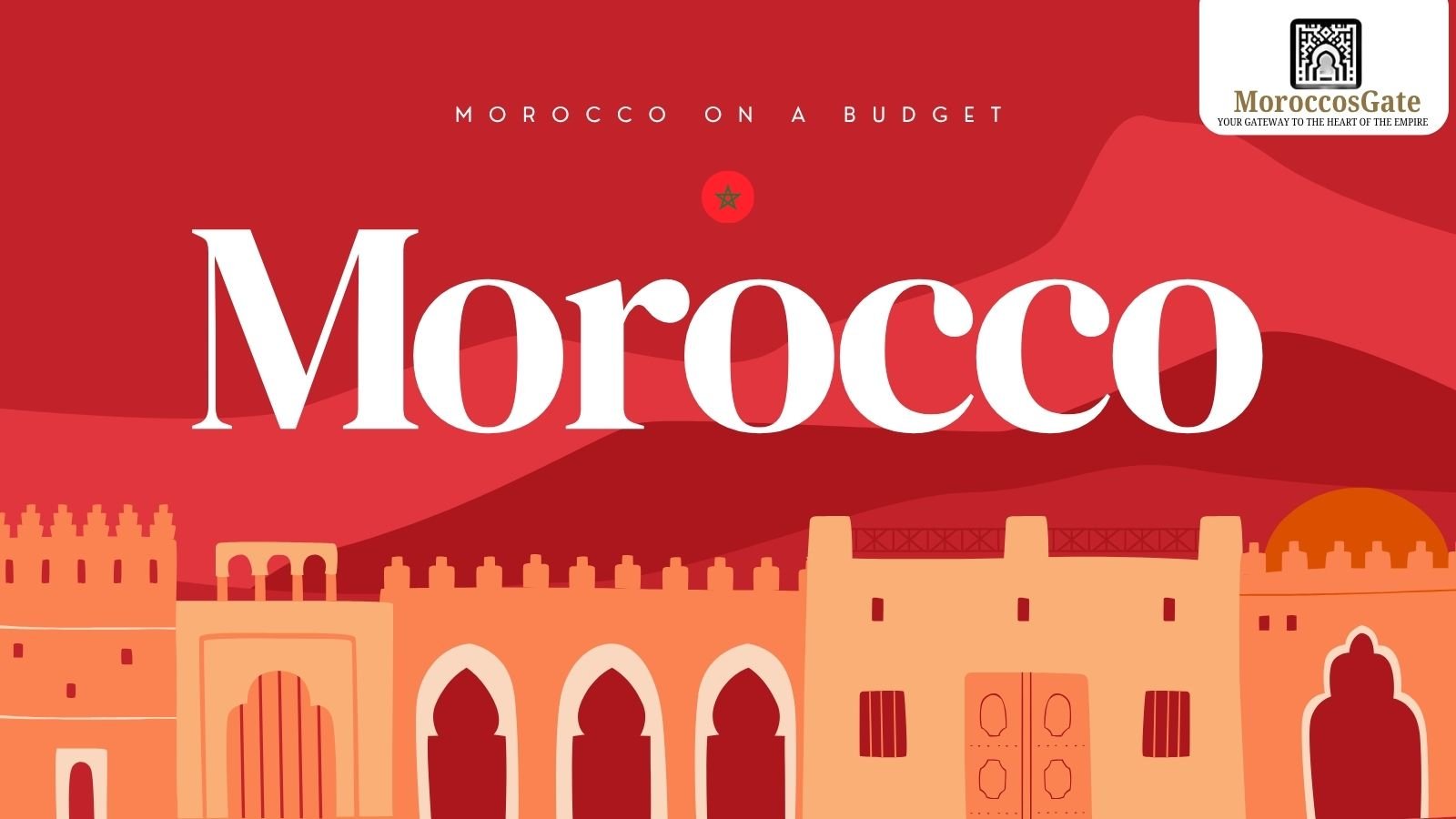
Morocco on a Budget: The Complete Guide to Affordable Travel in 2026
Morocco is proof that an unforgettable trip doesn’t require an unlimited bank account. Between the maze-like medinas of Fes, the ochre walls of Marrakech, the blue streets of Chefchaouen, and the wide golden dunes of the Sahara, Morocco delivers a sensory-rich experience that rivals destinations costing two or three times as much. With a favorable exchange rate, low-cost local transport, and a culture built around communal, affordable eating, Morocco consistently ranks as one of the best value destinations in North Africa and the Mediterranean region.
This guide breaks down exactly how to see Morocco on a budget — from getting around and sleeping well for less, to eating like a local, finding free and low-cost attractions, and avoiding the tourist traps that quietly drain a travel fund. Whether you’re backpacking solo, traveling as a couple, or planning a family trip, these strategies will help you stretch every dirham further.
How Much Does a Budget Trip to Morocco Cost?
For travelers who want the short version: a budget traveler in Morocco can comfortably get by on $30–$45 USD (roughly €28–€42) per day, covering a hostel bed or shared riad room, three local meals, public transport, and one paid attraction. Mid-range travelers who want more comfort and the occasional private taxi or guided tour should budget $60–$90 per day. A two-week budget trip for one person, including a few internal flights or long-distance buses, typically lands between $500 and $900 total, excluding international airfare.
Below, we’ll unpack exactly where that money goes and how to bring it down even further.
1. Getting Around: Affordable Local Transport
Transportation is where many first-time visitors accidentally overspend, mainly because private taxis are marketed aggressively at airports, train stations, and hotel entrances. The good news is that Morocco has one of the most extensive and inexpensive public transport networks in the region.
Trains (ONCM)
The national rail operator connects major cities including Casablanca, Rabat, Fes, Meknes, Marrakech, and Tangier. Trains are clean, reasonably punctual, and inexpensive compared to Western Europe — a second-class ticket between Casablanca and Marrakech typically costs a small fraction of what a similar distance would cost in France or Spain. Booking a day or two in advance during peak season helps guarantee a seat.
Grand Taxis and Shared Vans
For routes not served by rail, shared grand taxis (usually older Mercedes sedans) run fixed routes between towns and charge per seat rather than per vehicle. This is dramatically cheaper than chartering a private taxi and gives you a genuine slice of local life, since you’ll likely be sharing the ride with Moroccan commuters.
Local Buses (CTM and Supratours)
CTM and Supratours are the two major intercity bus companies, offering scheduled, air-conditioned coaches at low prices. They’re a favorite among backpackers because tickets can be booked online in advance, seats are numbered, and the buses reach smaller towns that trains don’t.
City Transport
Within cities, petit taxis (small, color-coded local taxis) are metered and inexpensive for short hops, but always confirm the driver is using the meter or agree on a price beforehand. Marrakech, Rabat, and Casablanca also have public bus networks and, in Casablanca and Rabat, tram lines that cost only a few dirhams per ride.
Budget tip: Avoid pre-arranged airport transfers unless bundled into a package deal. A petit taxi or shared grand taxi from most airports costs a fraction of a pre-booked private transfer.
2. Where to Sleep: Budget-Friendly Riads and Hostels
Accommodation is one of the biggest budget levers in Morocco, and thankfully, there’s no need to pay luxury-hotel prices to get an authentic, comfortable stay.
Budget Riads
A riad is a traditional Moroccan house built around an interior courtyard, often decorated with mosaic tilework, carved plasterwork, and a rooftop terrace. While five-star riads can be pricey, countless family-run budget riads in Fes, Marrakech, and Essaouira offer the same architectural charm — courtyard, terrace, and personal service — for a fraction of the cost. Booking directly with the owner (rather than through a large platform) sometimes unlocks a better rate and a warmer welcome.
Hostels
Morocco’s hostel scene has grown enormously in Marrakech, Fes, Chefchaouen, and coastal towns like Essaouira and Taghazout. Dorm beds are widely available, often including breakfast, free walking tours, and rooftop common areas — ideal for solo travelers who want to meet others.
Guesthouses and Homestays
In smaller towns and mountain villages (particularly in the Atlas Mountains), family-run guesthouses (often called “gîtes”) offer simple rooms and home-cooked meals at very low prices, plus a much more authentic look at rural Moroccan life than any hotel could offer.
Booking Tips
- Compare prices across multiple booking platforms, then check if the property has a direct-booking option or WhatsApp contact, which sometimes avoids commission fees passed on to you.
- Traveling in a small group? Many riads rent entire rooms or even the whole house at a flat rate, which can be cheaper per person than individual hostel beds.
- Always confirm whether breakfast is included; Moroccan breakfast (bread, olive oil, honey, mint tea) is often a highlight and a cost-saver if it replaces a restaurant meal.
3. Eating Well Without Overspending: Moroccan Street Food
Food is arguably where Morocco offers the single best value-to-experience ratio of any country in North Africa. You do not need a restaurant with white tablecloths to eat extraordinarily well.
Must-Try Budget Dishes
- Tagine — a slow-cooked stew named after the conical clay pot it’s prepared in, usually chicken, beef, or vegetable-based, and widely available from street stalls and small local eateries at low prices.
- Harira — a hearty tomato, lentil, and chickpea soup, traditionally eaten to break the fast during Ramadan but available year-round and extremely filling for the price.
- Msemen and Baghrir — flaky layered pancakes and “thousand-hole” spongy pancakes, typically eaten for breakfast with honey or amlou (an almond-argan spread).
- Brochettes — grilled skewers of lamb, beef, or chicken sold by street vendors, often accompanied by fresh bread and a simple salad.
- Khobz — Moroccan flatbread, sold fresh daily from neighborhood bakeries for a nominal price, perfect for sandwiches or scooping up tagine sauce.
Where to Eat Cheaply
- Medina food stalls and souk eateries consistently offer the lowest prices and the most authentic flavors.
- Jemaa el-Fnaa in Marrakech transforms into an enormous open-air food market each evening, with dozens of stalls competing on price — it pays to compare a few before sitting down.
- Local “hanout” cafés away from major tourist squares often charge a fraction of what similar dishes cost steps away in more visible tourist zones.
- Fresh fruit and nut stalls are everywhere and make for a cheap, healthy snack between meals — Morocco’s oranges, dates, and almonds are especially good value.
Budget tip: Restaurants directly facing major squares or landmarks charge a premium purely for the view. Walk two or three streets back into the medina and you’ll typically find the same quality of food for less.
4. Free and Low-Cost Attractions
Some of Morocco’s most memorable experiences don’t cost anything beyond your time and curiosity.
Wander the Medinas
The UNESCO-listed medinas of Fes and Marrakech are essentially free, open-air museums. Simply walking through the narrow alleys, past artisan workshops, tanneries, and spice markets, is an experience in itself.
Admire (the Exteriors of) Mosques
Most active mosques in Morocco are not open to non-Muslim visitors, but their exteriors — like the towering Koutoubia Mosque in Marrakech or the Hassan II Mosque’s grounds in Casablanca — are architecturally stunning and free to view from outside.
Explore the Souks
Even if you don’t plan to buy anything, browsing the souks (markets) of Marrakech, Fes, or Essaouira, with their towers of spices, dyed wool, leather goods, and lanterns, is a sensory experience worth the walk alone.
Visit Low-Cost Museums and Palaces
Sites like the Bahia Palace in Marrakech or the Nejjarine Museum of Wood Arts in Fes charge modest entrance fees, giving budget travelers access to genuinely impressive architecture and history for a small cost.
Enjoy Public Parks and Viewpoints
The Menara Gardens in Marrakech, the Andalusian Gardens in Rabat, and countless rooftop terraces (some cafés let you enjoy the view for the price of a mint tea) offer free or nearly-free ways to relax and take in the scenery.
Hike for Free
The Atlas Mountains offer day hikes accessible without a guide for experienced hikers, including routes near Imlil at the base of Mount Toubkal, North Africa’s highest peak.
5. Booking Affordable Tours and Activities
Private, personalized tours are wonderful but often carry a premium price tag. Group tours and shared activities deliver the same highlights for significantly less.
- Group day trips to destinations like the Sahara Desert, Ouzoud Waterfalls, or the Atlas Mountains split the cost of transport, guides, and permits across all participants, making them far more affordable than a private car and driver.
- Camel rides and desert camps booked as part of a shared overnight tour typically cost much less than arranging the same experience independently.
- Walking tours led by local guides (including free or “pay-what-you-wish” tours offered by many hostels) are an excellent way to learn the history of a medina without paying private-guide rates.
- Cooking classes in group settings offer a fun, hands-on cultural experience and are usually priced far below private lessons.
Booking a few days ahead — rather than same-day — often unlocks lower prices, since operators can consolidate travelers into a single group vehicle instead of running near-empty tours.
6. Travel During the Off-Peak Season
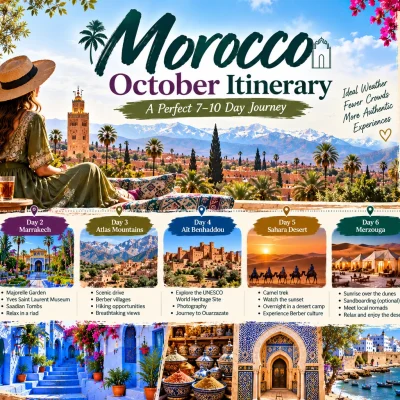
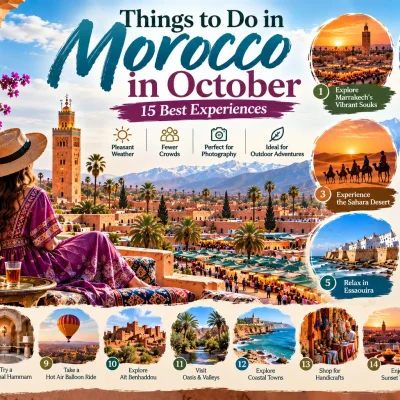
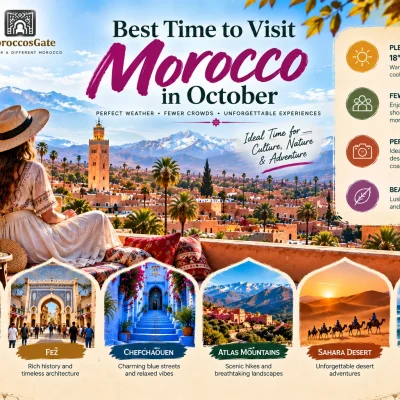
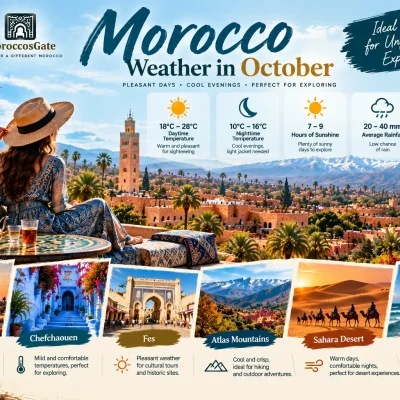
Morocco’s shoulder seasons — spring (March–May) and autumn (September–November) — offer the best combination of comfortable weather and lower prices. Summer in the interior (Marrakech, Fes) can be brutally hot, while winter brings cold nights, especially in the desert and mountains, and can affect coastal itineraries.
Traveling during these shoulder months typically means:
- Lower flight prices into Casablanca, Marrakech, or Rabat
- More negotiating power on riad and hostel rates, since occupancy is lower
- Shorter queues at popular sites like Bahia Palace or the Fes tanneries
- More comfortable conditions for activities like desert camping or Atlas Mountain hikes
Ramadan (dates shift annually on the Islamic calendar) is another consideration — some restaurants have altered hours during the day, but hotel and tour prices can also be noticeably lower, which appeals to budget-conscious, flexible travelers.
7. Shop Smart in the Souks
Moroccan souks are a shopping paradise for handmade carpets, leather goods, ceramics, brass lanterns, and argan oil products — but prices for tourists are often set high as an opening offer, with negotiation expected as part of the culture.
Bargaining Tips
- Start by offering roughly a third to half of the initial asking price, then negotiate toward a fair middle ground.
- Stay friendly and patient — bargaining is a social exchange in Moroccan culture, not a confrontation.
- Get a sense of “fair” prices early in your trip by browsing a few stalls before committing to a purchase, so you have a baseline for comparison.
- Walking away (politely) is often the most effective negotiating tool; vendors will frequently call you back with a better offer.
Buy Direct From Cooperatives
Women’s argan oil cooperatives (especially around Essaouira and the Souss region) and artisan collectives in Fes sell goods at fixed, fair-trade prices, cutting out markup from middlemen while directly supporting local producers. These cooperatives are also a great option for travelers who find bargaining uncomfortable.
8. Use Affordable, Transparent Travel Booking Platforms
For budget-conscious travelers, the platform you use to book transfers, day tours, and activities matters almost as much as the destination itself. A reliable booking service should show clear, all-inclusive pricing upfront, offer flexible cancellation, and let you compare group versus private options before you pay. Comparing a few budget-friendly tour and transfer platforms before you commit can help you lock in fair, transparent rates for everything from airport pickups to full-day Sahara excursions — often for less than what’s quoted by hotel front desks or street touts.
If you’re also researching specific sites before you go — like the historic layout of the Fes medina’s top attractions — reading up in advance helps you prioritize what’s worth a paid entry fee versus what you can appreciate for free from the outside.
Sample One-Week Budget Itinerary
| Day | Destination | Estimated Daily Cost (USD) |
|---|---|---|
| 1–2 | Marrakech (medina, souks, Jemaa el-Fnaa) | $35–$45 |
| 3 | Day trip to Atlas Mountains / Imlil | $30–$40 |
| 4–5 | Overnight Sahara Desert tour (via Merzouga) | $40–$60 |
| 6 | Fes (medina, tanneries, museums) | $35–$45 |
| 7 | Chefchaouen (blue city, day trip or overnight) | $30–$40 |
This route can be completed almost entirely by CTM/Supratours bus or shared grand taxi, keeping transport costs low while covering Morocco’s most iconic highlights.
Frequently Asked Questions About Morocco on a Budget
Is Morocco cheap for tourists? Yes. Morocco is considered one of the more affordable destinations in North Africa and the Mediterranean region, with budget travelers able to cover accommodation, food, and local transport for roughly $30–$45 per day.
How much money do I need per day in Morocco? Budget travelers typically spend $30–$45 per day, mid-range travelers spend $60–$90 per day, and luxury travelers can spend $150 or more per day, depending on accommodation and activity choices.
What is the cheapest way to travel around Morocco? Trains and CTM/Supratours buses are the cheapest way to travel between major cities, while shared grand taxis are the most economical option for shorter routes not served by rail.
Is it safe to eat street food in Morocco? Yes, street food is a core part of Moroccan culture and generally safe when purchased from busy stalls with high turnover, since that indicates fresh ingredients and frequent turnover of stock.
When is the cheapest time to visit Morocco? The shoulder seasons of spring (March–May) and autumn (September–November) typically offer the best balance of good weather and lower prices on flights and accommodation.
Do I need to bargain in Moroccan souks? Bargaining is expected in most souks and markets, though fixed-price shops and women’s cooperatives are a good alternative for travelers who prefer not to negotiate.
Can I see Morocco on a budget without a group tour? Yes. Independent travel using public trains, buses, and shared taxis, combined with budget riads and street food, is entirely feasible and often cheaper than pre-packaged tours, though group tours remain the most economical way to reach remote areas like the Sahara.
Morocco on a Budget Is Absolutely Possible
Morocco proves that an unforgettable trip doesn’t require a luxury budget. With affordable public transport connecting every major destination, budget riads and hostels offering authentic character at low prices, street food that rivals any restaurant, and countless free or low-cost cultural experiences, this is a country built for value-conscious travelers who still want a rich, immersive experience.
Plan around the shoulder seasons, lean on public transport and group tours, eat where the locals eat, and negotiate respectfully in the souks — and you’ll come home with a passport full of memories and a bank account that’s still standing.
#MoroccoTravel #BudgetTravel #ExploreMorocco #AffordableTrips #TravelHacks #BackpackingMorocco #Wanderlustv