
What to Wear in Morocco in October: Complete Packing Guide
Planning a trip to Morocco in October and wondering what clothes to pack? October can be an excellent month to explore Morocco, with opportunities to wander through historic medinas, discover colourful souks, visit the Sahara Desert, enjoy coastal towns and explore the Atlas Mountains. However, the weather and clothing requirements can change considerably as you travel between regions.
You might wear a lightweight shirt while exploring Marrakech in the afternoon, need a jacket for an evening walk in Essaouira, and want a warm fleece when staying overnight in a desert camp. If your itinerary includes mountain villages, cooler mornings and possible rain are also worth preparing for.
The secret to deciding what to wear in Morocco in October is to pack versatile, breathable clothing that you can layer throughout the day. You should also consider local customs, your planned activities and the type of accommodation you will use.
This guide explains what to wear in Morocco in October, from comfortable city outfits and modest clothing options to Sahara Desert essentials, hiking gear, footwear and a complete packing checklist. Whether you are travelling solo, as a couple, with friends or with family, you will find practical advice to help you prepare for your trip.
What Is the Weather Like in Morocco in October?
October is an autumn month in Morocco, but it does not feel the same everywhere. The country includes Atlantic and Mediterranean coastlines, inland cities, mountain ranges and desert landscapes. Each region has different weather patterns.
In many inland destinations, afternoons can remain warm while evenings become cooler. Coastal areas can feel breezy, and higher mountain locations may be considerably colder than the cities. Desert days can be sunny and warm, followed by cool nights.
This variation means that you should not pack exclusively for the warmest destination on your itinerary.
Marrakech and other inland cities
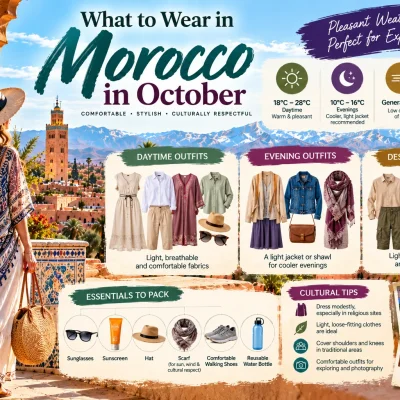
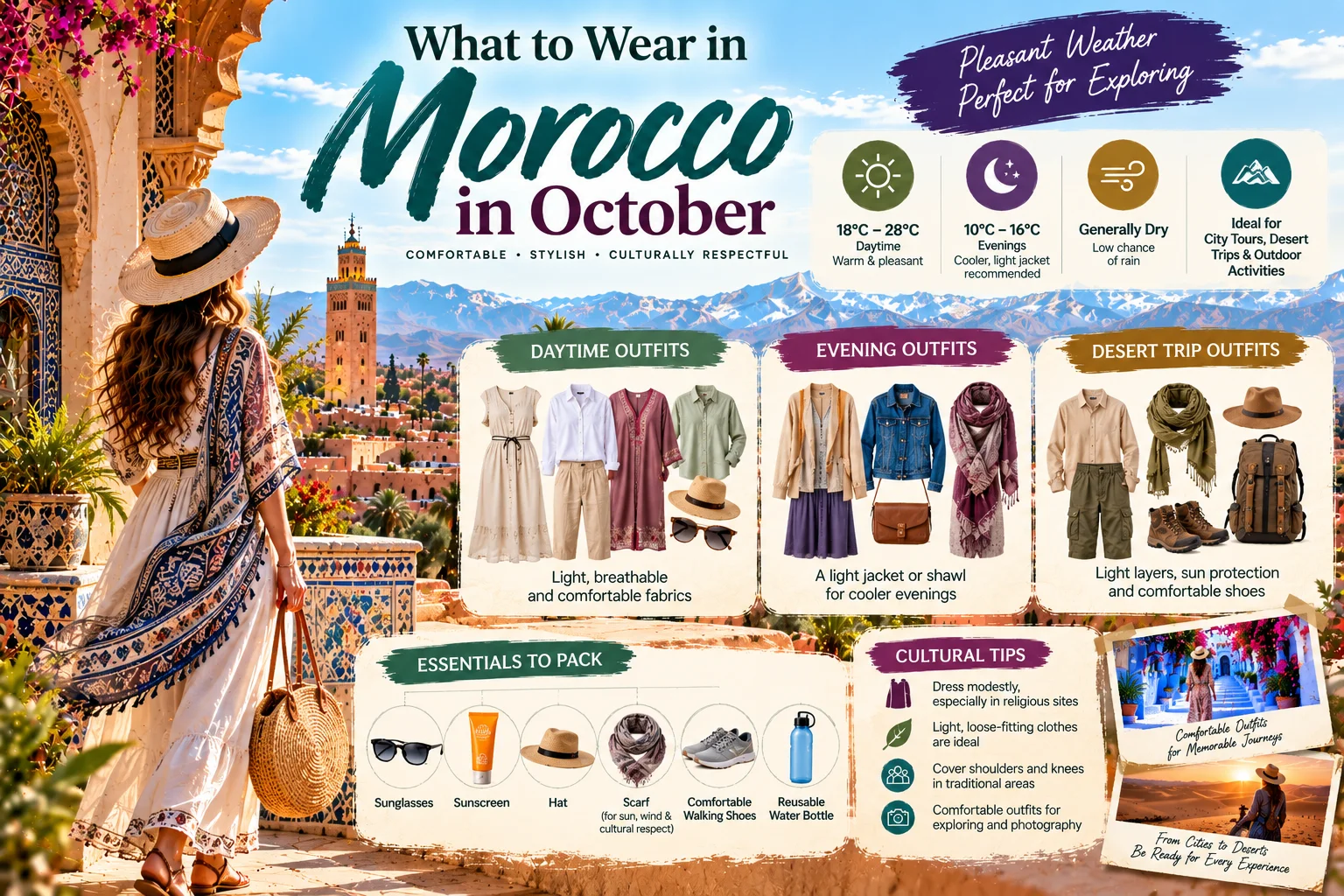
Marrakech is often warm and sunny during October, making lightweight clothing suitable for daytime sightseeing. Breathable shirts, loose trousers, skirts and dresses are useful when exploring the medina, gardens and markets.
Evenings can feel cooler, especially when dining outdoors or walking through the city after sunset. Bring a cardigan, jumper or lightweight jacket.
The Sahara Desert
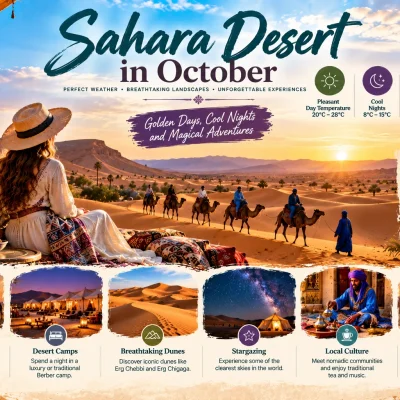
The Sahara can remain warm during the day, but temperatures may drop considerably after sunset. If you are planning a trip to Merzouga or an overnight desert camp, pack sun protection for daytime activities and warm layers for the evening.
A fleece, long trousers and closed shoes are practical additions. Ask your camp what bedding is provided before deciding whether you need extra sleeping layers.
The Atlantic coast
Coastal destinations such as Essaouira and Agadir can offer pleasant conditions, but wind may make the weather feel cooler than the temperature suggests.
Pack light clothing for daytime, along with a wind-resistant jacket or cardigan. If you plan to spend time on the beach, bring swimwear but do not assume the sea will be warm enough for comfortable swimming.
The Atlas Mountains
Mountain temperatures depend on elevation, route and weather. A warm afternoon in Marrakech does not mean the same clothing will be adequate for a high-altitude hike or a chilly mountain evening.
If your itinerary includes mountain villages or trekking, bring a warmer insulating layer, sturdy footwear and a waterproof outer layer appropriate to the forecast.
For additional seasonal information, read our guide to Morocco weather in October.
The Best Clothing to Pack for Morocco in October
The most useful clothes are comfortable, breathable and easy to combine. You do not need an entirely different wardrobe for every destination.
1. Lightweight T-shirts and breathable tops
Pack several comfortable tops made from breathable materials such as cotton or linen. They are suitable for warm afternoons and can be worn under a cardigan or jacket when temperatures fall.
Short-sleeved tops are practical in many tourist areas. Longer sleeves can provide additional sun protection and are useful when you want a little more coverage.
Choose items that coordinate with your trousers, skirts and other layers. This makes it easier to create several outfits without packing too many clothes.
2. Loose trousers and comfortable bottoms
Loose-fitting trousers are among the most versatile items you can bring to Morocco. Linen trousers, lightweight cotton trousers and comfortable travel pants work well for city sightseeing, long journeys and casual meals.
Jeans are also an option, but lightweight alternatives may feel more comfortable on warmer days.
Midi skirts and longer dresses are useful choices if you prefer them. Select styles that allow you to walk easily and climb steps without difficulty.
3. A cardigan, jumper or fleece
Do not overlook warm layers simply because you are travelling in October. Even when afternoons are warm, mornings and evenings may be cool.
A cardigan works well for restaurants, rooftop terraces and city walks. A fleece or warmer jumper is particularly useful for the Sahara Desert and mountain destinations.
Choose one layer that is warm enough for the coldest part of your itinerary rather than packing several bulky items you may rarely use.
4. A lightweight jacket
A compact jacket is useful for evening sightseeing, coastal winds and unexpected changes in weather.
A wind-resistant jacket is particularly helpful in Essaouira, while a light waterproof jacket can be useful if your itinerary includes northern Morocco or mountain areas.
You do not necessarily need a heavy winter coat for a typical October city-and-desert itinerary. However, if you plan to stay at high elevations or travel during a cold spell, check the forecast and pack accordingly.
5. A scarf or lightweight shawl
A scarf is one of the most versatile accessories to bring. You can use it for extra warmth, sun protection or to cover your shoulders when visiting more traditional settings.
It can also be useful on a windy day or during a desert excursion when dust is blowing.
Choose a lightweight scarf that folds easily into a day bag. You do not need to buy a special traditional garment unless you want one.
What to Wear in Morocco in October as a Woman
Women visiting Morocco can choose from a wide range of comfortable outfits. There is no single outfit that every visitor must wear, and clothing norms vary between tourist resorts, large cities, traditional neighbourhoods and rural communities.
A practical approach is to choose breathable clothes that offer comfortable coverage and can be adjusted to suit different settings.
Outfit ideas for daytime sightseeing
For exploring Marrakech, Fes or Chefchaouen, consider pairing loose trousers with a short-sleeved shirt, blouse or lightweight long-sleeved top. A midi skirt or flowing dress can also work well.
Choose fabrics that are comfortable in warm weather and styles that allow you to walk for several hours.
A light cardigan or scarf can provide additional coverage when needed. You can remove or add layers as the weather changes.
What to wear in medinas and traditional areas
When exploring medinas, markets and smaller villages, many visitors find that clothing covering the shoulders and knees is a comfortable and respectful choice.
This is a practical recommendation rather than a universal legal dress code. Morocco is diverse, and expectations vary by setting.
You can still dress in a style that reflects your personality. Loose trousers, long skirts, shirts, dresses and lightweight layers can be both comfortable and attractive.
What to wear for evening dinners
For dinner at a riad, rooftop restaurant or hotel, smart-casual clothing is generally a useful choice.
A dress with a cardigan, tailored trousers with a blouse or a coordinated top-and-trouser outfit can work well. Bring a light jacket if you plan to sit outdoors.
If you are attending a special event or visiting an upscale restaurant, check whether the venue has any particular dress expectations.
What to wear in the Sahara Desert
For desert travel, choose practical clothing rather than outfits that are difficult to walk in.
Lightweight long trousers and a breathable long-sleeved shirt help protect your skin from the sun. Closed shoes can be useful for walking over uneven ground, and a scarf can provide some protection against wind and blowing sand.
For evenings, bring a fleece or warm jumper. If you are staying in a desert camp, ask about bedding, bathroom facilities and the expected nighttime conditions.
What to wear on the coast
In beach destinations, casual clothing and swimwear are appropriate in many resort and beach settings. When walking through a town or visiting local shops and restaurants, it is useful to have a cover-up, shirt or trousers available.
For Essaouira, a wind-resistant jacket can be more useful than an extra summer dress because coastal breezes can make it feel cooler.
What to Wear in Morocco in October as a Man
Men can follow the same basic principles: choose breathable fabrics, comfortable footwear and layers that work across different temperatures.
Daytime outfits
Cotton T-shirts, polo shirts and lightweight button-down shirts are useful for city sightseeing. Pair them with chinos, linen trousers or other comfortable bottoms.
Shorts can be practical in beach resorts and casual tourist settings. Long trousers may feel more suitable in traditional medinas, rural communities or when visiting cultural sites.
You do not need to dress formally for everyday sightseeing. Prioritise comfort, practicality and the activities planned for the day.
Evening clothing
Bring a jumper, cardigan or light jacket for cooler evenings. A long-sleeved shirt and comfortable trousers are suitable for most casual restaurants.
If you are staying in the Sahara or visiting the mountains, a warmer fleece may be necessary.
Clothing for desert adventures
For camel trekking and desert excursions, wear breathable trousers, a long-sleeved shirt, sunglasses and a hat. Closed shoes can make walking over sand and rocky surfaces more comfortable.
Follow your guide’s instructions, carry water and bring warmer clothing for sunset and nighttime activities.
What Shoes Should You Wear in Morocco in October?
Footwear deserves careful consideration because many Moroccan destinations involve a lot of walking.
Comfortable walking shoes
A pair of well-fitting walking shoes is ideal for medinas, historic attractions, markets and sightseeing days. Choose shoes you have already worn comfortably rather than taking brand-new footwear that might cause blisters.
Many old-town streets are uneven, and some surfaces may be slippery or dusty. Shoes with a reliable grip can make walking easier.
Sandals
Comfortable sandals are useful for relaxed days, accommodation, beach visits and warm afternoons.
Choose a pair that supports your feet if you plan to walk for extended periods. Very thin flip-flops may not be ideal for a full day exploring a historic city.
Hiking shoes
If you are planning hikes in the Atlas Mountains, select footwear appropriate for the route and terrain. Easy village walks may only require supportive walking shoes, while rocky or more challenging trails may call for hiking shoes or boots.
Check local conditions before choosing your footwear.
Shoes for the Sahara
Closed walking shoes or lightweight trainers are useful for getting around camp and exploring rocky ground. Sand can enter shoes easily, so footwear that is simple to clean is helpful.
For a short walk across the dunes, some travellers prefer sandals or walking barefoot in suitable areas, but follow your guide’s advice and avoid walking barefoot on hot or rough surfaces.
What to Wear in Marrakech in October
Marrakech is often one of the warmest stops on a Morocco itinerary. Lightweight clothing is generally practical during the day, while a removable layer helps when temperatures fall in the evening.
A useful daytime outfit might include loose cotton trousers, a breathable shirt, comfortable walking shoes and sunglasses.
For women, a midi dress, long skirt or loose trousers paired with a blouse is another versatile option. Men may prefer chinos or lightweight trousers with a T-shirt or polo shirt.
When exploring the souks and medina, bring a small bag for water, sunscreen and personal essentials. Comfortable shoes are important because you may walk for hours.
For evening dining, add a cardigan or jacket. Rooftop terraces can feel cooler after sunset, particularly when there is a breeze.
If you want to visit gardens or popular attractions, check opening times and ticket arrangements before leaving your accommodation.
What to Wear in Fes and Chefchaouen in October
Fes and Chefchaouen offer a different atmosphere from Marrakech, with historic streets, traditional architecture and, in Chefchaouen’s case, a mountain setting.
Comfortable walking shoes are especially useful in the old medinas, where streets can be steep, narrow or uneven.
Fes
Choose breathable daytime clothing and comfortable shoes for exploring the medina. A light jumper or jacket is useful in the evening.
October can bring changing weather, so consider a compact rain jacket or small umbrella if your plans include northern Morocco.
Chefchaouen
Chefchaouen’s mountain setting can make mornings and evenings feel cooler than in some inland destinations. Pack layers and a jacket, particularly if you plan to visit viewpoints or go for walks outside the town.
A comfortable outfit might include trousers, a long-sleeved shirt, walking shoes and a light jacket. Bring rain protection if the forecast suggests showers.
What to Wear in the Sahara Desert in October
The Sahara requires a little more preparation because daytime sun and nighttime temperatures can feel very different.
During the day
Choose light, breathable clothing that protects your skin. A long-sleeved shirt, loose trousers, a hat and sunglasses are practical choices.
Apply sunscreen and carry water. Do not rely on the fact that October is cooler than summer to skip sun protection.
At sunset
Temperatures can fall quickly after the sun goes down. Carry a fleece, jumper or light insulated jacket rather than leaving your warm layer in luggage stored elsewhere.
Long trousers and closed shoes can help keep you comfortable while walking around the camp.
Overnight at a desert camp
Ask the camp about the bedding and facilities supplied. Bring warm sleepwear and socks if you tend to feel cold.
A headlamp or small torch is useful for moving around at night. Keep your phone, camera and other electronics protected from sand.
What to Wear in the Atlas Mountains in October
The Atlas Mountains can be significantly cooler than Morocco’s cities, especially at higher elevations. The right clothing depends on whether you plan to visit a village, take a short walk or undertake a challenging hike.
For village visits and easy walks
Wear comfortable trousers, a long-sleeved top and supportive walking shoes. Carry a fleece or jacket for early mornings and late afternoons.
For hiking
For longer walks, consider a layered system:
- A breathable base layer.
- A long-sleeved top or lightweight insulating layer.
- A fleece or warm mid-layer.
- A waterproof and wind-resistant outer layer when appropriate.
- Hiking trousers and suitable footwear.
- Sun protection, water and a small daypack.
Check the forecast and local trail conditions before setting off. If you are hiking at high altitude or on challenging terrain, consider using an experienced local guide.
Do not assume that all Atlas Mountain routes have the same weather or difficulty level.
What to Wear in Essaouira and Agadir in October
Morocco’s Atlantic coast can be pleasant for walking, sightseeing and relaxing, but wind and sea conditions should be considered when choosing clothes.
Essaouira
Bring lightweight clothing for daytime, comfortable walking shoes and a wind-resistant jacket. A scarf can also be useful on breezy streets or along the ramparts.
Swimwear is suitable for beach activities, but take a cover-up when walking through town. Check local sea conditions before swimming or taking part in water sports.
Agadir
Agadir has a popular beach and resort atmosphere. Casual clothing, sandals and swimwear can be suitable around the beach or pool.
Bring a light jacket for evenings and coastal breezes. If you plan to leave the resort and explore local neighbourhoods, a shirt or cover-up is useful.
How to Dress Respectfully in Morocco
Morocco welcomes visitors from around the world, and tourists will see different clothing styles in large cities, resort areas and traditional communities. Dressing respectfully does not mean you must wear traditional Moroccan clothing or completely change your personal style.
A few simple choices can make sightseeing more comfortable.
Cover shoulders and knees when appropriate
In medinas, villages and more traditional settings, tops covering the shoulders and bottoms reaching around the knees are practical options. These choices can help you feel comfortable while respecting local social expectations.
Expectations vary, and visitors will see a range of clothing in public spaces.
Carry a scarf or extra layer
A scarf or lightweight shawl is useful when you want extra coverage, protect yourself from the sun or feel warmer in the evening.
It is also a convenient way to adjust an outfit without carrying a second set of clothes.
Check requirements for religious sites
Access rules differ between religious buildings and sites. Some places welcome non-Muslim visitors, while others restrict entry. Check the rules of each location in advance and follow any clothing requirements communicated by staff.
Do not assume that covering your shoulders automatically grants access to every religious site.
Ask before photographing people
Clothing is only one part of respectful travel. Ask permission before taking close-up photographs of people, especially in markets and residential areas.
Be considerate when entering shops, workshops and neighbourhoods, and follow local guidance.
Complete Morocco October Packing Checklist
Use this checklist to prepare for your trip. Adjust the quantities to suit the length of your holiday, your planned activities and whether laundry will be available.
Clothing
- Breathable T-shirts and tops.
- Lightweight long-sleeved shirts.
- Loose trousers or comfortable jeans.
- A skirt or dress if you prefer wearing one.
- Underwear and socks.
- Sleepwear.
- A cardigan, jumper or fleece.
- A lightweight jacket.
- A wind-resistant or waterproof layer if needed.
- Swimwear for beaches or pools.
- A scarf or lightweight shawl.
- Warmer clothing for desert or mountain nights.
Footwear
- Comfortable walking shoes.
- Sandals.
- Hiking shoes if your itinerary requires them.
- Extra socks for colder evenings or hiking.
Sun and weather protection
- Sunglasses.
- A sun hat or cap.
- Sunscreen.
- Lip balm.
- A reusable water bottle.
- A compact umbrella or rain jacket if appropriate.
Travel essentials
- Passport and relevant travel documents.
- Travel insurance information.
- Personal medication.
- Phone and charger.
- Power bank.
- Travel adapter compatible with your devices.
- Small daypack.
- Toiletries and personal care products.
- Small torch or headlamp for desert stays.
Optional extras
- Camera and protective case.
- Binoculars for landscapes or wildlife viewing where appropriate.
- Laundry bag.
- Reusable shopping bag.
- Earplugs and sleep mask.
- A small first-aid kit.
You do not need to pack every item on this list. Choose what suits your route, activities and accommodation.
Common Clothing Mistakes to Avoid in Morocco in October
Packing only summer clothes
Warm afternoons can make it tempting to bring only T-shirts and sandals. However, cooler evenings, desert nights and mountain weather make an extra layer worthwhile.
Bringing too many heavy clothes
For many typical city itineraries, bulky winter clothing takes up space without being useful. Choose layers that can be combined rather than several heavy items.
If your itinerary includes high-altitude trekking, very cold conditions or a particularly exposed overnight stay, adapt your packing to the forecast.
Wearing uncomfortable shoes
A holiday often involves more walking than expected. New shoes, thin soles and footwear with poor grip can make long sightseeing days difficult.
Choose comfortable shoes and wear them before departure.
Ignoring wind and rain
The Sahara may be dry, but northern and coastal destinations can experience different conditions. A compact weatherproof layer is useful if your route includes those areas.
Overpacking outfits for every destination
You do not need a different outfit for each city. Pack items that coordinate with one another and can be worn in several settings.
A smaller, versatile wardrobe is usually easier to manage during a multi-stop itinerary.
Frequently Asked Questions About What to Wear in Morocco in October
Is October hot in Morocco?
October can still be warm in inland cities and desert regions, especially during the afternoon. Coastal and mountain destinations can feel cooler. Check the forecast for each stop on your itinerary.
Do I need a winter coat in Morocco in October?
Most travellers on a typical city-and-desert itinerary can manage with a jumper, fleece and lightweight jacket. If you plan to hike at high elevations or stay in particularly cold locations, check local conditions and pack warmer clothing if necessary.
Can women wear shorts in Morocco?
Women may wear shorts in many tourist and resort settings. However, longer shorts, skirts or trousers can be more comfortable in traditional medinas, villages and other conservative environments. Clothing expectations vary by location.
Can men wear shorts in Morocco?
Shorts are common in beach and resort settings and can be suitable for casual sightseeing. Lightweight long trousers are a versatile alternative for traditional neighbourhoods, cultural visits and cooler evenings.
Do I need to cover my hair in Morocco?
Visitors generally do not need to cover their hair in ordinary public spaces. Carrying a scarf can still be useful for warmth, sun protection or additional coverage when appropriate. Always check the entry requirements of a specific religious site.
What shoes are best for Marrakech in October?
Comfortable, broken-in walking shoes with good grip are ideal for exploring the medina, souks and historic attractions. Sandals can be useful for relaxed activities, but supportive shoes are better for long walking days.
What should I wear for a Sahara Desert camp?
Wear breathable clothing and sun protection during the day, then add a fleece or warm jacket after sunset. Closed shoes and long trousers are useful for walking around camp. Ask your accommodation provider what bedding is supplied.
Should I bring swimwear to Morocco in October?
Yes, if you plan to use a hotel pool, visit the beach or stay at a resort. Swimming conditions vary by location, weather and water temperature, so check local conditions before entering the sea.
Does it rain in Morocco in October?
Rain is possible, and conditions differ between regions. Northern Morocco, the coast and mountain areas can experience weather different from the arid south. Consider a compact rain jacket if your itinerary includes these destinations.
How many outfits should I pack for a week in Morocco?
For a week, a practical starting point is several tops, two or three versatile bottoms, one warmer layer, a light jacket, comfortable shoes and any activity-specific clothing you need. Adjust the quantities according to laundry access and personal preferences.
Final Thoughts: Pack Smart for Morocco in October
Choosing what to wear in Morocco in October is easier when you plan for the places you will visit rather than packing for a single average temperature. Lightweight, breathable clothing works well for many daytime activities, while a jumper, fleece or jacket helps you stay comfortable after sunset.
Think about your complete route. Marrakech calls for practical sightseeing outfits, the Sahara requires sun protection and warmer evening layers, the Atlas Mountains may need hiking equipment, and the Atlantic coast can be breezy.
Respectful clothing choices, comfortable footwear and a versatile packing list will help you enjoy your trip without carrying unnecessary luggage. Check the forecast before departure, adjust your list to your activities and leave some room for souvenirs.
With the right preparation, you can explore Morocco’s cities, desert landscapes, mountains and coastline comfortably throughout October.
Affiliate disclosure: This article may contain affiliate links. If you make an eligible purchase through these links, Morocco’s Gate may earn a commission at no additional cost to you.
AI-generated image disclosure: Some images on this website may be AI-generated or AI-enhanced for illustrative purposes. They may not exactly represent actual locations, weather conditions or clothing worn by local residents.