
Sahara Desert in October: Weather, Best Things to Do and Travel Tips
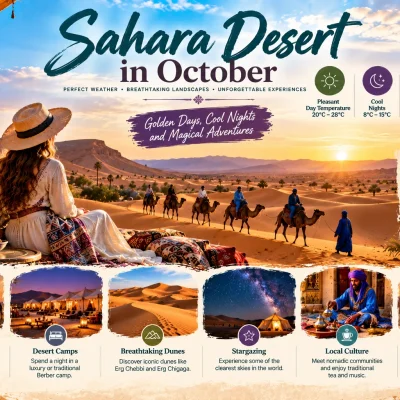
Visiting the Sahara Desert in October can be an unforgettable part of a trip to Morocco. The vast dunes, golden sunsets, traditional desert camps and star-filled night skies create a completely different experience from the country’s busy medinas and coastal towns. October is also an appealing time to explore southern Morocco because the extreme heat of summer generally begins to ease, making outdoor activities more manageable.
Whether you dream of riding a camel across the dunes, spending a night in a desert camp, watching the sunrise over the sand or exploring the landscapes around Merzouga, planning your trip carefully will help you make the most of your experience.
The Sahara is enormous, and Morocco offers several different desert landscapes. For travellers looking for sweeping sand dunes, Merzouga and the Erg Chebbi dunes are among the best-known options. Other destinations, including the area around M’Hamid and Erg Chigaga, offer a different route into the desert and often require more specialised transport.
In this guide, you will discover what the Sahara Desert is like in October, what to do, how long to stay, what to pack, how to choose a desert camp and how to organise your journey from Marrakech or Fes.
Is October a Good Time to Visit the Sahara Desert?
Yes, October can be an excellent time to visit the Moroccan Sahara. Autumn brings a welcome transition from the intense summer heat, while daytime conditions are often suitable for sightseeing, desert excursions and outdoor experiences.
Morocco’s National Tourist Office identifies spring and autumn as favourable seasons for exploring the desert. The region around Merzouga is particularly well known for its dunes, palm groves, desert tracks and opportunities for outdoor adventure.
There are several reasons to consider an October visit.
More manageable daytime conditions
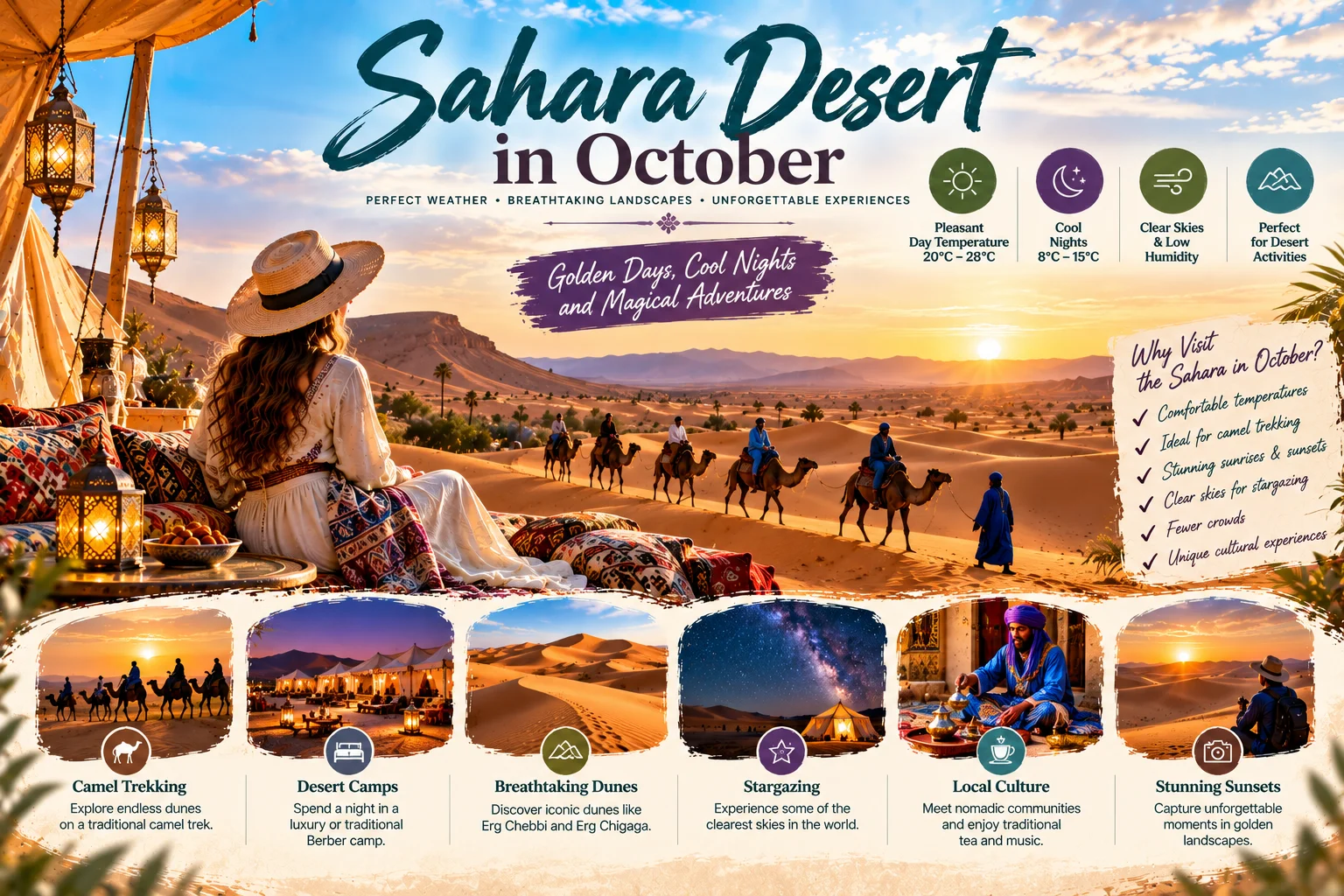
Summer temperatures in desert areas can be extremely high. In October, daytime heat generally becomes more manageable, although sunny afternoons can still feel hot. This makes it easier to plan activities such as dune walks, camel trekking and photography, particularly around sunrise and sunset.
Conditions vary between years and locations, so check the local forecast before travelling.
Beautiful sunrise and sunset views
The Sahara’s dunes change colour as sunlight moves across their slopes. Early morning and late afternoon are excellent times to appreciate the landscape and take photographs.
The exact colours depend on the light, cloud cover and viewpoint, but the contrast between the dunes and the open sky is often a highlight of the trip.
Cooler evenings for desert camping
October nights are generally cooler than summer nights. This can make sitting outside a camp, enjoying dinner or watching the stars more comfortable.
However, desert temperatures can fall significantly after sunset. Do not assume that warm daytime weather means you will be comfortable in light clothing throughout the night.
Opportunities for cultural experiences
A desert trip can also introduce you to the culture, food, music and everyday life of southern Morocco. Depending on the itinerary, you may visit villages, markets, oasis settlements or places where local guides share knowledge about the region.
Choose responsible local operators who explain the activities, respect communities and provide clear information about their services.
Sahara Desert Weather in October
Weather is one of the most important considerations when planning a Sahara Desert trip in October. The region is generally warm during the day and cooler after dark, but conditions vary with location, elevation, wind and the time of the month.
Around Merzouga and Erg Chebbi, daytime temperatures can reach the upper twenties Celsius or higher, while nighttime temperatures may fall into the teens. These are broad expectations rather than a forecast for specific travel dates.
Daytime weather
Sunny days can be warm enough for short sleeves, but the sun remains strong in an exposed desert environment. Wear a hat, use sunscreen and carry sufficient water.
For walking or camel excursions, early morning and late afternoon are often more comfortable than the middle of the day. Follow the advice of your guide if conditions become particularly hot or windy.
Nighttime weather
After sunset, temperatures can drop quickly. Open desert areas may feel cooler than nearby towns, especially when there is a breeze.
Pack a warm jumper, fleece or light insulated jacket. If you are camping, ask the accommodation provider what bedding is supplied and whether additional blankets are available.
Rain and wind
The Sahara is arid, but rain is not impossible. Strong winds can also affect visibility and make dune activities less comfortable. Weather can change, so keep some flexibility in your itinerary.
Ask your tour operator how excursions are adjusted if conditions are unsuitable. Safety should always take priority over reaching a particular viewpoint or completing an activity.
Is early or late October better?
Both parts of the month can work well. Early October may retain warmer daytime conditions, while later October can bring cooler evenings. Your experience will also depend on the particular year and your chosen destination.
Rather than choosing dates based only on average temperatures, consider your preferred activities, accommodation availability and travel schedule.
Where to Visit the Sahara Desert in Morocco
The best destination depends on the type of desert experience you want. Two commonly considered regions are Merzouga and Erg Chebbi, and M’Hamid and Erg Chigaga.
1. Merzouga and Erg Chebbi
Merzouga is one of the most popular gateways to Morocco’s Sahara. It lies beside the impressive Erg Chebbi dune field, where visitors can experience broad stretches of sand, sunset excursions and desert camps.
This area is a good choice for first-time visitors who want the classic image of the Sahara: sweeping dunes, camel silhouettes and sunrise over the sand.
Activities may include:
- Camel trekking with a local operator.
- Guided 4×4 excursions.
- Walking in the dunes where safe.
- Sandboarding where available and permitted.
- Overnight stays at desert camps.
- Sunrise and sunset photography.
- Stargazing when skies are clear.
The area can become busy during popular travel periods, so consider booking accommodation and excursions ahead of time.
2. M’Hamid and Erg Chigaga
M’Hamid is another starting point for desert adventures in southern Morocco. Erg Chigaga is a more remote dune region, and reaching it generally involves an organised 4×4 journey or another suitable desert transfer.
This option can appeal to travellers looking for a more remote-feeling experience. However, it requires more logistical planning than simply staying in the Merzouga area.
Ask your operator about the route, journey duration, vehicle arrangements, camp facilities and what happens if weather or road conditions affect the excursion.
Which destination should you choose?
Choose Merzouga if you want a well-known destination with a range of camps and established visitor services. Consider M’Hamid and Erg Chigaga if you prefer a more remote route and have enough time to organise the necessary transport.
Neither destination should be treated as a quick excursion from Marrakech. Both require careful planning, and the overall journey can involve substantial driving.
The Best Things to Do in the Sahara Desert in October
October’s conditions can be suitable for several memorable desert activities. Choose experiences according to your interests, fitness, comfort level and the time available.
1. Watch the sunrise over the dunes
A desert sunrise is one of the most rewarding experiences of an overnight stay. As the light gradually reaches the dunes, the landscape changes from muted shades to warm gold.
Ask your camp staff about a suitable viewing point and how early you need to leave. Walking on soft sand can be tiring, so take your time and avoid climbing steep dunes if you feel uncomfortable.
Bring a warm layer for the early morning and carry water.
2. Enjoy a sunset camel trek
A guided camel trek allows you to experience the dunes at a slower pace. Sunset excursions are popular because the changing light makes the sand particularly striking.
Before booking, ask about the length of the ride, safety arrangements, animal welfare and available alternatives. Follow the guide’s instructions when mounting and dismounting.
If you prefer not to ride a camel, ask whether walking or a suitable vehicle transfer is available.
3. Spend a night in a desert camp
For many visitors, sleeping in a desert camp is the highlight of the journey. Camps vary considerably in comfort, location and facilities, from simple traditional-style accommodation to luxury tents with private bathrooms.
Before reserving, confirm:
- Whether transfers to the camp are included.
- The location of the camp in relation to the dunes.
- Whether meals and drinking water are included.
- Bathroom and shower facilities.
- Bedding and heating arrangements, if any.
- Electricity and charging options.
- Cancellation conditions.
- Accessibility requirements and dietary arrangements.
Read the description carefully rather than assuming all camps offer the same experience.
4. Try a guided 4×4 desert excursion
A 4×4 excursion can help you explore areas that are difficult to reach on foot. Depending on the route, a local guide may take you through desert tracks, viewpoints, oasis landscapes or nearby settlements.
Choose a reputable operator and ask what the excursion includes. Stay seated as instructed, use seat belts where fitted and avoid operators who encourage unsafe driving on steep dunes.
5. Go stargazing
Away from bright city lights, the desert can offer excellent opportunities to observe the night sky. On a clear night, you may be able to see numerous stars and identify familiar constellations.
Visibility depends on clouds, moonlight, dust and artificial lighting. If stargazing is important to you, ask about the camp’s location and whether there are illuminated areas nearby.
Bring a light jacket and use a small torch to move around safely after dark.
6. Photograph the desert landscape
October can offer attractive light for landscape photography, particularly around sunrise and sunset.
Consider photographing the shapes of the dunes, footprints in the sand, distant silhouettes and the changing sky. Protect your camera and phone from sand, and avoid changing lenses in windy conditions.
Always ask permission before taking close-up photographs of people. Be respectful of private property and local customs.
7. Explore local markets and nearby villages
A Sahara visit can be more meaningful when you learn about the communities of the region. Depending on your route, you may have the opportunity to visit local markets or settlements.
Rissani, for example, is an important town in the wider region around Merzouga and can be included in some itineraries. Market days, opening arrangements and excursion schedules should be checked locally.
Buy crafts directly from makers when possible, ask before photographing individuals and approach cultural encounters with curiosity and respect.
8. Experience local food and music
Meals are an important part of many desert-camp stays. Depending on the operator, you may be served Moroccan dishes such as tagine, couscous, salads, bread or soup.
Some camps arrange music around the evening meal. The programme varies, so check what is included rather than assuming every camp offers the same activities.
If you have allergies or dietary requirements, tell the operator in advance and reconfirm when you arrive.
How Many Days Do You Need in the Sahara Desert?
The ideal length of stay depends on how far you travel and how much time you want to spend exploring.
One night in the desert
One night is enough for a short introduction. You may arrive in the afternoon, enjoy a sunset activity, stay at camp and watch the sunrise before continuing your journey.
This option suits travellers with limited time, although the travel days may still be long.
Two nights in the desert
Two nights allow you to slow down. You can spend one day exploring the dunes, take a 4×4 excursion or visit nearby places, and enjoy the camp without immediately preparing to leave.
This is a good choice if the desert is a major reason for your trip.
Three or more nights
A longer stay can suit travellers who want a quieter pace, photography opportunities or more extensive exploration of the region. Discuss the itinerary with a local operator so the additional nights include worthwhile activities rather than simply adding accommodation.
How to Reach the Sahara Desert from Marrakech
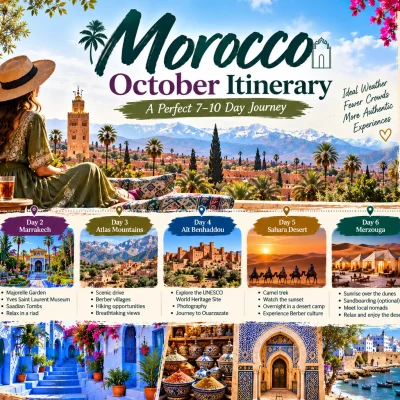
Marrakech is a common starting point for trips to Merzouga, but the journey is substantial. It usually involves crossing the High Atlas Mountains and travelling through southern Morocco towards the desert.
Organised multi-day tours
An organised tour can simplify accommodation, transport and activity planning. Many itineraries include stops around Aït Benhaddou, Ouarzazate or the Dades Valley before reaching Merzouga.
Check the number of nights, driving schedule, accommodation standards, included meals and whether the price covers transfers into and out of the camp.
Private driver
A private driver provides flexibility over stops and overnight locations. This can be useful for families, small groups or travellers who want to spend more time at particular places.
Ask for a clear itinerary and agree on the services and costs in advance.
Independent travel
Independent travellers can use a combination of public transport and local transfers, depending on available routes and schedules. Confirm connections and departure points before travelling, particularly if you are trying to reach a desert camp on the same day.
For a more relaxed journey from Marrakech, allow enough time for overnight stops. Avoid planning an international flight immediately after a long road transfer.
How to Reach the Sahara from Fes
Fes can also serve as a starting point for a trip to Merzouga. The route crosses inland landscapes and can be arranged by organised tour, private vehicle or a combination of transport options.
Although the journey may be more direct than some routes from Marrakech, it is still a substantial transfer. Do not plan a full day of sightseeing in Fes and a long desert drive on the same day unless your transport provider confirms that the schedule is realistic.
If you are visiting both Marrakech and Fes, compare open-jaw flight options and the direction of your route before booking accommodation. This can help you avoid unnecessary backtracking.
What to Pack for the Sahara Desert in October
Packing for the desert means preparing for both warm sunshine and cool evenings.
Clothing
Bring lightweight daytime clothing, a warm jumper or fleece, long trousers and a jacket for the evening. Comfortable closed shoes can help when walking over uneven ground or loose sand.
A scarf or buff can provide some protection against wind and blowing sand. Sunglasses and a hat are useful in exposed areas.
Sun protection
Pack sunscreen, lip balm, sunglasses and a wide-brimmed hat. The sun can feel intense even when the air temperature seems comfortable.
Reapply sunscreen according to the product instructions and take regular breaks in the shade when possible.
Water and personal essentials
Carry drinking water on excursions and follow your guide’s advice about how much to bring. A small day bag is useful for your phone, camera, medication, tissues and other essentials.
Bring personal medicines, travel documents and any items you need to sleep comfortably.
Electronics and photography equipment
Dust and sand can damage electronics. Use protective cases and keep devices secured when not in use.
A power bank can be useful, but check the camp’s electricity arrangements before relying on charging facilities. Carry a torch or headlamp if you expect to walk around the camp after dark.
Sleeping essentials
Ask your camp what bedding is provided. Depending on your preferences and the accommodation, you may want to bring warm sleepwear, extra socks or a small travel pillow.
Is the Sahara Desert in October Suitable for Families?
A Sahara trip can be enjoyable for families, but the best itinerary depends on children’s ages, health, comfort with long journeys and interest in outdoor activities.
Choose accommodation with facilities that meet your needs, and check the driving schedule before booking. Long transfers may be tiring for younger children, so consider breaking up the journey with overnight stops.
Discuss camel trekking and other activities with the operator, including age restrictions, safety measures and alternatives. Children should be supervised near dunes, vehicles and camp areas.
A family-friendly itinerary should allow time for meals, rest and changes in the weather rather than attempting to complete every activity.
Is Visiting the Sahara Desert in October Expensive?
The total cost varies according to your departure city, transport, accommodation, group size and the activities you choose.
Budget options
Budget travellers may compare shared tours, simple guesthouses and basic desert camps. Check exactly what is included, because the lowest advertised price may not cover every transfer, meal or activity.
Mid-range experiences
A mid-range trip may include comfortable accommodation, a guided multi-day tour and a camp with private or upgraded facilities. Compare the itinerary and inclusions rather than choosing based on the accommodation photos alone.
Luxury desert camps
Luxury camps may offer larger tents, private bathrooms, upgraded meals and additional services. Facilities vary by camp, and the word “luxury” is not a standardised guarantee. Confirm the specific amenities before booking.
When comparing prices, consider transport, meals, tips where customary, entrance fees, optional activities, travel insurance and cancellation conditions.
Responsible and Safe Travel in the Sahara
The desert is a beautiful but exposed environment. Good planning and responsible choices help protect both visitors and the places they explore.
- Follow local advice about weather, wind and safe walking routes.
- Carry sufficient water and protect yourself from the sun.
- Do not wander far from camp without informing your guide.
- Choose reputable operators with clear safety arrangements.
- Respect wildlife, vegetation and local communities.
- Avoid leaving rubbish in the dunes or around camps.
- Ask permission before photographing people.
- Follow animal-welfare guidance when considering camel rides.
- Keep essential medicines and emergency contact information accessible.
- Check current travel advice and insurance coverage before departure.
Avoid attempting remote desert routes alone without appropriate experience, navigation, equipment and local knowledge.
Frequently Asked Questions About the Sahara Desert in October
Is October a good month to visit the Sahara Desert in Morocco?
Yes. October is generally a favourable month for exploring the Moroccan Sahara because the most intense summer heat has often eased. Daytime conditions can still be warm, and nights are cooler, so prepare for both.
How hot is the Sahara Desert in October?
Temperatures depend on the location and date. Around Merzouga, daytime temperatures can reach the upper twenties Celsius or higher, while nighttime temperatures may fall into the teens. Check the forecast for your travel dates rather than relying on averages alone.
Is it cold in the Sahara at night in October?
Evenings and early mornings can feel cool after a warm day. A fleece or jacket is recommended, and you should ask your camp about bedding and additional blankets.
Can you ride a camel in the Sahara in October?
Yes, camel treks are offered by many local operators around Merzouga and other desert destinations. Confirm the route, duration, safety arrangements and animal-welfare practices. Ask about alternatives if you do not wish to ride.
How many nights should I spend in the Sahara?
One night provides a short introduction, while two nights allow more time for exploring and relaxing. Longer stays may suit travellers who want a slower pace or additional excursions.
Can I visit the Sahara on a day trip from Marrakech?
A classic dune experience around Merzouga is not practical as a relaxed day trip from Marrakech because of the distance. A multi-day journey is more suitable. If you only have one day, consider a closer excursion and understand that it offers a different landscape from the Sahara’s large sand dunes.
What is the difference between Merzouga and Erg Chebbi?
Merzouga is a village and gateway to the surrounding desert. Erg Chebbi is the nearby dune field known for its large stretches of sand and desert camps.
Should I book a desert camp in advance?
Booking ahead is sensible if you have fixed dates or specific accommodation preferences. Confirm the camp’s location, facilities, transfers, meals and cancellation policy before making a reservation.
Is the Sahara Desert suitable for older travellers?
It can be, depending on health, mobility and the type of trip. Ask about walking distances, vehicle transfers, camp access, bathroom facilities and the length of driving days. Camel trekking is optional, not essential.
What should I wear for a Sahara Desert trip in October?
Wear light, comfortable clothing during the day, along with sun protection and closed shoes for walking. Bring warmer layers for the evening and early morning.
Final Thoughts: Is the Sahara Desert in October Worth Visiting?
The Sahara Desert in October offers an appealing combination of warm days, cooler evenings and opportunities to experience one of Morocco’s most distinctive landscapes. From the dunes around Merzouga to guided desert excursions, overnight camps and stargazing, there are many ways to make the trip memorable.
The most important decision is choosing the right route. If you are travelling from Marrakech, allow sufficient time for the journey and consider overnight stops. If you are starting from Fes, check transport arrangements carefully and avoid overloading your schedule.
Pack for changing temperatures, choose responsible local operators and book accommodation that matches your comfort needs. With thoughtful preparation, an October visit to the Moroccan Sahara can become one of the highlights of your journey.
Affiliate disclosure: This article may contain affiliate links. Morocco’s Gate may earn a commission if you make an eligible purchase through these links, at no additional cost to you.
AI-generated image disclosure: Some images on this website may be AI-generated or AI-enhanced for illustrative purposes. They may not exactly represent actual locations, weather conditions or travel experiences.