
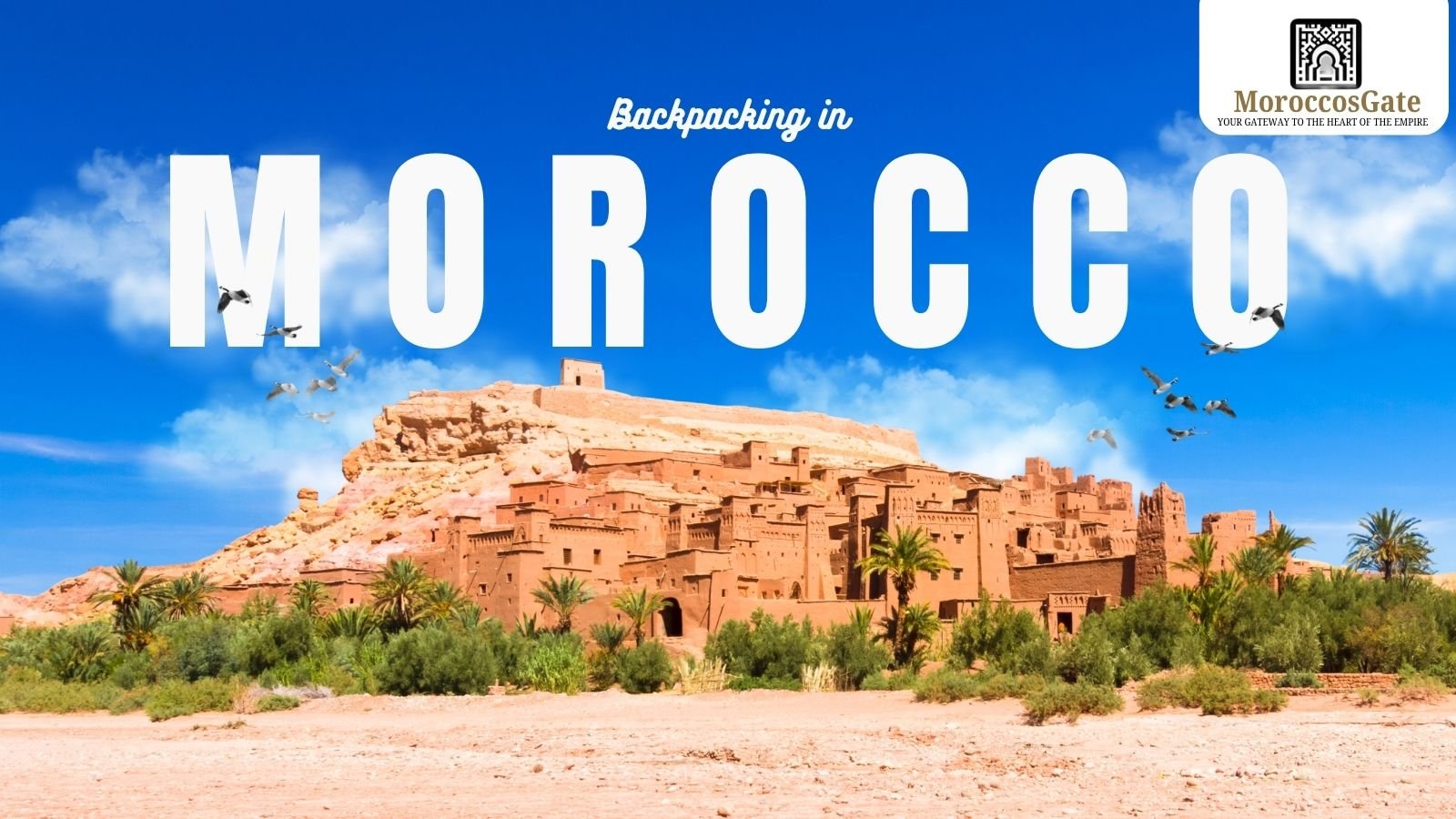
Backpacking in Morocco: The Complete Guide to Culture, Nature, and Adventure
Backpacking in Morocco delivers a combination few countries can match: medieval walled cities barely changed in centuries, the highest mountain range in North Africa, a windswept Atlantic coastline, and the edge of the Sahara Desert, all reachable within a single well-planned loop. Add in a favorable exchange rate, an extensive network of cheap buses and trains, and a culture built around hospitality and shared meals, and it’s easy to see why Morocco has become one of the most popular backpacking destinations connecting Europe, Africa, and the Middle East.
This guide walks through everything a backpacker needs to plan a trip through Morocco — from the essential cities and natural landscapes to transport logistics, budgeting, safety, packing, and the questions first-time visitors ask most often. Whether you’re backpacking solo, as a couple, or with a small group of friends, this guide is built to help you build a route that matches your time, budget, and interests.
Why Morocco Is a Top Backpacking Destination
Morocco sits at a unique geographic and cultural crossroads — close enough to Europe for a short flight or even a ferry crossing from Spain, yet distinctly North African, Amazigh (Berber), and Arab in culture, language, and cuisine. For backpackers, this translates into a trip that feels genuinely far from home without requiring the time or expense of a longer-haul journey.
The country’s diversity of landscapes is a major draw: snow-capped peaks in the Atlas Mountains, rolling Saharan dunes near Merzouga and Zagora, a rugged Atlantic coastline dotted with surf towns, and dense, historic medinas that function as living, breathing cities rather than museum pieces. Combined with genuinely low daily costs compared to Western Europe, Morocco offers an unusually rich backpacking experience relative to its price point.
Building Your Route: Essential Cities for Backpackers
Marrakech — The Classic Starting Point
Most backpacking routes through Morocco begin in Marrakech, thanks to its major international airport and central position relative to the mountains, desert, and coast. The city’s beating heart is Jemaa el-Fnaa, a UNESCO-recognized square that transforms from a market during the day into an enormous open-air theater by night, filled with storytellers, musicians, henna artists, and food stalls.
Beyond the square, the Marrakech Medina is a maze of narrow alleys and souks selling spices, leather, lanterns, and textiles, alongside landmarks like the ornately tiled Bahia Palace and the towering Koutoubia Mosque. For a break from the medina’s intensity, the Majorelle Garden — a striking botanical garden restored by fashion designer Yves Saint Laurent — offers a cool, tranquil escape filled with cacti, cobalt-blue structures, and a small Berber museum.
Marrakech also serves as the primary jumping-off point for day trips and multi-day excursions into the Atlas Mountains and the Sahara Desert, making it a natural hub for backpackers building a longer itinerary.
Fes — Morocco’s Spiritual and Intellectual Capital
Fes el-Bali, the old walled city of Fes, is widely considered the best-preserved medieval city in the Arab world and is one of the largest car-free urban zones on Earth, with donkeys and handcarts still used to transport goods through its narrow alleys. Backpackers who explore Fes often describe it as even more immersive than Marrakech, precisely because it draws fewer crowds while offering deeper historical density.
Highlights include Al-Qarawiyyin, recognized as the world’s oldest continuously operating educational institution, the ornately carved Bou Inania Madrasa, and the unforgettable Chouara Tannery, where leather is still dyed by hand in stone vats using techniques passed down for generations. Fes’s medina, with more than 9,000 alleys, rewards travelers who simply wander without a fixed destination — though a licensed local guide is highly recommended for at least the first day to avoid getting lost and to gain historical context.
Chefchaouen — The Blue Pearl of the Rif Mountains
Tucked into the Rif Mountains in northern Morocco, Chefchaouen is famous for its blue-washed buildings, a color tradition with roots that trace back to the city’s Jewish community in the 15th century. For backpackers, Chefchaouen offers a slower, more relaxed pace than the larger cities, along with excellent hiking opportunities in the surrounding mountains, including trails to the nearby Spanish Mosque viewpoint and Akchour waterfalls.
Essaouira — Coastal Calm and Surf Culture
On the Atlantic coast, Essaouira offers a dramatically different atmosphere from the interior cities: whitewashed buildings with blue shutters, a working fishing port, and a laid-back energy that has made it a favorite stop for backpackers looking to decompress. The historic Skala de la Ville, a fortified sea bastion with rows of old cannons, offers sweeping ocean views and a glimpse into the city’s role as a former Portuguese trading post.
Essaouira’s strong, consistent winds have also made it one of North Africa’s premier windsurfing and kitesurfing destinations, while its medina — smaller and calmer than those of Marrakech or Fes — is known for wood-carving workshops, art galleries, and fresh seafood grilled right at the port.
Rabat and Casablanca — The Modern Gateway Cities
While less commonly the centerpiece of a backpacking route, Rabat (Morocco’s capital) and Casablanca (its largest city and main international air hub) are worth a stop for travelers interested in more contemporary Morocco. Rabat’s Kasbah of the Udayas offers a peaceful, blue-and-white neighborhood overlooking the Atlantic, while Casablanca is home to the Hassan II Mosque, one of the largest mosques in the world and one of the few in Morocco that allows guided tours for non-Muslim visitors.
Natural Wonders and Outdoor Adventures
The Atlas Mountains
The High Atlas Mountains offer some of the best trekking in North Africa, and the village of Imlil serves as the primary gateway for hikers. From Imlil, trails wind through terraced valleys and traditional Berber villages before climbing toward Mount Toubkal, which at 4,167 meters (13,671 feet) is the highest peak in North Africa. Reaching the summit typically takes a two-day trek with an overnight stay at a mountain refuge, though shorter day hikes around Imlil are accessible to travelers with less time or experience.
Beyond Toubkal, the Atlas Mountains offer countless valleys worth exploring, including the Ourika Valley, known for its waterfalls and traditional Berber hospitality, and the more remote Ait Bouguemez Valley, sometimes called the “Happy Valley,” which sees far fewer tourists and offers an especially authentic look at rural mountain life.
The Sahara Desert
No backpacking trip through Morocco feels complete without a journey into the Sahara. Most travelers reach the desert via Merzouga, near the towering dunes of Erg Chebbi, or via the smaller, less-visited dunes of Erg Chigaga near Zagora. Multi-day desert tours typically combine camel trekking with an overnight stay in a traditional desert camp, where travelers can watch the sunset paint the dunes gold, sleep under an extraordinarily clear, star-filled sky, and rise early for a sunrise camel ride back.
Because most backpackers arrive from Marrakech or Fes, many desert tours are structured as multi-day loops that also pass through the dramatic Dades and Todra Gorges — deep limestone canyons that offer excellent short hikes and rock-climbing opportunities along the way.
The Atlantic Coast
Beyond Essaouira, Morocco’s Atlantic coastline offers additional stops for backpackers seeking surf towns and quieter beaches. Taghazout, north of Agadir, has developed into one of Morocco’s most popular surf destinations, with a growing number of surf hostels and camps catering specifically to backpackers looking to learn or improve their surfing while staying on a budget.
Budget-Friendly Travel Tips for Backpackers
Stay in Riads and Hostels
Traditional Moroccan riads — guesthouses built around a central courtyard — offer an authentic, architecturally rich stay at prices well below international hotel chains, especially when booked outside the historic medinas’ most touristed corners. Hostels have also expanded rapidly across Marrakech, Fes, Chefchaouen, and coastal towns, typically offering dorm beds, communal kitchens, rooftop terraces, and organized activities that make it easy for solo backpackers to meet other travelers.
Eat Like a Local
Moroccan street food offers extraordinary value: tagines, couscous (traditionally served on Fridays), and harira soup are widely available at street stalls and small family-run eateries for a fraction of restaurant prices. Bakeries selling fresh khobz (flatbread) and stalls offering msemen (flaky pancakes) make for cheap, filling breakfasts, while fresh fruit and nut vendors are found throughout every city for an inexpensive snack between meals.
Use Public and Shared Transport
Morocco’s train network, operated by ONCM, connects major cities like Casablanca, Rabat, Fes, and Marrakech comfortably and affordably. For routes not served by rail, CTM and Supratours buses offer scheduled, air-conditioned intercity travel, while grand taxis — shared sedans that run fixed routes and charge per seat — are the most economical option for shorter hops between towns. Within cities, metered petit taxis handle short trips at low cost.
Learn Basic Arabic and French Phrases
While Moroccan Arabic (Darija) is the primary spoken language, French is widely used in business, education, and tourism, and English is increasingly common in major tourist areas. Learning a handful of greetings and polite phrases in Arabic or French — even just “shukran” (thank you) or “salam” (hello) — goes a long way in building rapport with locals and can smooth interactions during bargaining or when asking for directions.
Travel During Shoulder Season
Spring (March–May) and autumn (September–November) offer the most comfortable temperatures for hiking and city exploration, along with lower accommodation prices and smaller crowds compared to the peak summer months, when interior cities like Marrakech and Fes can become extremely hot.
Bargain Respectfully in the Souks
Bargaining is a standard part of shopping in Moroccan souks, and starting an offer at roughly a third to half of the initial asking price is a common approach before settling on a fair middle ground. Staying friendly and patient throughout the exchange is key, since bargaining is treated as a social interaction rather than a confrontation.
Sample Two-Week Backpacking Route
| Days | Destination | Highlights |
|---|---|---|
| 1–3 | Marrakech | Jemaa el-Fnaa, Medina, Bahia Palace, Majorelle Garden |
| 4–5 | Imlil & Mount Toubkal | Atlas Mountains trekking, Berber villages |
| 6–8 | Sahara Desert (via Dades/Todra Gorges) | Camel trekking, desert camp, canyon hikes |
| 9–10 | Fes | Al-Qarawiyyin, Bou Inania Madrasa, Chouara Tannery |
| 11–12 | Chefchaouen | Blue medina, Rif Mountain hikes |
| 13–14 | Essaouira | Coastal relaxation, Skala de la Ville, windsurfing |
This loop can be completed almost entirely using trains, CTM/Supratours buses, and shared grand taxis, keeping transport costs low while covering Morocco’s most essential backpacking highlights.
Packing Tips for Backpacking in Morocco
- Modest, breathable clothing — lightweight layers that cover shoulders and knees are respectful in more conservative areas and practical for both hot cities and cooler mountain evenings.
- A warm layer for the desert and mountains — desert nights and Atlas Mountain evenings can get surprisingly cold, even when daytime temperatures are hot.
- Comfortable, closed-toe walking shoes — essential for uneven medina cobblestones and any hiking in the Atlas Mountains.
- A universal power adapter — Morocco uses the European-style two-pin plug (Type C/E).
- A lightweight scarf or shawl — useful for sun protection in the desert, warmth in the mountains, and covering up when visiting religious sites.
- A reusable water bottle with a filter — reduces plastic waste and is useful on longer treks where bottled water isn’t always available.
Safety Tips for Backpackers
Morocco is generally considered safe for backpackers, including solo female travelers, though standard travel precautions apply. Staying alert in crowded medina alleys, keeping valuables secure, and politely declining unsolicited “guide” offers from unlicensed individuals near major landmarks are all sensible practices. Solo female travelers often report feeling comfortable in Morocco’s main tourist cities, particularly when dressing modestly and staying in well-reviewed riads or hostels with strong community feedback.
When trekking in the Atlas Mountains or venturing into the Sahara, it’s advisable to go with a licensed guide, both for safety and to support local Berber communities who depend on trekking tourism.
Frequently Asked Questions About Backpacking in Morocco
Is Morocco good for backpacking? Yes. Morocco offers an unusually diverse range of landscapes — mountains, desert, coastline, and historic cities — combined with affordable transport, budget accommodation, and inexpensive food, making it one of North Africa’s most popular backpacking destinations.
How much money do I need to backpack Morocco? Budget backpackers typically spend $30–$45 per day covering accommodation, food, and local transport, while a two-week trip, excluding international flights, generally totals between $500 and $900.
Is it safe to backpack alone in Morocco? Yes, Morocco is generally safe for solo backpackers, including solo women, though standard precautions such as dressing modestly, staying alert in crowded areas, and booking well-reviewed accommodation are recommended.
What is the best route for backpacking Morocco? A popular two-week route begins in Marrakech, continues to the Atlas Mountains and Sahara Desert, then loops through Fes, Chefchaouen, and finishes on the coast in Essaouira, using trains, buses, and shared taxis throughout.
What is the best time of year to backpack Morocco? Spring (March–May) and autumn (September–November) offer the most comfortable temperatures for both city exploration and mountain trekking, along with lower prices than peak summer months.
Do I need to speak Arabic or French to backpack Morocco? No, English is increasingly common in tourist areas, though learning a few basic Arabic or French phrases helps with navigating smaller towns, bargaining in souks, and connecting with locals.
Can you backpack the Sahara Desert independently? Independent desert travel is possible to towns like Merzouga, but the dunes themselves are best experienced through a licensed multi-day tour that includes camel trekking and an overnight desert camp, both for safety and logistics.
Backpacking in Morocco Is an Adventure Worth Taking
Backpacking in Morocco offers a rare combination of cultural depth, natural diversity, and affordability that few destinations can match. From the sensory overload of Marrakech’s Jemaa el-Fnaa to the quiet vastness of the Sahara’s dunes, the mountain trails around Mount Toubkal, and the salty breeze of Essaouira’s port, this country rewards travelers willing to embrace a bit of chaos alongside its beauty.
With a flexible route, a reasonable budget, and an openness to Morocco’s rich blend of Amazigh, Arab, and Andalusian culture, backpackers consistently come away with one of the most memorable trips of their travels.
#BackpackingMorocco #TravelOnABudget #ExploreMorocco #AtlasMountains #MoroccanCulture #BudgetTravel #SoloTravel