
Grotte à Hominidés: Celebrating Morocco’s 773,000-Year-Old Human History
Usually, when we talk about the Kingdom’s history, we speak of the great dynasties, the majestic Kasbahs, or the intricate mosaics of the 12th century. But today, we are rewinding the clock much, much further. We are traveling back—not hundreds of years, but hundreds of thousands of years.
We are celebrating a discovery that puts Morocco right at the center of the story of mankind.
The spotlight is on a site known as Thomas Quarry I, and specifically, a small cave within it called the Grotte à Hominidés.
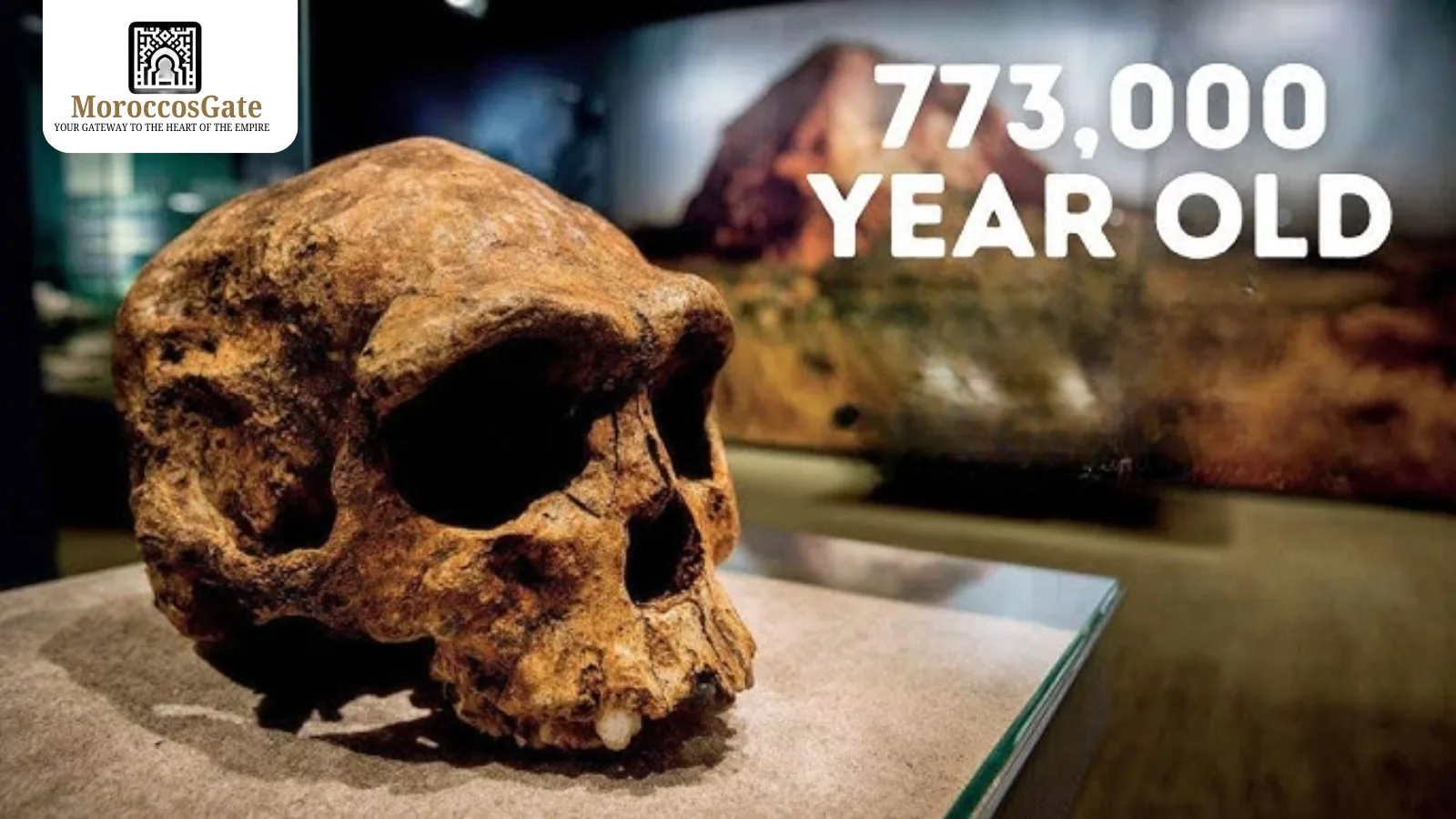
Why the celebration? Because researchers have identified 773,000-year-old Moroccan fossils right here in Casablanca. This discovery is shaking up the scientific world, rewriting textbooks, and giving every traveler one more massive reason to visit this incredible country.
At MoroccosGate, we love sharing the hidden secrets of our homeland. Whether you are a solo traveler looking for deep facts about Morocco, or an adventure traveler wanting to walk in the footsteps of the ancients, this is a story you need to know.
Here is why the Grotte à Hominidés is the most exciting archaeological headline of the decade.
Exclusive offer on resort room booking. Click here👇
What is the Grotte à Hominidés?
The Grotte à Hominidés (Cave of Hominids) is a specific archaeological cavity located within the Thomas Quarry I site on the outskirts of Casablanca.
For years, Casablanca has been famous for its Art Deco architecture, the Hassan II Mosque, and its bustling business center. But beneath the modern streets lies the Prehistory of Casablanca—a treasure trove of secrets.
The Big Discovery
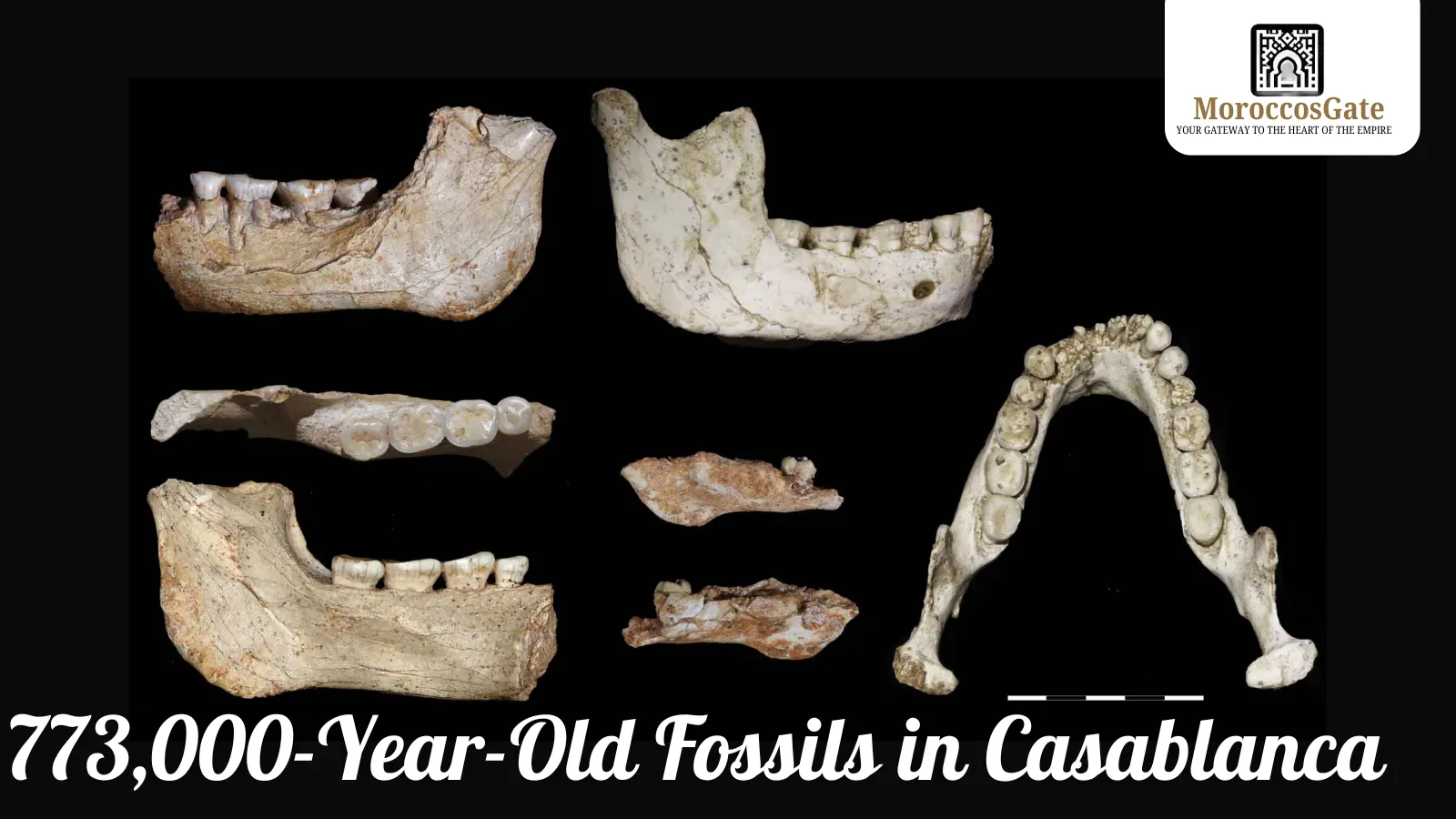
Researchers, in a moment of pure scientific triumph, identified hominin fossils in this cave. These weren’t just random bone fragments; they included:
- Jawbones (mandibles).
- Teeth.
- Vertebrae.
But the real shocker? The age.
Through advanced dating techniques, these remains were found to be approximately 773,000 years old.
To put that in perspective:
- The Pyramids of Egypt are about 4,500 years old.
- The Roman ruins of Volubilis are about 2,000 years old.
- The Grotte à Hominidés finds are nearly three-quarters of a million years old.
This isn’t just “old.” This is deep time. This is the dawn of us.
Breaking the “East Africa Only” Narrative
Why is this a cause for celebration?
For decades, the story of human evolution had a very specific geography. We were told that the “Cradle of Humanity” was almost exclusively in East Africa (The Rift Valley in Ethiopia and Kenya). While those sites are incredibly important, North Africa was often seen as a quiet sideline.
The Grotte à Hominidés changes everything.
This discovery fills a massive gap in the fossil record. It proves that North African human origins are just as deep and vital. It suggests that early humans weren’t just sitting in one corner of the continent; they were moving, living, and evolving right here on the Atlantic coast of Morocco.
It validates what Moroccan archaeologists have suspected for years: Morocco has always been a hub of life. From the dinosaurs of the Atlas Mountains to the early humans of Casablanca, this land has a magnetic pull.
The Science: How Do We Know It’s 773,000 Years Old?
For our fact-loving solo travelers and geeks (we say that with love!), you might be wondering: “How can they be so sure about the date?”
The dating technique used is as fascinating as the fossils themselves. It is called the Matuyama-Brunhes magnetic reversal.
What is Matuyama-Brunhes?
Imagine the Earth is a giant magnet (because it is). Every so often—over hundreds of thousands of years—the Earth’s magnetic poles flip. North becomes South, and South becomes North.
- The last major reversal happened about 773,000 years ago.
- This event is known as the Matuyama-Brunhes boundary.
When layers of sediment are laid down, magnetic minerals inside them freeze in the direction of the magnetic field at that time. By analyzing the magnetic signature of the sand and rock in the Thomas Quarry I, scientists could pinpoint exactly where the reversal happened.
The fossils in the Grotte à Hominidés were found just below this boundary.
Translation: We have a cosmic timestamp etched into the rock that guarantees these ancestors lived just before the last great magnetic flip. Science is amazing!
New offers and collection has arriver. Check here👇
Meeting the Ancestors: Who Were They?
So, who was living in Casablanca 773,000 years ago? They didn’t have cafes, and they certainly didn’t have Rick’s Café from the movie!
These Casablanca hominin remains are believed to be from a species often called Homo heidelbergensis or Homo rhodesiensis.
The Missing Link?
Here is the most exciting part for adventure travelers who want to understand their own history.
These fossils date back to a crucial period—the time of the Last Common Ancestor (LCA).
This is the point in the family tree just before humanity split into different groups:
- One lineage stayed in Africa and eventually became Homo sapiens (us!).
- One lineage moved into Europe/Asia and became the Neanderthals and Denisovans.
The residents of the Grotte à Hominidés are likely the grandparents of both. They are the root from which modern humanity and our extinct cousins sprang. Standing in Casablanca, you are standing at the crossroads of the human family.
Casablanca: The New Capital of Prehistory
For the tourist, this changes how you view Casablanca.
Usually, tourists land in Casablanca, see the Mosque, and take the train to Marrakech. But now, we know that Casablanca is sitting on top of one of the most important archaeological goldmines in the world.
The Thomas Quarry I is not the only site. The entire region, known as the Casablanca Sequence, preserves millions of years of history. It shows a lush, ancient Morocco where hippos, rhinos, and elephants roamed alongside these early humans.
The “Prehistoric Trail” for Adventure Travelers
If you are planning an adventure trip to Morocco, you can now trace the full story of humanity:
- Start in Casablanca: Acknowledge the Grotte à Hominidés (773,000 years ago).
- Move to Safi (Jebel Irhoud): Visit the site where the oldest Homo sapiens remains ever found were discovered (dating back 300,000 years).
- End in the Present: Sip tea in a Medina, knowing you are the latest chapter in a story that has been writing itself on this soil for nearly a million years.
Why This Discovery Matters for 2026
As we look toward 2026, scientific tourism is booming. Travelers are no longer satisfied with just seeing pretty buildings; they want to learn. They want “Facts about Morocco” that challenge their worldview.
The Grotte à Hominidés puts Morocco on the map for a new kind of traveler: The Paleo-Tourist.
- Educational Travel: Families can come to learn about evolution.
- Solo Travelers: Can explore the museums and sites that house these treasures.
- National Pride: For Moroccans, this is a massive source of pride. We are not just a Kingdom of history; we are a Kingdom of Prehistory.
How to Experience This Today
Currently, Thomas Quarry I is an active archaeological and scientific site. You cannot simply wander into the Grotte à Hominidés with a selfie stick (yet!).
1. Visit the Museum of History and Civilizations (Rabat)
Many of the most important finds from the Prehistory of Casablanca and other sites are housed here. It is a world-class museum. You can stand inches away from the tools and remains of these ancient ancestors.
2. The Heritage of Casablanca
When booking a tour with MoroccosGate, ask our guides about the prehistoric context of the city. Even just driving past the quarry areas on the outskirts of the city takes on a new meaning when you know what lies beneath.
3. Keep an Eye on the Future
Morocco is investing heavily in heritage. There are plans and discussions about creating interpretation centers for these sites. By 2026, we may see more public access to the edges of these quarries.
Celebrating the Scientists
We must raise a glass (of mint tea) to the researchers. This discovery was a joint effort between Moroccan institutions (like the National Institute of Archaeology and Heritage – INSAP) and French universities.
Their patience, digging through tons of earth to find a single tooth, has gifted Morocco a legacy that is literally priceless.
It proves that the African roots of Homo sapiens and their ancestors run deep in the Maghreb soil.
Limited offer! Check here👇
Frequently Asked Questions
Q1. What was found in the Grotte à Hominidés?
A. Researchers found hominin fossils, including mandibles (jawbones), teeth, and vertebrae, belonging to early human ancestors.
Q2. How old are the fossils in Thomas Quarry I?
A. They are approximately 773,000 years old, dated using the Matuyama-Brunhes magnetic reversal technique.
Q3. Why is this discovery significant?
A. It challenges the idea that early humans were only evolving in East Africa. It shows that North Africa was a key hub for human evolution and the Last Common Ancestor (LCA) of humans and Neanderthals.
Q4. Can tourists visit the Grotte à Hominidés?
A. As of now, the quarry is a scientific site and not open for general tourism. However, artifacts and context can be viewed at the Museum of History and Civilizations in Rabat.
Q5. Where is the Grotte à Hominidés located?
A. It is located within the Thomas Quarry I site, on the outskirts of Casablanca, Morocco.
The Deepest Roots
When you travel to Morocco, you often feel a sense of timelessness. Now, thanks to the Grotte à Hominidés, we know why.
You are walking on land that has supported human life for nearly a million years. The hospitality you feel today is the result of thousands of generations of community survival and evolution.
So, let’s celebrate! Let’s celebrate the 773,000-year-old Moroccan fossils. Let’s celebrate the scientists. And let’s celebrate the fact that Morocco continues to surprise the world.
Are you ready to travel back in time?
Whether you want to explore the modern streets of Casablanca or the ancient artifacts in Rabat, MoroccosGate is your guide to the past, present, and future.
Book your adventure today.
Contact us today on👇
WhatsApp: +353-892614066
Email: travel@moroccosgate.com
Learn More: Check our “Facts about Morocco” section for more mind-blowing history.
Welcome to the Cradle of the North.