
Sacred Journeys: The Complete Guide To Moroccan Religious Sites
There is definitely an energy in Morocco that you sense the instant your toes sink into the earth. It is more than the hot sun or the bustle of the marketplaces it is an ancient sensation. It is the vibration of the spiritual.
Right from the very first musical note of the Adhan, or call to prayer, that rings out from the minarets at dawn, shattering the stillness of the desert, to the smell of oud and musk drifting through the doorways of ancient shrines, Morocco is a land that is profoundly infused with the divine.
For so many centuries, this Kingdom has been a haven for those who search for God, a junction of religious paths, and an earthly cradle of Sufism. Here, the terrestrial and the divine converge.
A visit to Morocco religious places is more than a holiday-it is a pilgrimage of the soul. Whether you are Muslim, Jewish, Christian, or simply a seeker of peace, the holy sites of Morocco can offer an intense connection with history and with the Creator.
At MoroccosGate, we understand that travel can be a spiritual act. We are pleased to guide you through our homeland’s sacred geography. Herein follows your in-depth guide to Morocco holy places, etiquette of the sacred, and the spiritual trends rising in 2026.
Book a Flight Ticket now. Click here👇
The Spiritual Landscape: A Land of “Baraka”
It is Baraka that we talk about so often in Morocco-a divine blessing or spiritual force residing in people and places. You feel this Baraka in the intricate geometry of mosques, its model reflecting the infinite nature of God and in the quiet courtyards of madrasas, where there has been a recitation of the Quran for a millennium.
Morocco stands apart within the Islamic world. It is a land of saints, Awliya. They say in Marrakech alone, seven patron saints guard the city. But besides Islam, Morocco is also the protector of a very rich Jewish heritage the synagogues and cemeteries are well looked after with profound respect.
Visiting Morocco religious places is walking through living enshrinement of faith.
The Mosques: Architectural Hymns to God
The mosque is the heart of the community. While many mosques in Morocco are reserved for Muslim worshipers, there are magnificent exceptions and exteriors that radiate spiritual power.
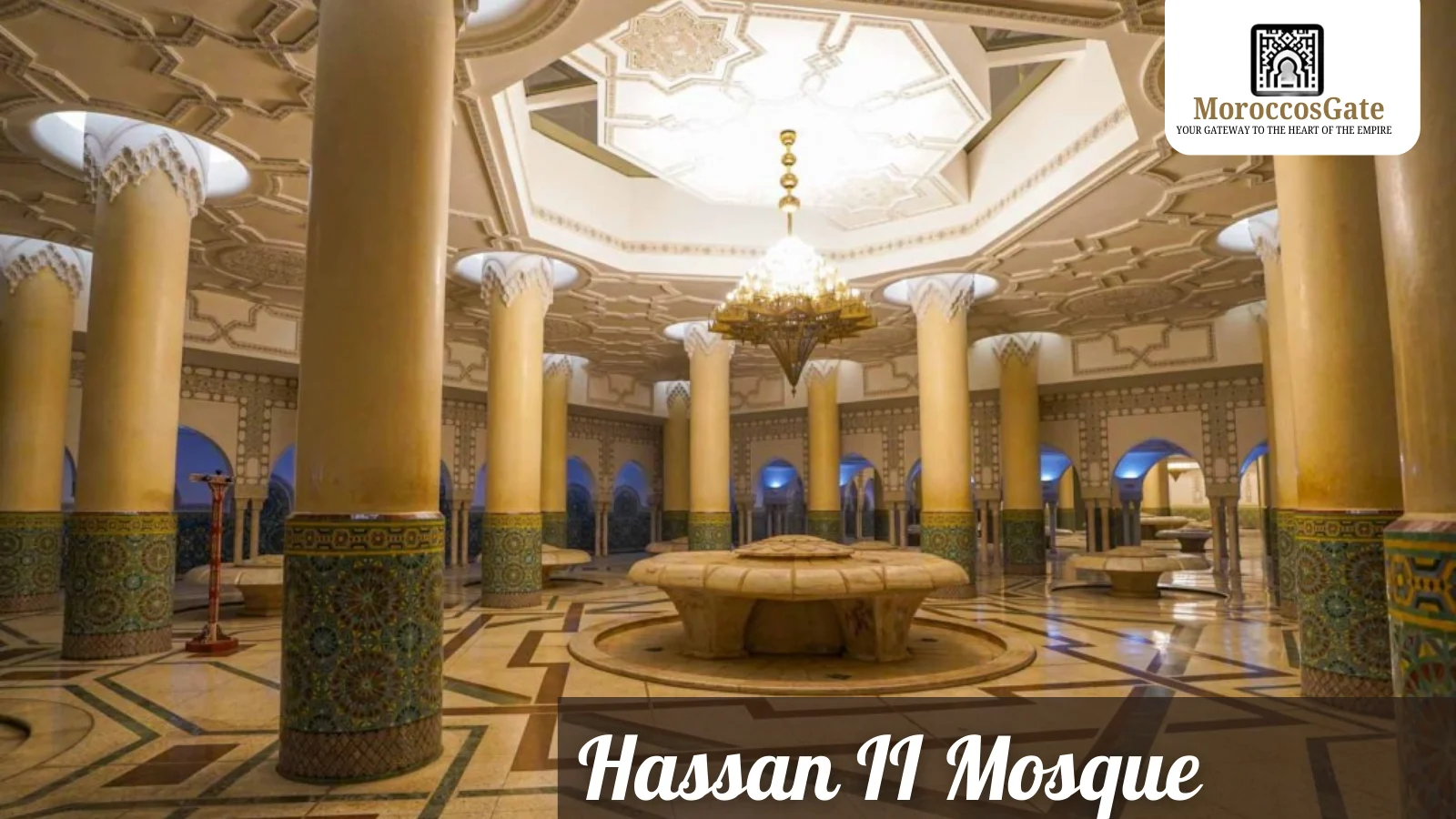
1. The Hassan II Mosque (Casablanca)
- The Significance: It is one of the few mosques in Morocco open to non-Muslims for guided tours. It is a masterpiece of faith and craftsmanship.
- The Spiritual Experience: Built partially over the Atlantic Ocean, it was inspired by the Quranic verse stating that “the throne of God was upon the water.” Standing in the vast prayer hall, which holds 25,000 worshipers, under a retractable roof that reveals the heavens, you feel small in the presence of the Divine. The sound of the waves crashing below mixes with the recitation of scripture, creating a harmony of nature and faith.
- Visitor Note: This is a must-visit for anyone wanting to understand the scale of Islamic devotion.
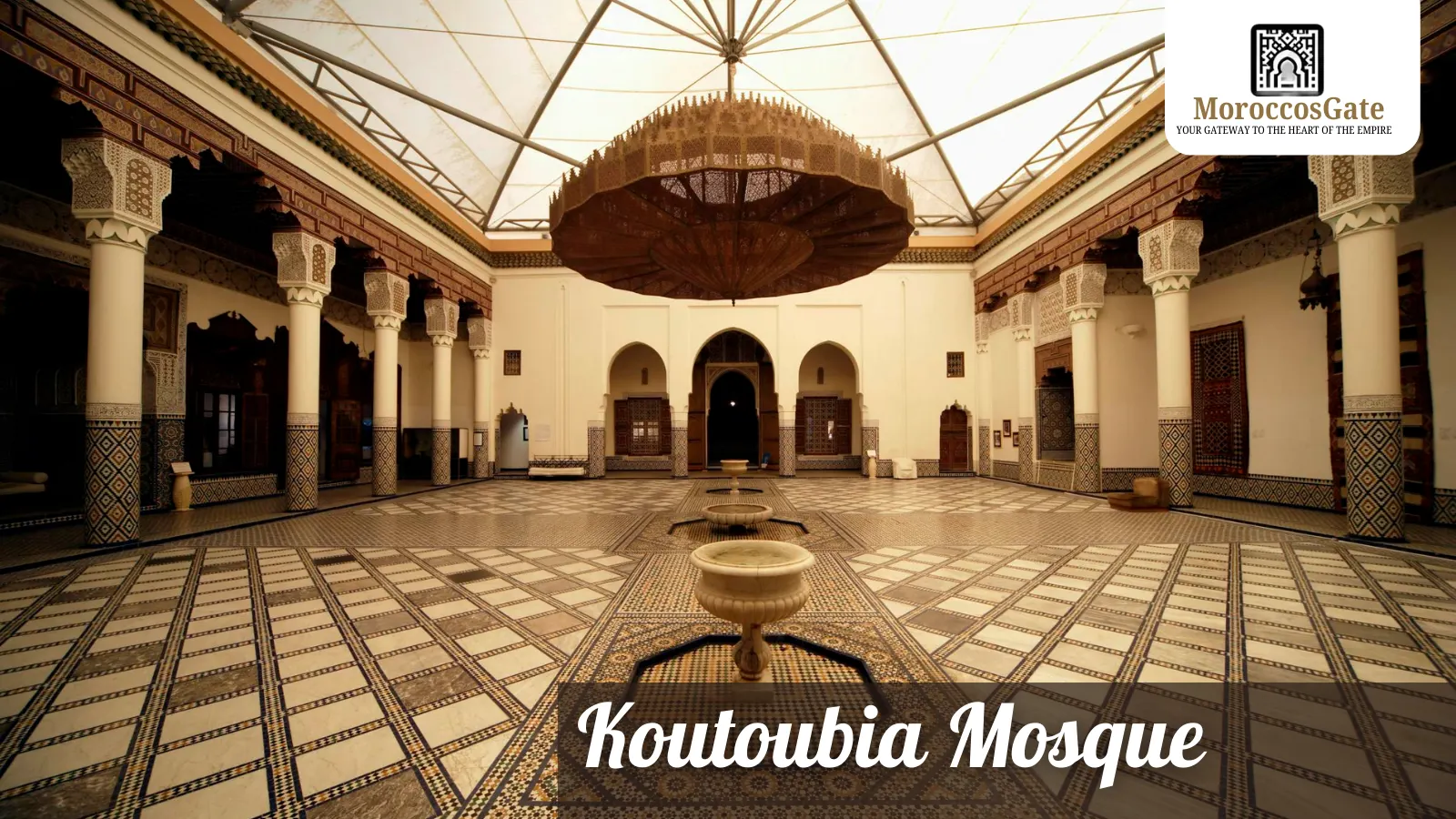
2. The Koutoubia Mosque (Marrakech)
- The Significance: The spiritual compass of Marrakech. Its minaret served as the model for the Giralda in Seville.
- The Spiritual Experience: While entry is for Muslims only, the gardens surrounding the Koutoubia are a place of contemplation. At sunset, when the call to prayer rings out, the birds circle the minaret in great flocks. Sitting here, listening to the call of “Allahu Akbar” (God is the Greatest) while the sky turns purple, is one of the most peaceful experiences in the city.
3. Al-Qarawiyyin (Fez)
- The Significance: Founded in 859 AD by a pious woman, Fatima al-Fihri, this is the oldest existing, continually operating educational institution in the world.
- The Spiritual Experience: Deep in the labyrinth of Fez, you cannot enter as a non-Muslim, but you can peer through the great gates. You will see the fountain of ablutions and the worshipers in white jellabas. It is the beating heart of Moroccan scholarship and spirituality.
The Zaouias and Mausoleums: Resting Places of the Saints
Morocco is dotted with Zaouias—centers of Sufi brotherhoods—and Mausoleums where great saints and kings are buried. These are potent Morocco religious sites filled with history.
1. The Mausoleum of Mohammed V (Rabat)
- The Sacred Space: This is the resting place of the father of modern Morocco, King Mohammed V, and his son King Hassan II.
- The Experience: It is open to all. The silence here is profound. A reader of the Quran is present 24/7, reciting holy verses over the tombs. The white marble and the green tiled roof symbolize peace and paradise. It is a place to reflect on leadership, sacrifice, and the transition from this life to the next.
2. Moulay Idriss Zerhoun (The Holy City)
- The Significance: Located near Meknes, this town holds the tomb of Idris I, the founder of the Idrisid dynasty who brought Islam to Morocco.
- The Pilgrimage: For centuries, this town was closed to non-Muslims. Today, it is open (though the tomb itself is reserved for Muslims). It is a place of pilgrimage (Moussem). The town clings to the mountain, closest to the sky. To walk its streets is to walk in the footsteps of the first believers in the Maghreb.
3. The Seven Saints of Marrakech
- The Tradition: Marrakech is known as the city of the “Seven Men” (Sabatu Rijal). These were seven Sufi mystics and scholars buried in the city.
- The Journey: There is a traditional pilgrimage route (Ziara) visiting their tombs. While the shrines are for believers, understanding who they were—men of peace, charity, and wisdom—adds a spiritual layer to your visit to the Red City.
Cheapest Taxi Service. Click here👇

The Madrasas: Schools of the Soul
In the Islamic tradition, seeking knowledge is a sacred duty. The Madrasas (theological schools) of Morocco are among the most beautiful Morocco religious places.
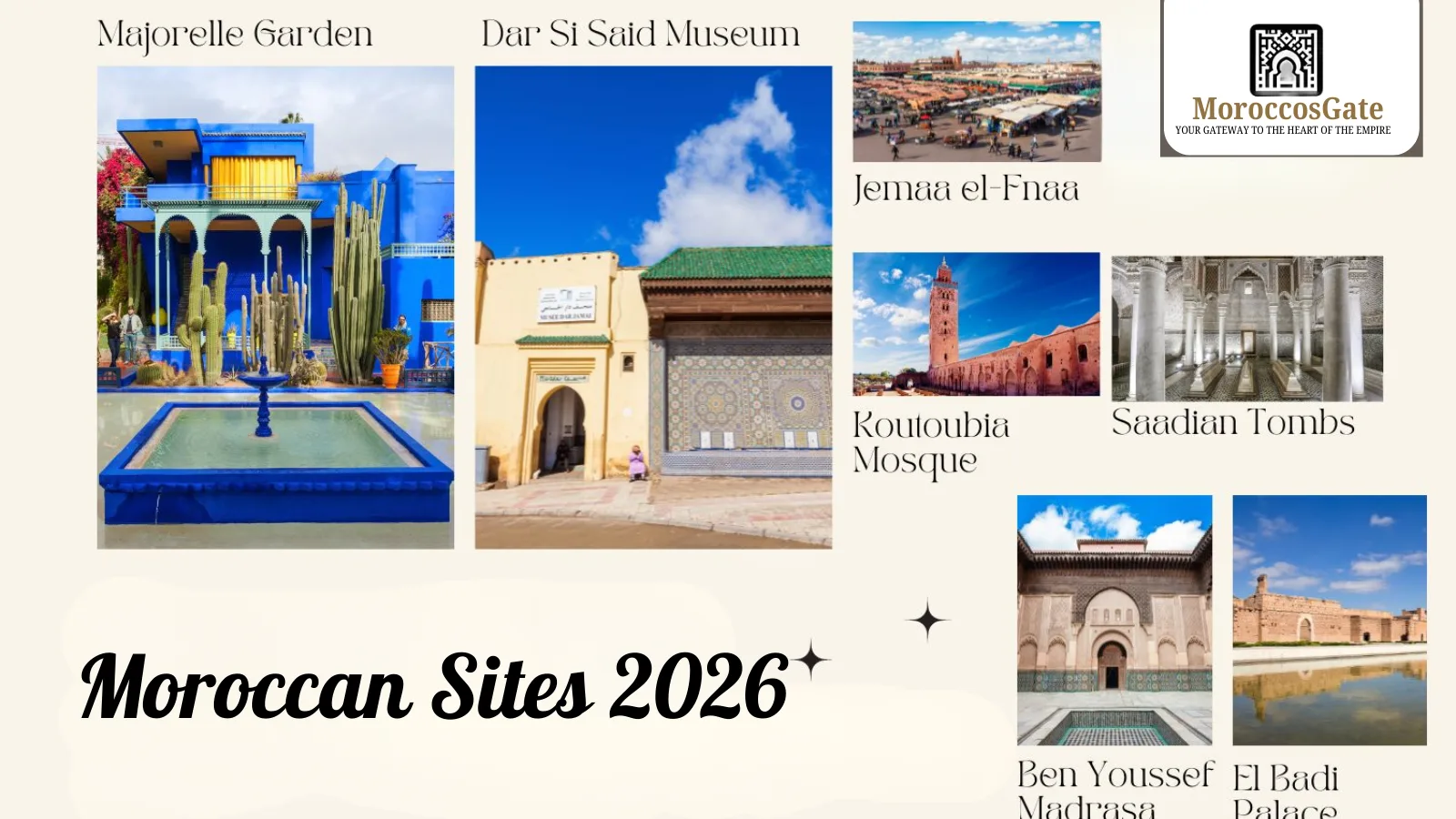
1. Ben Youssef Madrasa (Marrakech)
- The Inscription: Above the door, it reads: “You who enter my door, may your highest hopes be exceeded.“
- The Experience: Recently restored, this is a masterpiece of Zellij tilework and cedar wood. It served as a dormitory for students learning the Quran. Standing in the central courtyard, looking up at the sky, you feel the serenity that comes from a life dedicated to learning. It is a place of absolute symmetry, reflecting the order of God’s creation.
2. Bou Inania Madrasa (Fez)
- The Uniqueness: One of the few religious buildings in Fez that non-Muslims can enter. It functions as both a school and a congregational mosque. The sound of water from the central fountain creates a meditative atmosphere, washing away the chaos of the medina outside.
Interfaith Harmony: Jewish Heritage Sites
Morocco’s spiritual fabric is woven with Jewish threads. For 2,000 years, Jews have lived here, and the King remains the “Commander of the Faithful” for all his subjects. Visiting these sites is crucial to understanding the full picture of Morocco holy places.
1. Slat Al Azama Synagogue (Marrakech)
- The History: Located in the Mellah (Jewish Quarter), this synagogue dates back to 1492, founded by Jews expelled from Spain.
- The Vibe: It is a blue and white oasis of peace. It is still a functioning house of prayer. To visit is to honor the coexistence that defines Morocco.
2. Museum of Moroccan Judaism (Casablanca)
- The Significance: The only museum of its kind in the Arab world. It houses Torah scrolls, Hanukkah lamps, and traditional clothing. It is a powerful testament to religious tolerance and shared history.
What Should Wear Each Morocco Religious Places
This is the most common question we receive from spiritual travelers. When visiting the house of God, respect is the currency of entry. Here is a breakdown of what should wear each Morocco religious places to ensure you are respectful and welcomed.
1. General Rule: Modesty (Hshouma)
In Moroccan culture, modesty is a virtue. Regardless of your religion, dressing modestly invites respect from locals.
2. Visiting the Hassan II Mosque (Open to Non-Muslims)
- For Men: Long trousers are required. No shorts. Shoulders must be covered (no tank tops). A shirt or t-shirt is fine.
- For Women: Long trousers or a long skirt (ankle length). Arms should be covered. While a headscarf is not strictly mandatory for non-Muslim tourists in the tourist hours, it is highly respectful to carry a light scarf to drape loosely over your head or shoulders. It shows you understand the sanctity of the space.
- Shoes: You will be asked to remove your shoes before walking on the carpets. You will be given a bag to carry them.
3. Visiting Mausoleums (Mohammed V, etc.)
- Dress Code: Similar to the mosque. Knees and shoulders must be covered.
- Silence: These are graves. Speak in whispers. Do not use flash photography directly on the tombs.
4. Visiting Synagogues
- For Men: It is respectful to wear a kippah (skullcap) if offered one at the door, though a hat is often acceptable. Modest clothing (long pants) is expected.
- For Women: Modest dress covering shoulders and knees.
5. Walking in the Medinas (Near Holy Sites)
- Even if you are not entering a mosque, when walking through holy cities like Moulay Idriss or the old medinas of Fez:
- Avoid: Short shorts, crop tops, or plunging necklines.
- Wear: Linen trousers, maxi dresses, t-shirts, and comfortable walking shoes.
Need a Tour Guide book today.
2026 Trending Search for Holy Places: The Spiritual Shift
As we look toward 2026, travel trends are shifting. We are seeing a massive rise in “Spiritual Tourism” and “Silence Retreats.” Travelers are no longer just looking for sun they are looking for souls.
Here is what is trending for Morocco religious places in 2026:
1. The “Digital Detox” Pilgrimage
In a world of constant noise, travelers are seeking the silence of the Sahara and the Atlas Mountains. Retreats that combine Sufi meditation practices with desert silence are becoming the most sought-after experiences for 2026.
2. Interfaith Tours
There is a growing desire to understand the “Moroccan Exception“—the coexistence of Islam and Judaism. Tours that visit both Mosques (exterior/Hassan II) and Synagogues in the same day are trending, highlighting the shared Abrahamic roots.
3. Ramadam Experience 2026
More non-Muslim tourists are choosing to visit during Ramadan (which will fall in Feb/March 2026). They want to experience the spiritual intensity, the fasting, and the communal joy of Iftar (breaking the fast). It is seen as a way to connect deeply with the community.
4. “Baraka” Hunting
Travelers are moving away from the big cities to smaller, holier towns like Chefchaouen (with its many mosques) and Tamegroute (home to an ancient Quranic library) to find authentic spiritual connections.
Etiquette of the Spirit: How to Behave
Visiting Morocco holy places requires a soft heart and good manners.
- Do Not Enter if Forbidden: If a sign says “Muslims Only,” please respect it. Do not try to sneak a photo. The doorway is a boundary of faith.
- Photography: Always ask permission before photographing people praying. Prayer is a private conversation with God.
- Friday Prayers: On Fridays between 12:00 PM and 2:00 PM, mosques are full. Shops close. Streets go quiet. It is best to avoid visiting religious sites during this time and instead enjoy a quiet lunch, respecting the holy day.
- Listen: When the Adhan plays, music in shops is often turned down. Pause your conversation for a moment. Listen to the call. It is a beautiful moment of shared mindfulness.
A Journey Inward
To visit Morocco religious places is to realize that we are all searching for the same peace, the same meaning, and the same light.
Whether you stand beneath the towering minaret of the Hassan II Mosque with the ocean spray on your face, or sit in the silent, cedar-scented courtyard of the Ben Youssef Madrasa, you will leave Morocco different than when you arrived.
You will leave with a touch of Baraka. Morocco is open. The doors of hospitality are unlocked. The tea is pouring. The call to prayer is singing.
Are you ready for your spiritual journey?
At MoroccosGate, we specialize in crafting itineraries that respect the soul. Whether you want a tour of Jewish Heritage, a photography trip to the great Mosques, or a silence retreat in the desert, we are your guides.
Book your sacred journey today.
- WhatsApp: +353-892614066
- Email: travel@moroccosgate.com
- Explore More: Visit our “Moroccan Culture & Traditions” page for more insights.
May your journey be blessed.