The Magic of Ashura Festival Morocco: A Celebration of Fire, Water, and Tradition
A Festival Like No Other
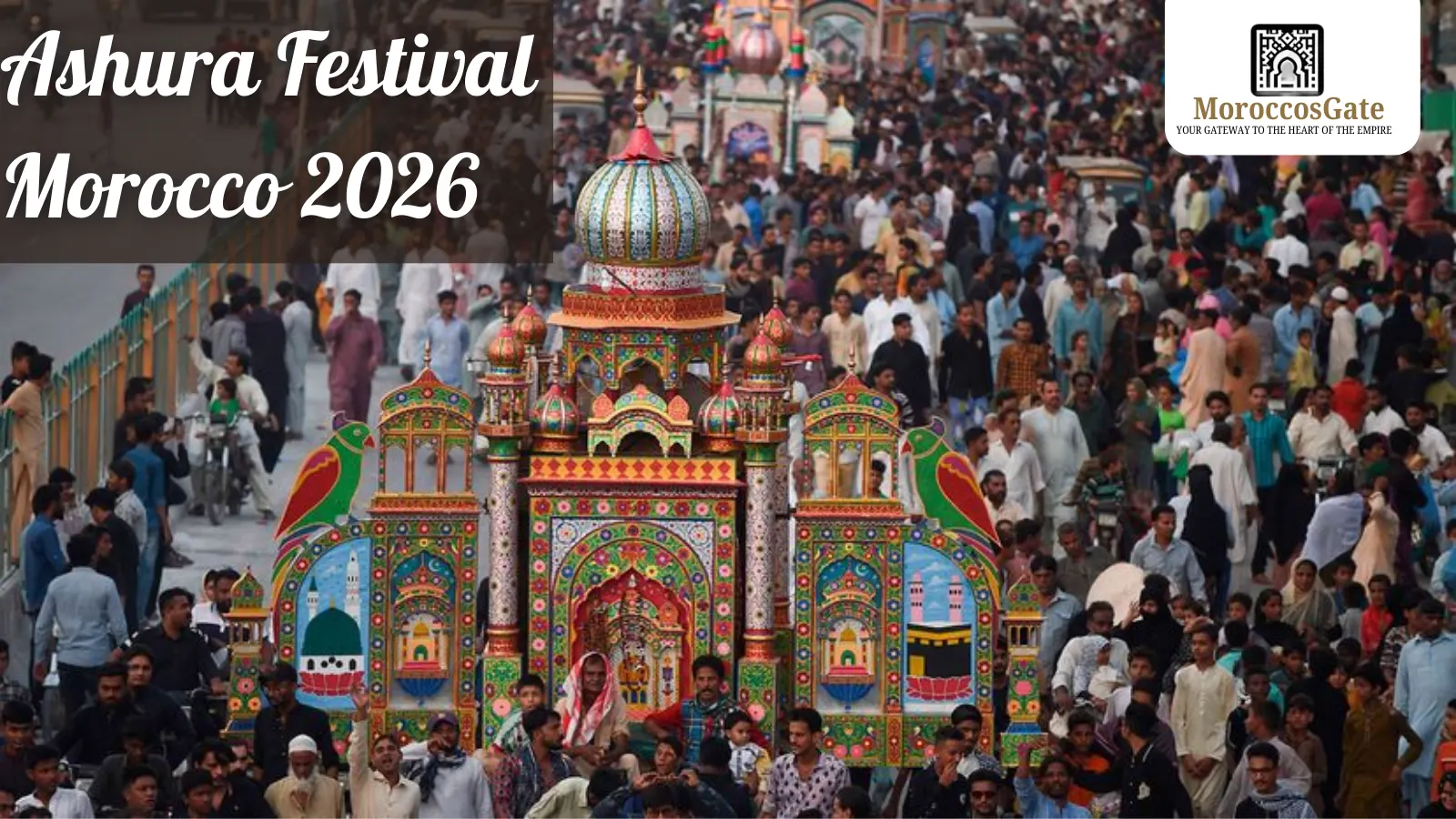
If you walk through the streets of a Moroccan medina on the 10th day of Muharram, you will notice a palpable shift in energy. The air smells of incense and dried fruits. The sound of small clay drums (Taarija) echoes from every alleyway. In the morning, you might get splashed with water by laughing children; by night, you might see the glow of bonfires lighting up the neighborhoods.
This is the Ashura festival Morocco—one of the most complex, vibrant, and fascinating events in the North African calendar.
While Ashura is observed by Muslims worldwide, the Moroccan celebration is unique. It is a spectacular blend where solemn religious history meets ancient local customs, creating a festival that feels entirely distinct from how it is celebrated in the Middle East or Asia. It is a mix of the spiritual and the playful, the fire and the water, the fasting and the feasting.
At MoroccosGate, we love exploring the hidden gems of our culture. Whether you are an Irish traveler planning a trip or a culture enthusiast, understanding Ashura offers a deep dive into the soul of Morocco. In this guide, we will explore what is Ashura and why it is celebrated, the specific rituals of Sha’ala and Zamzam, and everything you need to know about Ashura holiday 2026.
Take care of skin. Click here👇
Ashura Meaning in Islam and History
To understand the Moroccan festivities, we must first look at the religious foundation. Ashura meaning in Islam is derived from the Arabic word “Ashara,” which simply means “ten.” It falls on the 10th day of Muharram, the first month of the Islamic Lunar Calendar.
What happened on Ashura?
From a religious perspective, Ashura is a day of great historical significance.
- The Victory of Moses (Musa): For Sunni Muslims, who make up the majority in Morocco, Ashura marks the day God saved Moses and the Israelites from the Pharaoh by parting the Red Sea. It is a day of victory, liberation, and gratitude.
- Noah’s Ark: Tradition also holds that Noah’s Ark came to rest on Mount Judi on this day.
- The Martyrdom of Husayn: For Shia Muslims, Ashura is a day of mourning for the martyrdom of Husayn ibn Ali (the Prophet Muhammad’s grandson) at the Battle of Karbala. However, in Morocco, the observance is predominantly joyful and focused on the victory of Moses, though infused with local folklore that gives it a carnival-like atmosphere.
Why is Ashura important?
It serves as a spiritual reset at the start of the New Year. It is a time to cleanse sins through fasting and to strengthen community bonds through charity and gift-giving.
How Morocco Celebrated a Ashura: The Unique Traditions
While the religious core remains, the Ashura festival Morocco has evolved into a cultural phenomenon that includes pre-Islamic, Amazigh, and Jewish influences. The celebration spans two distinct days, often referred to by the elements they represent: Fire and Water.
1. The Night Before: Sha’ala (The Festival of Fire)
The festivities kick off on the eve of Ashura (the 9th of Muharram). As the sun sets, the atmosphere transforms. This night is dedicated to the ritual of Sha’ala (Bonfires).
In neighborhoods across the country, from the Atlas Mountains to the coast of Casablanca, young people gather wood and dry branches to build large bonfires in open squares.
- The Ritual: Crowds gather around the fire, chanting traditional songs. The bravest youths leap over the flames, a practice believed to burn away the bad luck of the previous year and bring prosperity for the new one.
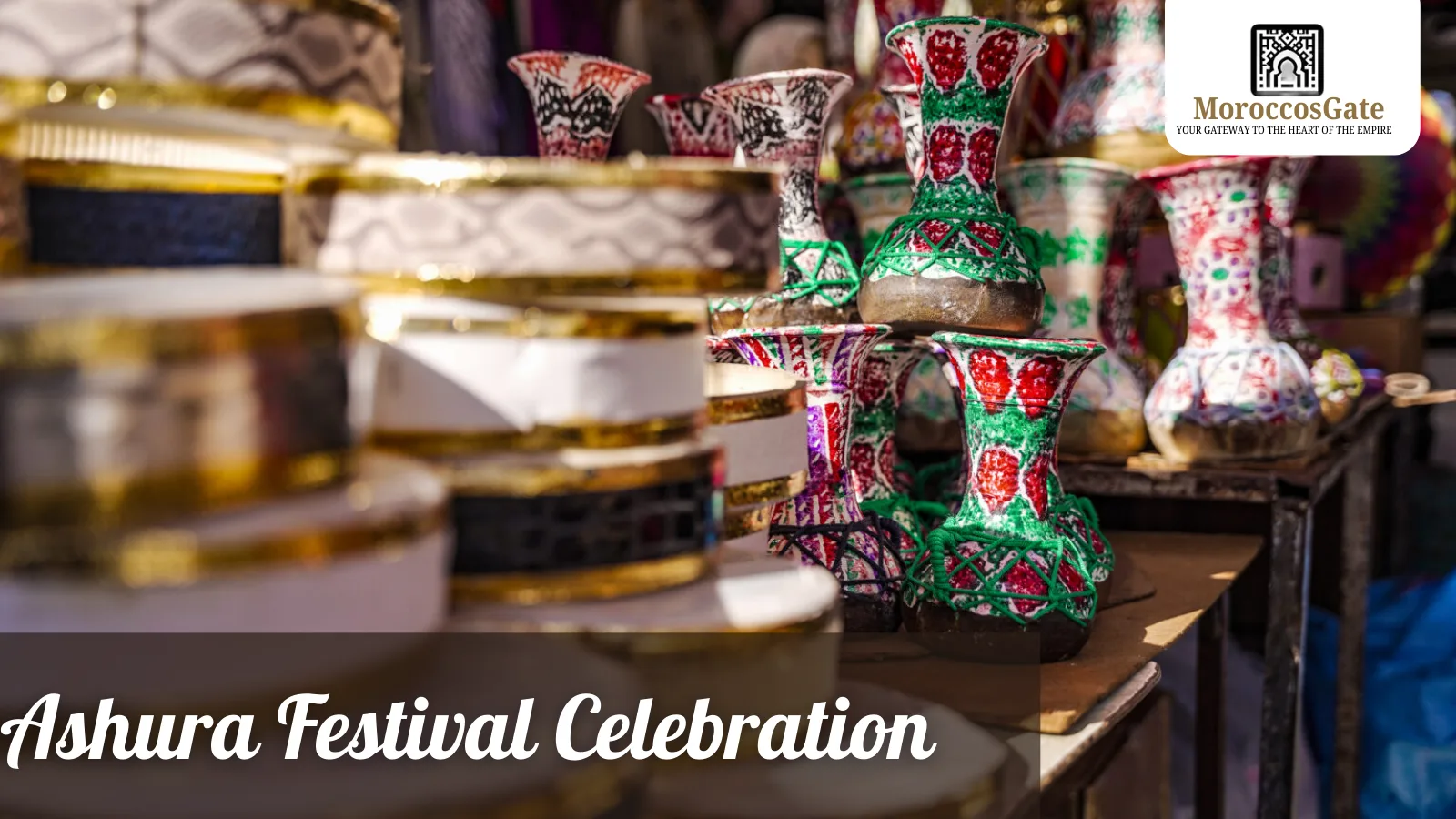
- The Music: Women and children play traditional percussion instruments. The Taarija (a small, hourglass-shaped clay drum) and the Bendir (frame drum) create a rhythmic heartbeat that lasts late into the night.
- Incense: Families burn strong incense (Bakhour) in their homes to ward off evil spirits and bless the household.
2. The Day of Ashura: Zamzam Day (The Water Festival)
If the night belongs to fire, the morning belongs to water. The day of Ashura is locally known as “Zamzam Day,” named after the holy well in Mecca.
What is the water ritual?
On this morning, the streets turn into a playful battlefield. Children, and often adults, engage in water-splashing games.
- The Tradition: It is customary to splash water on family, friends, and neighbors. In the past, this was a symbolic sprinkling to wish for rain and a bountiful harvest. Today, it has evolved into a full-blown water fight using buckets, water balloons, and water guns.
- The Meaning: The water symbolizes life, purification, and prosperity. Getting splashed on Ashura is considered a sign of good luck, washing away the old year’s troubles.
- Traveler Tip: If you are walking through a Moroccan city on the morning of Ashura, keep your phone in a waterproof bag! It is all in good fun, and getting wet is part of the “blessing.”
3. Hak Baba Aishur (Moroccan Trick-or-Treating)
Did you know Morocco has its own version of Halloween? This tradition is called Hak Baba Aishur.
“Baba Aishur” is a folklore character, often depicted as an old wise man. On Ashura, children dress up—sometimes in costumes or just their best traditional clothes—and go door-to-door in their neighborhoods.
- The Chant: They knock on doors singing, “Hak Baba Aishur!” (The right of Father Aishur).
- The Treat: Neighbors give them sweets, coins, dry fruits, or sugar. It is a heartwarming tradition that emphasizes community trust and generosity toward children.
Nindohost is a Moroccan web hosting company and domain registrar, recognized for its specialized services in Africa with over 18 years of experience.
Domain Registration: Specializes in .ma domain registrations.
- Free Domain & SSL
- Security & Backup
- Managed Services
- Website Migration


The Culinary Delights of Ashura
No Moroccan festival is complete without specific foods. How Ashura celebrated in the kitchen is just as important as the street festivities.
Krichlate and Fekkas (Ashura Crackers)
Weeks before the festival, bakeries stack mountains of Krichlate (or Fekkas). These are tiny, crunchy cookies that come in two main varieties:
- Sweet: Flavored with anise, sesame, and orange blossom water.
- Savory: Spicy mini-crackers seasoned with harissa and cheese.
They are eaten by the handful, like popcorn, accompanied by endless glasses of mint tea.
Fakia (The Dried Fruit Mix)
Fakia is the centerpiece of the Ashura table. It is a mixture of dried fruits and nuts, including:
- Walnuts and Almonds
- Dates and Figs
- Raisins and Peanuts
Families buy Fakia in bulk and mix it with the Krichlate. It is served to guests and distributed to children as part of Hak Baba Aishur.
The Traditional Dinner: Couscous with Guiddid
On the night of Ashura, families gather for a special meal. The traditional dish is Couscous with Seven Vegetables and Guiddid (or Kaddid).
Guiddid is dried, salted meat (usually lamb or beef) that was preserved from the Eid al-Adha festival (which occurs a month prior). Saving the meat for Ashura connects the two major holidays and ensures a rich, flavorful meal.
Spiritual Observance: Fasting and Charity
Amidst the drums and water fights, the religious significance remains strong. Benefits of Ashura fasting are widely recognized in Morocco.
Ashura Fasting Benefits:
It is recommended (Sunnah), though not mandatory, to fast on the 10th of Muharram.
- Forgiveness: Prophet Muhammad (Peace Be Upon Him) said that fasting on the day of Ashura expiates (forgives) the sins of the previous year.
- Tradition: Many Moroccans fast on the 9th and 10th of Muharram to distinguish the observance.
Zakat (Charity):
Ashura is also a designated time for giving back. Known as Zakat, many Moroccans choose this day to calculate their annual charity contributions and distribute money to the poor, orphans, and needy families. This ensures that everyone, regardless of status, can afford the joy, toys, and food of the festival.
Ashura 2026: Dates and Planning
Because the Islamic calendar is lunar (11 days shorter than the Gregorian solar calendar), the dates for Ashura move backward every year.
Ashura 2026 Start Date & Time and End Date & Time:
- Ashura Holiday 2026 (10th Muharram): Expected to fall on or around June 26, 2026.
- Celebration Start: The festivities (Sha’ala/Bonfires) will begin at sunset on the previous day (approx. June 25, 2026).
- Celebration End: The water rituals and feasts conclude at sunset on Ashura day (June 26, 2026).
Note: Muslim holidays depend on the sighting of the moon. The exact date may vary by one day.
For travelers planning to visit Morocco in 2026, June will be warm. Ashura falling in summer means the “Zamzam” water fights will be incredibly refreshing and enthusiastic!
Dispo.Travel provides taxi transfers, private limousines, and chartered bus rentals.
- Comprehensive Transport Options
- Specialized Features for Agents
- Extensive Network & Support
- Convenience
- Flexible Payments
- Comfort Focus

Common Questions Answered
To help you find quick answers about the Ashura festival Morocco, here is a breakdown of the most asked questions.
Q1: What is Ashura and why it is celebrated in Morocco?
A1: Ashura is the 10th day of the Islamic lunar month of Muharram. In Morocco, it is celebrated to mark the victory of Moses over Pharaoh and to honor local cultural traditions. It is a day of joy, mixing religious fasting with bonfires, water games, and music.
Q2: Is Ashura a public holiday in Morocco?
A2: Ashura is not an official paid bank holiday for government offices, but it is culturally treated as a major festive day. Schools often have reduced hours or are closed, and businesses may close early for the family meal.
Q3: What are the Ashura greetings?
A4: To wish someone a happy Ashura in Morocco, you can say “Aishuri Aishuri, kul am wa antum bi khair” (Happy Ashura, may you be well every year) or simply “Mabrouk Aishur” (Blessed Ashura).
Q5: Why do children play drums on Ashura?
A5: Parents purchase traditional clay drums (Taarija) and tambourines for children as gifts. The drumming is a symbol of joy and is believed to connect the younger generation to Moroccan musical heritage.
Q6: Can tourists participate in Ashura?
A6: Absolutely! Moroccans are incredibly hospitable. If you are in a neighborhood during the bonfire night, you may be invited to watch. However, be prepared to get wet during the water splashing rituals in the morning!
Q7: How does Ashura fasting benefit the believer?
A7: Spiritually, fasting on Ashura is believed to wipe away the minor sins of the past year, offering a fresh start for the year ahead.
Why You Should Experience Ashura in Morocco
The Ashura festival Morocco is a testament to the country’s ability to preserve history while celebrating life. It is a time when the boundaries between the sacred and the social blur into a beautiful display of humanity.
From the glowing embers of the Sha’ala to the laughter of children engaging in Zamzam water fights, Ashura engages all the senses. It reminds us of the importance of community, the joy of giving, and the richness of Moroccan heritage.
If you are looking for an authentic travel experience that goes beyond the standard tourist trail, visiting Morocco during Ashura is unforgettable.
Are you ready to explore the magic of Morocco?
At MoroccosGate, we are here to help you plan your journey. Whether you want to taste the Fakia, hear the drums, or explore the Atlas Mountains, we are your gateway to the empire.
- Follow our blog for more cultural insights.
- Contact us on WhatsApp: +353-892614066
- Email: travel@moroccosgate.com
Happy Ashura / Mabrouk Aishur!